Vietnam is often described as a single culture. In reality, it is shaped by 54 ethnic groups, each with its own language, traditions, beliefs, and way of life. What many travelers see at first is only the surface. To truly understand Vietnam is to look beyond familiar images and recognize its cultural diversity—not as something divided, but as a living mosaic formed through centuries of shared life.
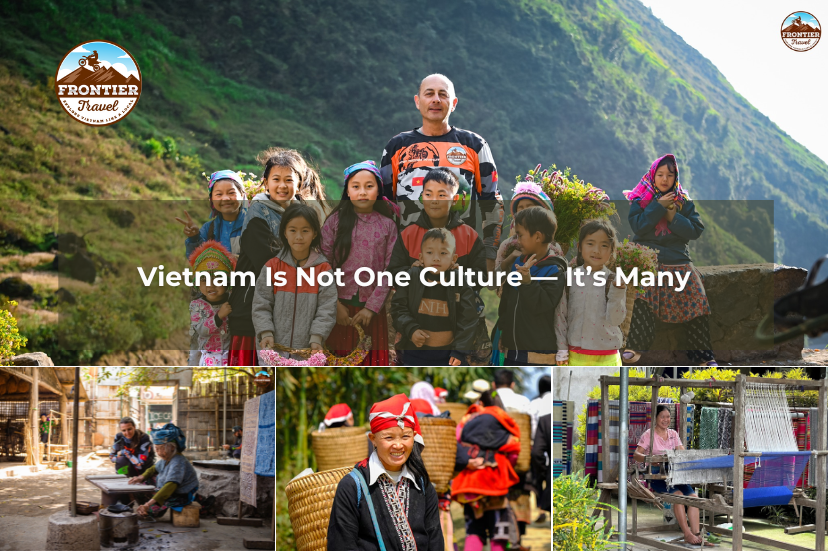
Vietnam Is More Than One Cultural Story
For many international travelers, Vietnam is associated with rice paddies, conical hats, pho, and motorbikes. These images are not wrong—but they are incomplete.
Vietnam officially recognizes 54 ethnic groups, coexisting within one national identity while maintaining distinct cultural traditions. Language, rituals, architecture, and social organization vary widely between communities, shaped by geography, history, and centuries of adaptation.
Exploring Vietnam, therefore, is not about discovering a single culture. It is about encountering many cultures within one country.
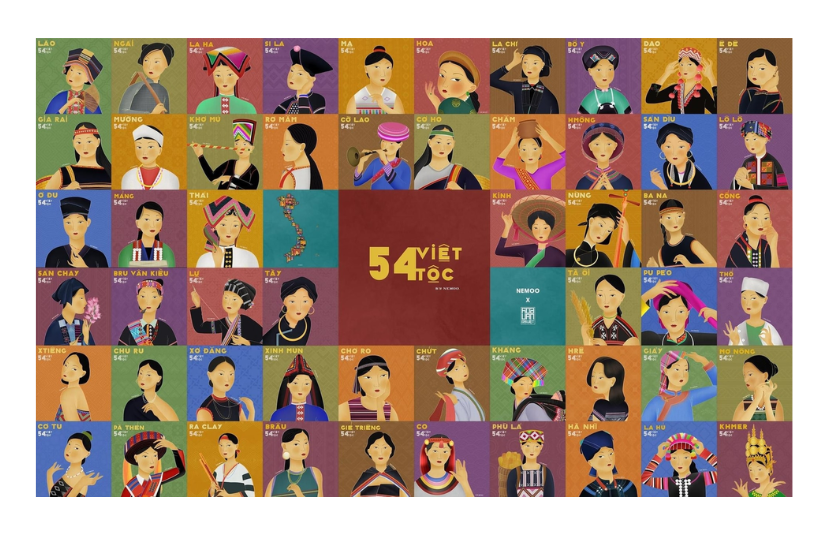
Cultural diversity of Vietnam represented through ethnic communities across different regions
→ Explore now Must-Try Northern Vietnamese Specialties For Travelers
Understanding Vietnam’s Ethnic Diversity Through Language Families
One of the clearest ways to understand Vietnam’s cultural complexity is through language families, as language reflects shared origins, worldviews, and historical connections between ethnic groups.
Classification of Vietnam’s 54 Ethnic Groups by Language Families
Language Family | Representative Ethnic Groups | Key Cultural Characteristics |
Viet–Muong | Kinh (Vietnamese), Muong, Tho, Chut | The Kinh people make up about 85% of Vietnam’s population and live throughout the country. The Muong are known for their gong culture and traditional agricultural rituals. |
Tay–Thai | Tay, Thai, Nung, Giay, Lao, Lu, San Chay, Bo Y | Primarily living in northern mountainous regions, these groups traditionally inhabit stilt houses and are famous for Xoe dances, Then singing, and intricate brocade weaving. |
Mon–Khmer | Khmer, Ba Na, Xo Dang, Co Ho, Hre, Kho Mu, M’Nong… | The largest minority language family, concentrated in the Central Highlands and southern Vietnam. Cultural life is closely linked to communal longhouses (Central Highlands) and temples or pagodas (Khmer). |
Hmong–Dao | Hmong, Dao, Pa Then | Residing mainly in the high mountains of northern Vietnam. Distinguished by vibrant handmade clothing, traditional embroidery and dyeing techniques, and the unique culture of weekly highland markets. |
Austronesian | Gia Rai, Ede, Cham, Raglai, Chu Ru | Some groups follow matrilineal traditions (notably the Ede and Gia Rai). The Cham are renowned for their ancient tower complexes and the spiritually significant Kate Festival. |
Sinitic | Hoa (Chinese), Ngai, San Diu | Living mainly in major urban centers and border areas. These communities have strong traditions in trade, handicrafts, and lion and dragon dance performances. |
Tibeto–Burman | Ha Nhi, Phu La, La Hu, Lo Lo, Cong, Si La | Primarily found in Vietnam’s northernmost border regions. Known for rammed-earth houses and distinctive agricultural festivals linked to seasonal cycles. |
Kra–Dai | Co Lao, La Chi, La Ha, Pu Peo | Very small ethnic groups (often fewer than 10,000 people), mainly residing in Ha Giang and Lao Cai provinces, with cultural traditions of high preservation value. |
Diversity Without Division
Despite differences in language and customs, Vietnam’s ethnic groups do not exist in isolation.
- Intermixed settlement has encouraged long-term cultural exchange
- Shared historical experiences have fostered strong social cohesion
- Unity through diversity forms the foundation of Vietnam’s national identity
Vietnam’s cultural richness lies not in uniformity, but in coexistence.
Travel as a Bridge for Cultural Preservation
Modernization brings opportunity, but it also poses challenges: disappearing languages, fading crafts, and the migration of younger generations to cities.
When approached responsibly, travel can support cultural preservation rather than accelerate loss.
Frontier Travel Vietnam works with this philosophy in mind. Their journeys focus on:
- Small-group, slow-paced travel
- Community-based homestays
- Trekking and immersive cultural experiences
- Long-term collaboration with ethnic communities
The aim is not to “consume” culture, but to create respectful cultural exchange that benefits local communities and helps keep traditions alive.
→ Read more Top 18 Budget-friendly Vietnam Souvenirs That Are Still Special
Conclusion: Many Cultures, One Vietnam
Vietnam is not defined by a single cultural narrative. It is shaped by 54 ethnic communities, each contributing a unique voice to the country’s identity.
Sharing these stories with international travelers does more than broaden understanding—it helps generate respect, pride, and sustainable livelihoods that support cultural continuity.
To discover Vietnam fully is to embrace its diversity. And to travel responsibly is to help ensure that this diversity continues to thrive.
→ Read more The Ultimate Guide To Navigating Tan Son Nhat Airport In Ho Chi Minh City
Frequently Asked QuestionsHow many ethnic groups are there in Vietnam?
Vietnam officially recognizes 54 ethnic groups, each with distinct languages, traditions, and cultural practices.
Why is language an important lens for understanding ethnic diversity?
Language reflects shared history, cultural values, and social structures, helping explain how different communities relate to one another.
Which ethnic group forms the majority in Vietnam?
The Kinh (Vietnamese) people, part of the Viet–Muong language family, make up approximately 85% of the population.
Can tourism contribute to the preservation of ethnic cultures?
Yes. When practiced responsibly, tourism can help preserve cultural heritage by creating sustainable livelihoods and strengthening pride in local traditions.