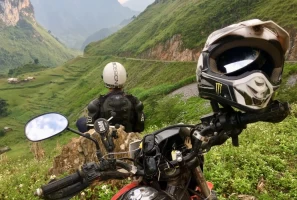
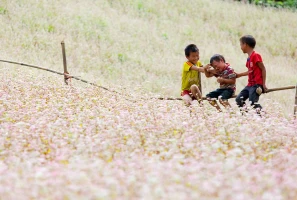
Ethnic minority communities in Vietnam are well known for their hospitality, sincerity, and a way of life closely connected to both the community and nature. However, each village has its own distinct customs, traditions, and beliefs. Therefore, when joining a Vietnam ethnic village motorbike trip, travelers should take the time to learn about local taboos and be mindful of proper behavior and communication to show respect for the local culture and people.
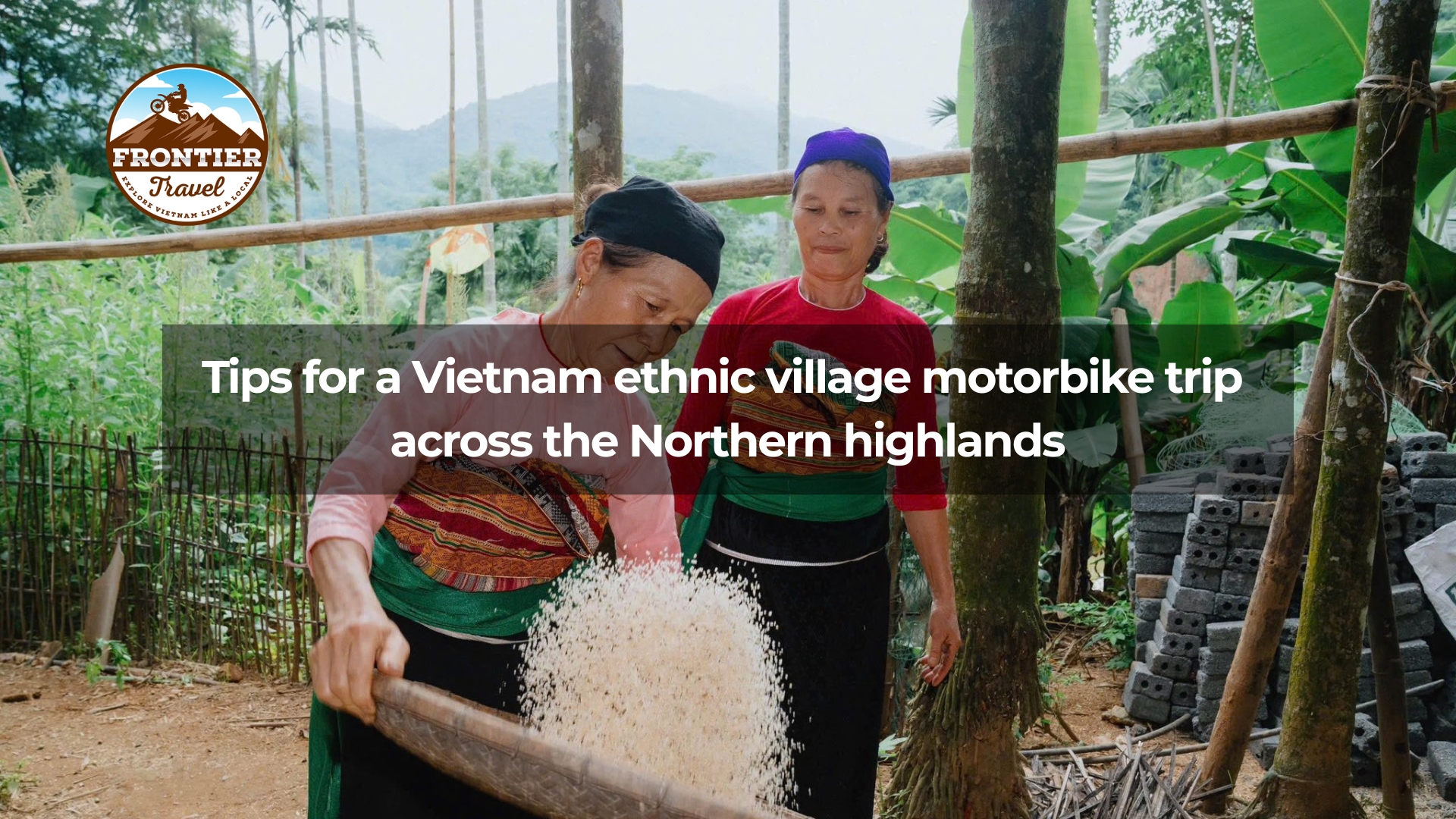
1. Cultural and communication notes for a Vietnam ethnic village motorbike trip
1.1. Notes when visiting villages and hamlets
During a Vietnam ethnic village motorbike trip, visitors should be aware that villages and local homes follow strict traditional customs and spiritual rules. Respecting local taboos is essential to ensure a safe, respectful, and meaningful experience.
Do not enter the village when there are prohibitory signs
When traveling to ethnic minority villages in Lao Cai, visitors should pay close attention to the prohibitory signs placed at the village entrance. At certain times of the year, the village may be holding spiritual rituals such as worshipping the village deity, driving away evil spirits, or praying for peace and prosperity for the community.
During these periods, villagers often set up temporary gates and hang items such as wooden knives, wooden swords, green branches, woven lattice panels, or animal jawbones. These signs clearly indicate that outsiders are not allowed to enter the village, and visitors should not proceed further to avoid violating local taboos.
Sacred forests are communal spiritual spaces
In addition, each village has a sacred forest - an area deeply connected to community beliefs, where supernatural forces and guardian spirits of the village are worshipped. A sacred forest may be an old-growth forest, a large ancient tree, or a prominent rock, and it is collectively protected by the entire community.
Visitors are strictly prohibited from cutting trees, breaking branches, littering, relieving themselves, or engaging in playful, gathering, or romantic activities in this area. Respecting the sacred forest not only means following local customs but also reflects environmental awareness and respect for indigenous culture.
1.2. Notes for visiting a local home
Do not enter a house if there are prohibitory signs at the entrance, such as green branches, thorny twigs, or woven lattice panels, as these indicate that the family does not wish to receive visitors at that time.
Respect the specific rules of each ethnic group. In Ha Nhi houses, visitors should only enter through the outer door and should not step into the inner section without the homeowner’s permission. In Thai stilt houses, women are expected to use the left staircase, which is usually connected to the drying area, and should avoid the right staircase.
The ancestral altar is the most sacred space in the house. Visitors must not place personal belongings there, touch any ritual objects, turn their backs toward the altar, or sit or lie with their feet facing it. In some areas, women are not allowed to enter the altar room.
The hearth is also considered a sacred place. Visitors should not step on or move the stone supports, should not turn their backs to the fire, should place pots and pans in the proper direction, and should never put firewood into the stove with the tip end first.
Other important taboos include avoiding sitting on the doorstep, leaning against the main pillar, whistling inside the house.
1.3. Notes on communication and daily life
When interacting with local villagers, visitors should always maintain a friendly, open, and respectful attitude. A gentle greeting accompanied by a sincere smile not only shows good manners but also helps you quickly build rapport with the host family and the local community.
In daily activities, visitors should avoid touching children’s heads, especially among the H’Mong and Dao people. According to traditional beliefs, the head is where the soul resides, and touching it may be considered disrespectful or bring bad luck.
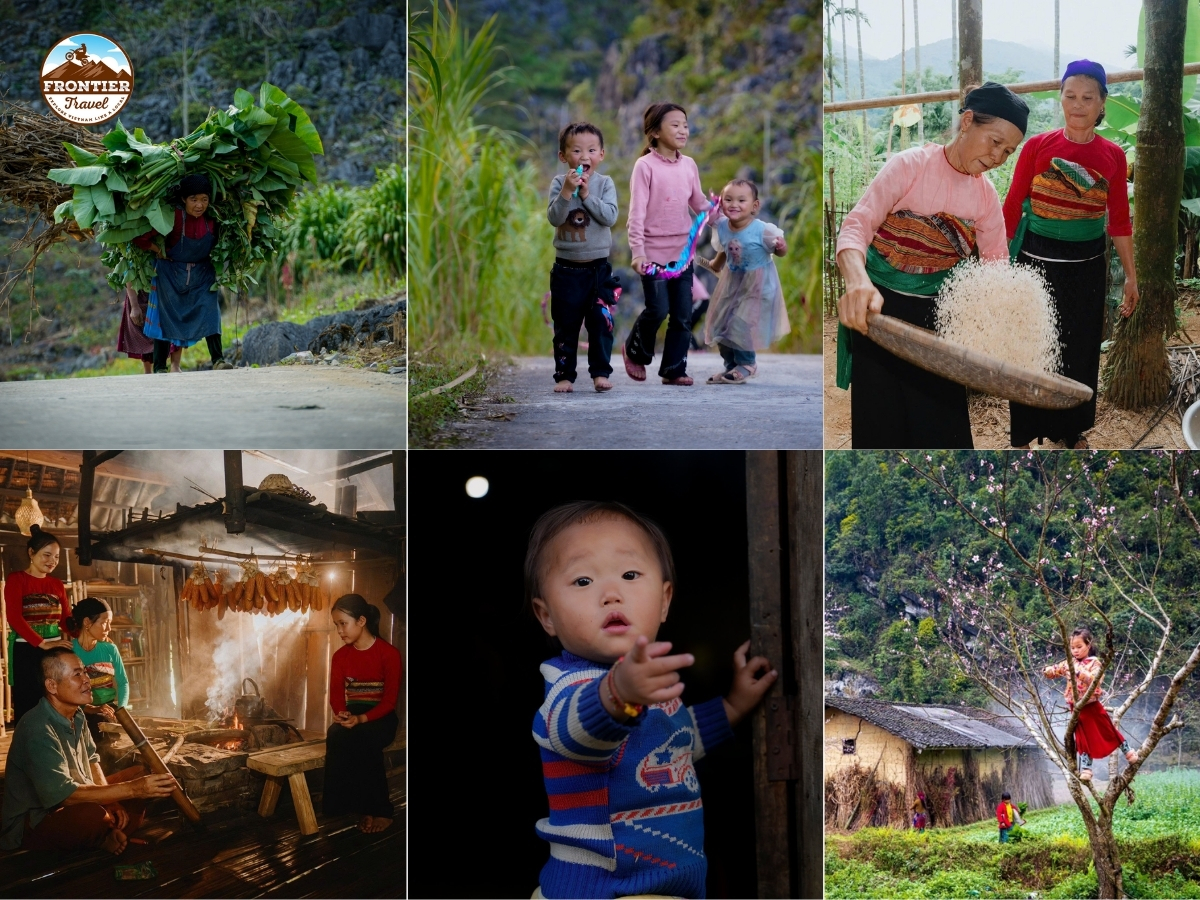
Images of everyday life in highland communities, where cultural traditionsare preserved across generations.
When sharing a meal with a local family, guests should sit in the place arranged by the host. Turning bowls or cups upside down on the tray or dining mat is considered a taboo and should be avoided.
When staying overnight, sleep only in the area designated for guests, following the host’s instructions. Avoid pointing your feet toward the household altar, as it is a sacred space within the home.
2. Notes when riding a motorbike in highland villages
The terrain and daily life in highland villages are very different from urban roads or highways. During a Vietnam ethnic village motorbike trip, riders should be mentally prepared and equipped with appropriate riding skills and responsible behavior to ensure personal safety while also respecting the local way of life.
2.1. Riding on mountain passes and steep roads
Maintain a steady speed and avoid sudden acceleration or hard braking, especially on sharp hairpin bends with limited visibility. When riding downhill, use engine braking combined with gentle front and rear braking to control speed and prevent wheel lock or loss of control.
Lightly honking before entering blind corners is also important, as it helps alert oncoming vehicles or pedestrians, particularly on narrow mountain roads where there is often only one lane.
2.2. Riding on slippery, muddy or unpaved roads
Reduce speed, keep the throttle smooth and avoid sudden steering movements. On dirt roads or loose gravel, maintain a safe distance from the vehicle ahead to reduce the risk of skidding.
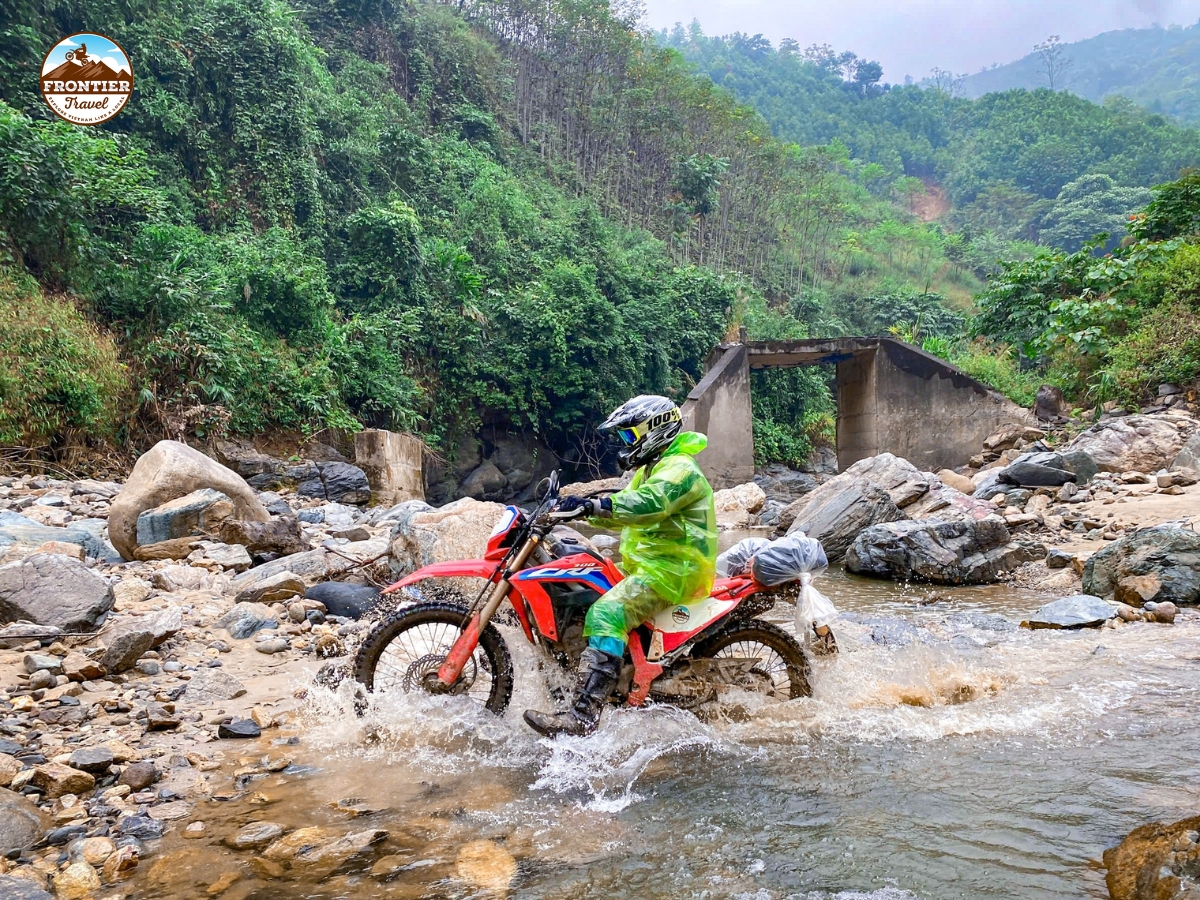
A mountain route crossing streams and rocky terrain in the wild.
When crossing shallow streams or flooded sections, carefully observe the road surface, choose the firmest line, keep the bike upright, and maintain a steady throttle. Avoid stopping mid-crossing, as this can cause the tires to lose traction.
2.3. Riding through villages
Slow down to the lowest safe speed when entering villages. These areas are shared living spaces where children may suddenly run onto the road, and livestock such as buffaloes, cows, or dogs may cross without warning.
Avoid loud honking, revving the engine, or riding in large, noisy groups, especially early in the morning or in the evening, to minimize disturbance and show respect for local residents.
A Vietnam ethnic village motorbike trip requires not only riding skills but also understanding, respect, and cultural sensitivity. Frontier Travel Vietnam hopes that the information shared above will help make your journey more fulfilling and foster positive connections with local communities along every step of the way.
FAQs
1. How can I recognize prohibitory signs at a village entrance?Look for temporary gates, green branches, wooden knives or swords, woven panels, or animal bones.
2. Is it acceptable to visit a local home without invitation?No. If prohibitory signs are displayed, visitors should not enter the house.
3. Are there different house rules among ethnic groups?Yes. Each ethnic group follows specific customs that visitors must respect.
4. What should I avoid touching inside a local home?Avoid touching the ancestral altar, ritual objects and the hearth area.
5. Is touching children considered acceptable?No. Touching children’s heads is considered disrespectful in some ethnic groups.
6. What is the safest way to ride in highland villages?Ride slowly, stay alert and be prepared for children or livestock on the road.
7. Why is riding slowly through villages important?It ensures safety and shows respect for local community life.