Northern Vietnam unfolds as a journey where nature, culture, and flavor come together in dramatic harmony—from the towering karst cliffs of Ha Giang and the mist-filled thunder of Ban Gioc Waterfall to the floating cloud seas of Y Ty and the golden terraces of Mu Cang Chai. Traveling by motorbike lets adventurers slow down and feel the pulse of mountain life, tasting regional dishes and discovering local specialties—from buckwheat treats to roasted chestnuts—that are easy to pack and bring home. The journey concludes in Hanoi, where refined northern cuisine and centuries-old craft villages offer not only memorable experiences but also airport-friendly souvenirs, creating a perfect ending to an immersive and meaningful adventure.
.png)
Vietnamese cultural items and handicrafts available for travelers to bring home.
Exploring Northern Vietnam by Motorbike – A Journey of Layered Landscapes & Cultures
Northern Vietnam is a land where mountains, rivers, and vibrant ethnic communities come together to form one of the most compelling cultural and natural tapestries in Asia. For international travelers with a passion for discovery, the region feels like an open-air laboratory—where you can witness shifting terrains, experience the rhythm of highland life, and savor distinctive regional flavors all within a single journey.
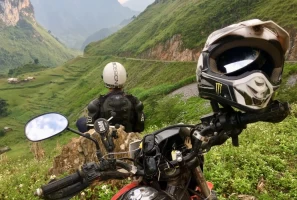
Traveling by motorbike in Northern Vietnam is far more than an adventure. It is a way to move slowly through the landscape, to pause in remote mountain villages, and to immerse yourself in cultural stories that reveal themselves only when you take the long, winding road. Riding also allows access to places that larger vehicles simply cannot reach—from cascading terraced valleys to mountaintop viewpoints where the clouds drift at eye level.
.png)
Travelers experiencing Northern Vietnam’s culture and cuisine on a motorbike tour with Frontier Travel Vietnam.
In this guide, Frontier Travel Vietnam takes you through three signature routes that showcase the very best of the North:
• The Northeast – Ha Giang & Cao Bang
A region of dramatic limestone peaks, deep valleys, and living cultures of the Hmong, Dao, Tay, and Nung communities. Rugged, authentic, and iconic—often referred to as the “heart of the northern mountains.”
• The Northwest – Y Ty, Mu Cang Chai & Nghia Lo
A completely different world: endless oceans of clouds, golden terraced rice fields, vibrant mountain markets, and unique high-altitude agricultural traditions.
• Hanoi – The Cultural & Culinary Capital
Where your journey comes full circle. Explore ancient craft villages, savor refined northern cuisine, and learn about essential airport regulations before bringing home local specialties and souvenirs.
With this article, Frontier Travel Vietnam aims to provide an inspiring, accessible, and practical guide—helping you fully embrace the landscapes, flavors, and cultural richness of Northern Vietnam, while also preparing you to choose and pack your souvenirs safely for your flight home.
→ Begin Your Ultimate Exploration of Northern Vietnam
PART 1: THE NORTHEAST ROUTE – HA GIANG, CAO BANG & ESSENTIAL BAGGAGE NOTES
1.1. Ha Giang – Majestic Karst Landscapes & Hmong Cultural Heritage
A. Karst scenery – the raw beauty of the stone kingdom
Ha Giang sits at the heart of the Dong Van Karst Plateau Geopark, a UNESCO Global Geopark. The entire region feels like an open-air geological museum, with sharp limestone peaks, deep canyons, and serpentine mountain passes carved along the cliffs.
Ma Pi Leng Pass Often hailed as one of Vietnam’s most spectacular motorbike routes, Ma Pi Leng opens up sweeping views over a canyon hundreds of meters deep. From the back of a motorbike, travelers can admire the emerald tones of the Nho Que River below—a color created by the scattering of light in the karst environment. It’s an experience both dramatic and intimate, unmatched by any larger vehicle.
Dong Van Karst Plateau Beyond the breathtaking landscape, the plateau reflects the remarkable resilience of its people. Between the grey limestone ridges, the Hmong cultivate maize directly on rock—a rare agricultural model that showcases their ability to “live with the stone and thrive from it.”
.png)
Visitor immersing in the open natural scenery and cultural atmosphere of Vietnam’s mountain regions.
B. Local cuisine – where culture meets nourishment
Hà Giang’s cuisine is humble yet full of character, shaped by cold mountain weather, rugged terrain, and the everyday rhythms of highland life.
Thắng cố (Thang Co) A signature dish of northern highland markets. Cooked from various parts of horse meat and offal, Thang Co carries bold flavors rooted in ancient nomadic traditions. Sharing a steaming pot among locals is one of the most authentic cultural moments on the journey.
Cháo ấu tẩu (Au Tau porridge) Perhaps the most distinctive dish of Ha Giang. Made from au tau roots—which contain natural toxins until neutralized through careful processing—the porridge is warming, nourishing, and known for improving sleep. Its gentle bitterness blends beautifully with the sweetness of bone broth and upland rice, best enjoyed on a chilly mountain night.
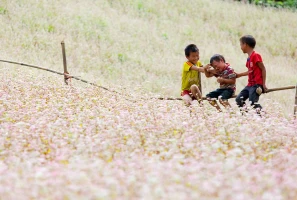
Buckwheat cake Soft, fragrant, and fiber-rich, this cake is made from the buckwheat grown across the rocky hills. It has become a symbol of Ha Giang’s annual buckwheat flower season, when the valleys turn shades of pink and purple.
C. Souvenirs & important airport regulationsEthnic brocade textiles
– Lightweight, durable, easy to pack
– Not restricted by international customs
– A favorite among travelers thanks to their craftsmanship and vivid patterns
Smoked buffalo jerky
– Must be vacuum-sealed and properly packed
– Allowed only in checked baggage
– ⚠️ Strictly controlled in the U.S., Australia, and the EU; many travelers have had meat products confiscated even when packaged correctly
→ Recommendation: Always check your destination country’s customs website before purchasing food-related souvenirs.
1.2. Cao Bang – Majestic Karst Landscapes, Border Waterfalls & Tay–Nung Cuisine
A. Iconic landscapes that define Cao BangBan Gioc Waterfall Straddling the Vietnam–China border, Ban Gioc is one of the largest and most breathtaking waterfalls in Asia. Its cascading tiers create a fine mist that blankets the valley, nurturing lush vegetation year-round. A bamboo raft ride to the foot of the falls lets travelers feel the thunderous roar and cool spray—an unforgettable highlight of any Northeast journey.
Nguom Ngao Cave Just a short drive from the waterfall, Nguom Ngao is among the most stunning limestone caves in northern Vietnam. Stepping inside feels like entering a dreamlike world of stalactites and stalagmites—natural sculptures formed slowly over millions of years. Light filtering through the cavern enhances the dramatic textures, making it a perfect stop for geology enthusiasts and curious explorers alike.
.png)
Visitor capturing a picture at Ban Gioc Waterfall, one of Vietnam’s most iconic natural sites.
B. Tay–Nung cuisine: rustic, refined, and full of character
Cao Bang’s culinary traditions carry the warmth of mountain life—simple, flavorful, and preserved through generations.
Seven-Spice Roast Duck The region’s most beloved dish. The duck is marinated with a variety of local spices, especially mac mat leaves, known for their fragrant essential oils and gentle sweetness. The result: crispy skin, tender meat, and a rich aroma that pairs beautifully with sticky rice or rice paper.
Steamed Rice Rolls with Broth Unlike the southern and Hanoi versions served with fish sauce, Cao Bang’s rice rolls are enjoyed with a clear, savory bone broth. The warmth of the soup perfectly matches the region’s cool mountain climate.
C. Local specialties & international airline regulationsTrung Khanh Chestnuts A renowned local delicacy. Travelers may bring chestnuts on international flights if they are roasted or dried. They keep well and make excellent gifts.
Smoked Sausage (Lap Xuong) Deeply aromatic and flavorful, but classified as a meat product. → Allowed only when vacuum-sealed and packed in checked luggage. → ⚠️ The U.S., Australia, and most European countries enforce strict biosecurity rules. Confiscation at customs is common, even with proper packaging.
PART 2: THE NORTHWEST ROUTE – Y TY, MU CANG CHAI & AGRICULTURAL ECOSYSTEMS
2.1. Y Ty – Cloud-Kissed Highlands & Ha Nhi Culture
A. Climate & unique high-altitude ecosystem
Sitting at nearly 2,000 meters, Y Ty is famous for its distinctive orographic clouds—where moist air meets cold mountain slopes and forms vast layers of suspended mist. This phenomenon creates the magnificent “sea of clouds” that rolls across the valleys every morning, earning Y Ty its reputation as the cloud-chasing capital of Northern Vietnam.
Leo Than & Nhiu Co San Peaks These iconic summits serve as natural observatories, offering travelers front-row views of the early-morning atmosphere. Here, wind, clouds, and sunlight blend into a breathtaking, almost surreal panorama that few places can match.
B. Highland cuisine – slow, simple, and deeply comforting
Black chicken & stream fish Signature dishes of the Ha Nhi people, reflecting small-scale agriculture and freshwater harvesting adapted to mountain conditions. Black chicken is tender, rich in nutrients, while stream fish has a naturally sweet, clean flavor thanks to the high-altitude water sources.
Ha Nhi rice beer A traditional fermented drink made from rice—light, smooth, and easy to enjoy. Its fermentation method resembles that of ruou can (Vietnam’s jar wine), embodying centuries of indigenous knowledge.
C. Local products & airport regulations
Sour bamboo shoots – dried bamboo shoots
– ⚠️ Fresh bamboo shoots or products containing liquid are not allowed in cabin baggage due to liquid restrictions.
– Dried bamboo shoots are permitted when cleanly packaged in checked luggage.
.png)
Stunning sea of clouds rolling over mountain peaks as visitors enjoy the view.
2.2. Nghia Lo – Mu Cang Chai: Terraced Fields & the Story of Sticky Rice
A. Golden “waves” of sustainable mountain agriculture
Terraced rice fields in the Northwest are more than landscapes—they are agricultural masterpieces crafted by Thai and Hmong communities. This farming method maximizes arable land on steep slopes, conserves water, prevents erosion, and creates the iconic layered patterns stretching across the mountains.
Khau Pha Pass One of Vietnam’s legendary “Four Great Passes.” With steep gradients and sharp bends, it’s a favorite among motorbike riders seeking a challenge amid awe-inspiring scenery.
Mu Cang Chai Terraced Fields Recognized as a National Special Heritage Site, these terraces are most spectacular during the autumn harvest, when the rice turns golden and the hills ripple like soft waves under the sunlight.
.png)
Visitor walking along scenic terraced rice fields in Mu Cang Chai.
B. Culinary highlight – the signature flavor of mountain sticky rice
Tu Le sticky rice Grown in a unique climate basin, Tu Le’s sticky rice is exceptionally fragrant, soft, and chewy. The experience is most memorable when enjoyed right in the village, surrounded by terraced fields and the crisp mountain air.
C. Local products & travel regulations
Tu Le rice A dry agricultural product—safe to bring on international flights when properly packaged.
Thai brocade textiles Lightweight, durable, and unrestricted in international travel, making them a perfect souvenir for overseas visitors.
PART 3: HANOI – A CROSSROADS OF CULTURE, CUISINE & CRAFTS
3.1. Hanoi Cuisine – where tradition meets refinement
A. Hanoi Pho – the soul of Vietnamese cuisine
No dish represents Hanoi more perfectly than pho. A true northern-style bowl features a clear yet richly layered broth, created from hours of simmering bones with spices like star anise, cinnamon, and charred ginger. Every element is carefully balanced to create a flavor experience that is delicate, aromatic, and unmistakably Hanoi.
B. Bun Cha – charcoal-grilled flavors in the heart of the Old Quarter
Bun Cha gained worldwide attention after being featured in President Obama’s visit to Hanoi. The dish pairs soft rice vermicelli with charcoal-grilled pork (both patties and slices), served with a sweet-and-sour dipping broth and fresh herbs. The smoky aroma from the grill is what captivates travelers most.
C. Egg Coffee – a delightful Hanoi original
One of Vietnam’s most iconic drinks. Whipped egg yolk and sugar form a creamy, velvety foam that, when combined with strong Vietnamese coffee, creates a texture reminiscent of a light tiramisu. A perfect embodiment of Hanoi’s creativity and classic charm.
.png)
Traditional Hanoi dish representing the sophistication and cultural depth of Northern Vietnamese cuisine.
3.2. Souvenirs to Bring Home – beautiful, durable & airport-friendly
A. Bat Trang Ceramics – nearly a thousand years of craftsmanshipBat Trang Village is one of Vietnam’s oldest pottery centers. Fired at high temperatures, Bat Trang ceramics are known for their durability, artistry, and cultural significance. From vases and tea sets to decorative sculptures, each piece reflects generations of refined craftsmanship.
B. Van Phuc Silk – soft, luxurious & meticulously woven
Woven from natural silk threads, Van Phuc silk is celebrated for its delicate patterns and elegant texture. Once reserved for royalty, it remains a premium gift cherished by visitors seeking something both beautiful and distinctly Vietnamese.
.png)
Vietnamese souvenirs that are allowed on airplanes, including dried foods and handicrafts.
C. Bamboo & Rattan Crafts – sustainable beauty in everyday life
Bamboo and rattan products blend tradition with modern design. Lightweight and eco-friendly, they are easy to pack and suitable for contemporary interiors. Nearby craft villages like Phu Vinh are renowned for their exceptional weaving techniques.
D. Dried Fruits & Green Rice (Cốm) – quintessential flavors of Hanoi
Packaged ô mai (preserved fruits) and cốm-based products such as rice cakes or dried green rice are allowed through international customs since they are fully processed and dry. These treats offer a convenient, delicious way to bring home the taste of Hanoi.
FAQs
1. Is motorbiking in Northern Vietnam safe?
Yes—safe when riding with a guide. Roads can be steep, so beginners shouldn’t ride alone.
2. Can I follow these routes on Google Maps?
Yes, but guided tours help avoid unsafe or restricted paths.
3. What souvenirs are allowed on international flights?
Textiles, dried foods, roasted chestnuts, dried bamboo shoots, ceramics, rattan crafts, ô mai, and green rice products.
4. Which items are restricted?
Meat products (buffalo jerky, smoked sausage) must be vacuum-sealed and placed in checked baggage—often restricted in the US, EU, and Australia. Fresh fruit and liquids over 100ml are not allowed in carry-on.
5. Why choose a guided motorbike tour?
For safety, local knowledge, better routes, cultural insight, and easier logistics.
6. What foods should I try in the North?
Thang Co, buckwheat cake, Au Tau porridge, roast duck with mac mat, rice rolls with broth.
7. Where is the best place to buy airport-friendly souvenirs?
Hanoi—especially for ceramics, silk, dried snacks, and packaged specialty products.
→ Ready to explore Northern Vietnam? Ride with Frontier Travel Vietnam.