The Ha Giang Loop has become one of the most popular routes among international travelers visiting Vietnam. Its dramatic landscapes, distinctive limestone formations, and challenging high mountain passes create a journey that is both demanding and deeply rewarding. However, not everyone fully understands the nature of Ha Giang’s rugged terrain before setting off.
This guide is designed as a travel handbook for international visitors, with a focus on helping readers visualize the terrain along each section of the route—where the road is easy, where fog commonly appears, where steep cliffs are located, and which types of motorbikes are truly suitable. It also provides a detailed ha giang loop itinerary for ha giang 3d, ha giang 4d, and ha giang 5d routes, along with practical safety advice to ensure a secure and enjoyable experience.
1. Understanding Ha Giang Terrain: What the Route Actually Looks Like
The Ha Giang Loop is not a flat, gentle drive. It is a constantly shifting mix of winding mountain roads, steep limestone formations, narrow passes, and dramatic high-altitude viewpoints. Below is a realistic overview to help you visualize the terrain.
1.1 Ha Giang to Quan Ba
This section is relatively mild with wide roads and smooth pavement. It gradually climbs in elevation, opening up views of rolling mountains and scattered villages. The terrain is gentle enough for beginners to adapt before reaching steeper areas.
1.2 Quan Ba to Yen Minh
As you approach Yen Minh, the landscape transforms into pine forests and long stretches of curved mountain roads. The road surface is generally good, the slopes are moderate, and the scenery is one of the most pleasant and relaxing of the entire loop.
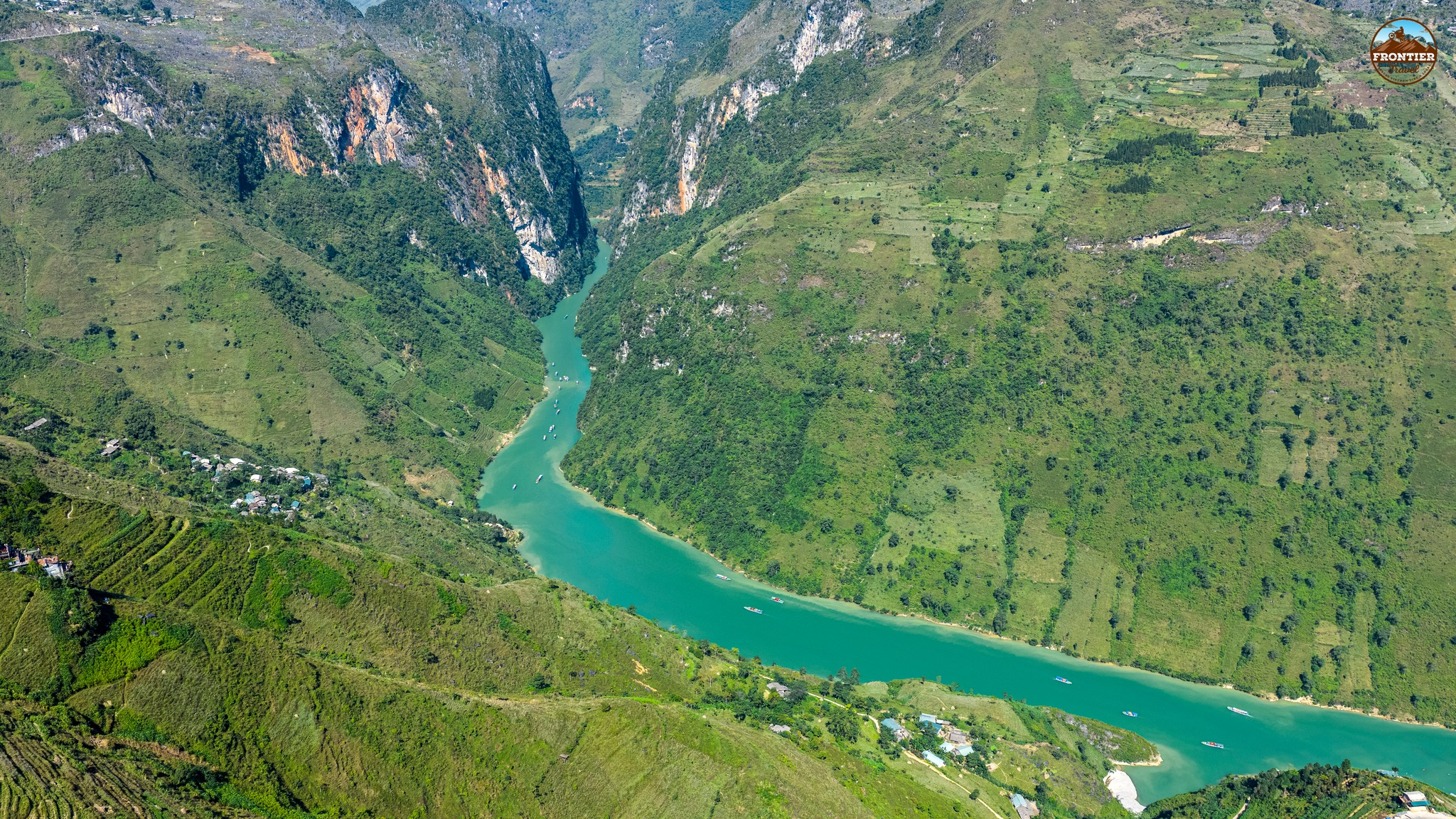
View of the Nho Que River winding through deep limestone valleys below Ma Pi Leng Pass in Ha Giang, Vietnam.
1.3 Yen Minh to Dong Van
This segment marks the beginning of more rugged mountain terrain. Sharp curves, narrow passes, and jagged limestone formations (known as “karst”) become the dominant features. Villages sit precariously along the mountainside, giving the region its distinct highland character.
1.4 Dong Van to Ma Pi Leng Pass – Meo VacThis is the highlight—and the most overwhelming—part of the Ha Giang Loop. The road hugs sheer cliffs, with a vertical drop on one side and towering rock walls on the other. Ma Pi Leng Pass offers sweeping views of the turquoise Nho Que River, hundreds of meters below.
The road is not technically difficult if ridden at slow, controlled speeds. However, the elevation, exposure, and dramatic scenery can easily distract inexperienced riders.
1.5 Meo Vac to Du GiaThe landscape softens into terraced fields and valleys. The road widens in some areas but can be uneven, especially after rain. This section passes through Dao minority villages, rivers, and farmland, offering a peaceful contrast to the intensity of Ma Pi Leng.
1.6 Du Gia to Ha GiangThe final day descends gradually into lower elevations. Roads are easier, scenery opens up, and riding becomes more relaxed. It is a fitting cooldown after completing the high mountain passes.
.png)
Sharp hairpin turn on a narrow mountain pass along the Ha Giang Loop in northern Vietnam.
2. Ha Giang Loop Itinerary Options (3D – 4D – 5D)
2.1 Ha Giang 3D Itinerary
For travelers with limited time who still want to see the main attractions.
Day 1: Ha Giang – Quan Ba – Yen Minh – Dong Van
Day 2: Dong Van – Ma Pi Leng – Meo Vac – Du Gia
Day 3: Du Gia – Lung Ho – Ha Giang
A balanced and more relaxed pace.
Day 1: Ha Giang – Quan Ba
Day 2: Quan Ba – Yen Minh – Dong Van
Day 3: Dong Van – Ma Pi Leng – Meo Vac
Day 4: Meo Vac – Du Gia – Ha Giang
Ideal for travelers seeking cultural immersion and photography.
Day 1: Ha Giang – Quan Ba
Day 2: Quan Ba – Yen Minh – Dong Van
Day 3: Full immersion in Dong Van villages and markets
Day 4: Dong Van – Ma Pi Leng – Meo Vac
Day 5: Meo Vac – Du Gia – Ha Giang
3. Recommended Motorbikes for the Ha Giang Loop
Suitable motorbikes
Dirt bikes and lightweight manual or semi-automatic motorbikes are the most suitable options for Ha Giang’s terrain.
Recommended models:
Honda XR150
Honda CRF150L
Honda Wave or Sirius (experienced riders only)
Their lightweight bodies, better suspension, and responsive braking make them ideal for mountain passes and rough patches.
.png)
Boat ride on the Nho Que River between steep limestone cliffs in Ha Giang, Vietnam.
Not recommended
Scooters (poor brakes and weak climbing power)
Heavy motorbikes
Big bikes (250cc–500cc)
the Ha Giang Loop is generally more suitable for lighter motorbikes. The mountain passes, narrow bends, and mixed road surfaces are easier to navigate with dirt bikes, which are designed for both on-road and off-road conditions. For most travelers, choosing a lighter, more flexible motorbike will provide a smoother and safer riding experience throughout the Loop.
4. Estimated Costs (VND & USD)
These amounts are approximate and may vary depending on season, availability, and service quality. They are provided for reference only.
Motorbike rental: 150,000 – 600,000 VND/day (6–24 USD)
Fuel: 150,000 – 250,000 VND/trip (6–10 USD)
Homestay: 150,000 – 300,000 VND/night (6–12 USD)
Meals: 150,000 – 350,000 VND/day (6–14 USD)
Nho Que River boat ticket: 100,000 – 150,000 VND (4–6 USD)
Entrance fees: 10,000 – 30,000 VND (0.4–1.2 USD)
Travelers should plan for flexibility, as prices can shift depending on holidays or peak tourism months.
.png)
Drone view of the “dinosaur spine” ridge in Ha Giang, showing the sharp mountain crest and deep surrounding valleys.
5. Safety Guidelines for Riding the Ha Giang Loop
Avoid riding at night due to poor visibility and the presence of large trucks.
Be cautious of heavy fog, especially in Quan Ba and Yen Minh.
Slow down before entering corners and avoid braking mid-turn.
Never overtake trucks on narrow mountain passes.
Maintain a safe distance of at least 20–30 meters.
Do not use your phone while riding.
Check brakes, tires, lights, and chain tension every morning.
Avoid big bikes unless you are an advanced rider.
Monitor weather forecasts to avoid heavy rain and landslide risks.
Wear proper protective gear: gloves, boots, helmet, and rainproof outerwear.
6. FAQs
Is the Ha Giang Loop dangerous?
The Ha Giang Loop can be dangerous for inexperienced riders due to steep passes, sharp turns, narrow roads, and high cliffs. However, with the right motorbike (preferably a dirt bike), proper gear, and safe riding habits, many travelers complete the loop without issues.
If you are uncomfortable with the risks or are not confident riding a motorbike in mountainous terrain, you may consider joining a guided tour. Frontier Travel Vietnam offers Ha Giang Loop tours with experienced guides who ensure safety, manage the route, and allow you to enjoy the scenery without the stress of self-riding.
What is the best season to visit the Ha Giang Loop?
The most stunning period to ride the Ha Giang Loop is from late September to early November, when the mountains glow with harvest-season colors and the valleys are filled with blooming buckwheat flowers.
Another beautiful time to visit is from March to April, when the weather is comfortable and the highlands come alive with peach blossoms, apricot flowers, and fresh spring greenery.
Is the ha giang 3d itinerary enough?
Yes, it covers the essentials. For a slower pace, the ha giang 4d or ha giang 5d itineraries are recommended.
Can beginners ride the Ha Giang Loop?
Beginners can ride only if they choose the right motorbike and avoid risky weather. Those who are not confident should join a guided tour for safety.
Conclusion
The Ha Giang Loop is a rare combination of natural beauty and challenging mountain terrain. Understanding the landscape is the key to choosing the right ha giang loop itinerary, whether it is ha giang 3d, ha giang 4d, or ha giang 5d. With proper preparation and realistic expectations of the terrain, the journey can be both memorable and safe.
For travelers who prefer a structured, safe alternative with full support, guided tour options from Frontier Travel Vietnam provide a dependable way to experience the loop without worrying about road conditions or riding skills.