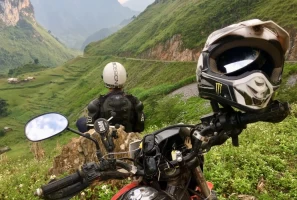
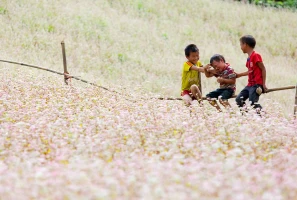
On a Vietnam motorbike tour, speed doesn’t define a great rider. What truly matters is the ability to master your bike—because real adventure, safety, and freedom are earned through control on Vietnam’s challenging mountain roads. Below are insights shared by the experts at Frontier Travel Vietnam.
1. Three Core Skills Every Rider Must Master
1.1. Cornering Skills
Vietnam’s terrain is defined by tight hairpin turns and blind corners hidden by mountains, vegetation, or fog.
- Vision (Target Fixation): Don’t stare at the road right in front of your wheel. Look toward the furthest visible point of the corner—the place you want the bike to go.
- Body Position: Stay relaxed and use lean-with (leaning together with the bike) or lean-out depending on how tight the corner is.
- Adaptability: Always keep a safe distance from lane markings to allow room for oncoming vehicles that may cross into your lane.
.jpg)
Motorbike cornering techniques are essential for all-terrain riding adventures.
1.2. Braking - The Skill That Keeps You in Control
Braking isn’t just about stopping. It’s about feeling the bike, managing speed, and staying in control when the road throws surprises at you.
Use both brakes together to keep the bike balanced and predictable. On Vietnam’s winding roads, the real trick is slowing down before the corner - once you’re leaned in, smooth throttle matters more than sudden braking.
On long descents, let the engine do part of the work. Dropping a gear and using engine braking keeps your speed in check and your brakes cool, especially on endless mountain passes.
1.3. Clutch Control - Where Control Really Begins
Clutch control is what keeps you moving when the speed drops and the terrain turns rough mud, loose rocks, steep climbs, and tight spaces.
Knowing where the clutch starts to bite makes all the difference. It lets you crawl uphill without stalling and maneuver smoothly when there’s barely room to move. By feeding the clutch gently, holding a steady throttle, and using a touch of rear brake, the bike stays calm and planted as you work through obstacles at walking speed.
Smooth clutch work isn’t about being slow - it’s about being precise. Clean, deliberate movements protect the bike and prevent the rear wheel from breaking loose when you least expect it.
Master these three skills, and a Vietnam motorbike journey becomes more than just a ride, it becomes safer, smoother, and far more rewarding.
.jpg)
Most bikes used on Vietnam motorbike tours demand confidence with a manual clutch.
→ Explore more Matching Physical Fitness With Motorcycle Choice For Vietnam Motorcycle Tours
2. Why Control Matters More Than Speed
The line between a memorable journey and a serious accident often comes down to one thing: how well you can control the bike when the unexpected happens.
Vietnam throws constant variables at riders. Traffic flows in its own rhythm, rarely following strict rules. On any given stretch of road, you might find yourself sharing space with heavy trucks, long-distance buses, slow-moving farm vehicles, or even animals wandering onto the asphalt. In this environment, raw engine power means very little—what matters is your ability to adjust your line, speed, and body position in an instant.
Then there’s the road itself. Potholes appear without warning, gravel spreads across mountain passes, and tropical rain can turn a familiar surface slick in minutes. On roads like these, speed quickly becomes a liability. A small mistake with the throttle or brakes is often all it takes to lose control.
In Vietnam, riding well isn’t about how fast you go—it’s about how smoothly and calmly you adapt to whatever the road puts in front of you.
.jpg)
Speed control is essential for both on-road and off-road riding.
→ Read more Discover Mu Cang Chai In Rice Terrace Season: Travel Guide & Tips
3. Reflexes and Calmness
To ride these roads well, you need more than skill—you need the right balance between sharp reflexes and a calm mind.
Reflexes are what save you when a bike suddenly cuts across your line or a vehicle turns without warning. Good reflexes come from practiced cornering and braking, built through experience rather than speed.
Calmness keeps everything under control when traffic turns chaotic. Staying calm allows you to read the flow around you, predict movements, and use clutch control smoothly—without jerky inputs or stalling in crowded streets.
When you can control both the bike and your emotions, Vietnam reveals its beauty instead of its dangers.
4. Cornering: The First Skill Vietnam Tests
Routes like the Ha Giang Loop and Ma Pi Leng Pass are packed with blind corners—where rock walls, dense vegetation, or thick fog hide what’s coming next.
To ride these turns safely in real-world conditions, a few habits make all the difference.
Start wide to open up your view into the corner and give yourself time to react if something appears in your lane. Watch the vanishing point—where the road edges seem to meet. If it moves closer, the corner is tightening; if it opens up, you’re on your way out.
In Vietnam, the horn is part of the riding language. A short, controlled beep before a blind corner lets trucks and buses know you’re there. Keep your head level, turn your whole head toward the exit, and let your eyes guide the bike. Slow down and choose the right gear before leaning in, then hold a steady throttle through the turn to keep the bike stable and avoid a low-side slide.
Mastering cornering doesn’t just get you through Vietnam’s legendary mountain passes—it lets you enjoy the scenery without worrying about what’s hiding beyond the rock face.
5. Braking: The Skill That Keeps You Safe
On a long journey across Vietnam, the ability to stop safely matters far more than how fast you can accelerate. In a place where anything can appear on the road without warning, braking skill is often the line between a close call and a serious crash.
Good braking gives you time, space, and control—three things every rider needs when the unexpected becomes part of the ride.
.jpg)
Motorbike rider losing balance during sudden braking on a Vietnam road
Braking in Unexpected Traffic: Reflexes and Judgment
Vietnamese traffic is full of surprises: a motorbike cutting across without a signal, a dog running into the road, or a truck braking suddenly to dodge a pothole. Handling these moments comes down to preparation and judgment.
Good riders stay ready. Keeping two fingers resting on the front brake as you pass through villages or intersections shortens reaction time when something unexpected happens. When you need to stop fast, grabbing the brake isn’t the answer. Smooth, progressive braking starting light to load the front suspension, then building pressure keeps the tires gripping the road instead of locking up.
Why Braking Technique Matters More Than Engine Power
A powerful bike means little if you can’t control it in tight, unpredictable situations. Proper braking brings stability and confidence when the road turns chaotic.
Using both brakes together makes all the difference. The front brake does most of the stopping, while the rear keeps the bike settled and the weight balanced. On long mountain descents, engine braking becomes essential—dropping a gear lets the engine help slow you down, keeping your brakes cool and responsive.
For experienced riders, a light touch of trail braking before entering a corner adds control, allowing small adjustments if something suddenly appears at the apex.
Speed might give you a brief rush—but strong braking skills are what make sure you ride home safely.
6. Clutch Control: The Skill Most Riders Underestimate in Vietnam
Many riders think the clutch is only for changing gears. But from the narrow streets of Hanoi’s Old Quarter to muddy mountain roads in the highlands, clutch control is what truly separates beginners from confident, experienced riders.
6.1. Mastering Low-Speed Riding in Tight Streets and Traffic
Urban riding in Vietnam often means moving at walking pace, while staying balanced without constantly putting a foot down.
Everything starts in the friction zone, the sweet spot where the clutch begins to engage. Holding the clutch at this point allows you to feed power smoothly and precisely, keeping the bike stable even when space is limited.
Instead of repeatedly twisting the throttle and releasing the clutch, which makes the bike jerk and lose composure, keep a steady and gentle throttle. Hold the clutch in the friction zone and use the rear brake to control speed. When done right, the bike stays calm and predictable, even at the slowest pace.
This is where real control shows. Not in speed, but in how effortlessly you move when the road gives you no room for mistakes.
6.2. Conquering Steep Climbs and Rough Terrain
When facing steep hills in places like Da Lat or sections of loose rock and broken ground, clutch control becomes the key to getting through safely.
Starting on an incline requires confidence with the clutch. Good control allows you to pull away smoothly without rolling backward or lifting the front wheel. When climbing and suddenly encountering an obstacle, flexible clutch use helps keep the engine in the right rev range, preventing stalls at the worst possible moment.
On rough terrain, the clutch is not just a tool for movement. It is what keeps momentum, balance, and control working together when the surface offers little forgiveness.
.jpg)
Properly preparing your motorbike riding skills allows you to fully enjoy and confidently conquer challenging terrain.
6.3. Clutch Control Motorcycle: The Key to Smooth Riding
Smoothness is not just about comfort for the passenger. It also protects the bike and extends its lifespan.
Smooth downshifting comes from good timing. By pulling in the clutch and giving a light throttle blip when shifting down, the bike stays composed and the rear wheel remains stable during sudden deceleration.
When you truly master the clutch, the motorcycle starts to feel like an extension of your body. You are no longer controlling it with force, but guiding it with precision and subtlety.
Never underestimate your left hand. Strong clutch control gives you the confidence to slip through tight spaces and take on any off-road route Vietnam has to offer.
7. Vietnam Motorbike Adventures Build Better Riders
Slower Riding, Deeper Experiences
On long rides across Vietnam, speed often works against both safety and enjoyment. The goal is not how fast the numbers climb on the speedometer, but how calmly and confidently you handle every situation the road presents.
You begin to see further ahead, reading the road and anticipating surprises that might appear from a narrow alley or a hidden hairpin turn. Your riding becomes more refined. Throttle and brakes are no longer used aggressively. Instead, the clutch, gear changes, and body position work together in harmony, allowing the bike to flow smoothly across every type of terrain.
This is how riders grow. Not by riding faster, but by riding with awareness, control, and intention.
.jpg)
Incredible scenery and unforgettable experiences await those bold enough to try.
Every kilometer on Vietnam’s roads becomes a lesson, quietly upgrading your riding skills with real-world experience.
You learn to adapt. From the scorching asphalt of central Vietnam to the muddy tracks of the Northwest, the journey forces you to master cornering, braking, and clutch control in conditions no manual can fully prepare you for. Each surface, each turn, demands a different response.
You also learn to handle pressure. Riding in mixed traffic builds mental toughness. You discover how to stay calm when sharing the road with massive trucks or navigating mountain passes wrapped in thick fog.
Over time, a deeper connection with the bike forms. After a long journey, you begin to recognize every sound from the engine, feel the wear of the tires, and understand the true limits of your braking system. The motorcycle is no longer just a machine. It becomes part of you.
At the end of the ride, what you take home is more than striking photos or memories. It is confidence, control, and a refined set of riding skills. If you are ready to take that next step and truly level up, planning a journey with professional Vietnam motorbike tour operators is the best way to experience the country safely and with purpose.
FAQs – Vietnam Motorcycle Tour
1. Do I need to be a professional rider to join the tour?
No. You don’t need racing skills or high-speed experience. What matters most is stable bike control, proper use of brakes and the clutch, and good balance in Vietnam’s complex traffic conditions.
2. Why is slow-speed control more important than speed?
Vietnamese roads are unpredictable, with blind corners, changing surfaces, and mixed traffic. Strong slow-speed control gives you more reaction time, improves decision-making, and significantly reduces risk.
3. Can I join if I am not confident with a manual clutch?
Clutch control is essential, as most motorcycles used on the tour are manual. It plays a key role in climbing steep passes, handling rough terrain, and moving smoothly through crowded city traffic. Riders are strongly advised to practice and become comfortable with clutch control before the trip.
4. What is the terrain like during the tour?
The terrain is highly varied and goes far beyond smooth pavement. Expect long mountain passes, slippery roads after rain, gravel sections, and densely populated areas. Adaptability is critical to enjoying the experience.
5. Will my riding skills improve after the trip?
Yes. Most riders finish the tour with a stronger ability to read the road, more precise throttle and brake control, and greater confidence in high-pressure riding environments.
6. Why travel with an experienced agency like Frontier Travel Vietnam?
Choosing an experienced operator such as Frontier Travel Vietnam adds a critical layer of safety and efficiency to the journey.
Expert guidance from teams who understand local terrain and traffic behavior
Routes designed around rider ability, not just distance or scenery
Professional support for technical issues and unexpected situations
This allows riders to focus on riding well, learning, and enjoying the experience.
Conclusion
A Vietnam motorbike tour is about handling real roads in real conditions. You ride mixed traffic, rough surfaces, long descents, and blind corners, and you learn to stay in control when things change fast.
With the right mindset and experienced support from Frontier Travel Vietnam, the ride becomes solid, focused, and rewarding. You finish the journey riding smoother, thinking clearer, and handling the bike better than when you started.