Joining Vietnam motorcycle tours requires much more than a normal travel mindset. It demands good physical condition, mental resilience, and a willingness to adapt. If you are someone who loves adventure travel, exploring new lands, authentic people, and the everyday life of local communities in Vietnam, this type of journey may appeal to you. In this article, Frontier Travel Vietnam takes a close and realistic look at why not everyone is suitable for motorcycle tours or riding motorbikes across Vietnam’s most famous terrains.
1.Vietnam Motorcycle Tour: A Paradise Dream or a Real-Life Nightmare?
Online videos often portray motorcycle tours in Vietnam as an endless paradise: winding mountain passes alongside lush green rice terraces, or long white sandy beaches stretching across the central coast. But before labeling the journey as “freedom,” it is worth pausing for a moment. Reality is very different from polished Instagram images.
A true Vietnam motorcycle tour is about fully immersing yourself in time and space, without the protective shell of a car. You face dust, sudden jungle rain, and cultural differences head-on. So the real question is: are you truly suited for this journey?
To answer that, let us look at three major barriers that no social media filter will ever show you.
Harsh natural conditions: Are you ready to ride for eight hours under 38 degree Celsius heat, or endure the biting cold of northern mountain regions where thick fog can reduce visibility to just a couple of meters?
Cultural and language shock: Once you leave major cities like Hanoi or Ho Chi Minh City, English becomes a luxury. Communication often relies on gestures, smiles, and the ability to accept unfamiliar local habits.
Culinary challenges: This is often the most underestimated test, yet for many travelers, it becomes the hardest one.
→ Explore more Two-Week Motorbike Journey Across Vietnam: The Ultimate 14-Day Itinerary
2. Vietnamese Traffic: A Specialty Not for the Faint-Hearted
If you are used to orderly traffic in Europe or the United States, where vehicles strictly follow road rules and signage, Vietnamese traffic will feel like an immediate cultural shock. This is not just about riding skills; it is a serious psychological test.
A chaotic road ecosystem: Vietnamese traffic is a complex system where lane boundaries are often only symbolic.
Dangerous coexistence: On the same road, you may encounter large trucks, aggressive buses, countless motorbikes weaving through traffic, and in rural areas, cattle casually walking on the asphalt.
Unwritten rules: There is an unspoken rule that no driving school teaches: bigger vehicles have priority. On a motorcycle tour, you must understand that you are always the most vulnerable road user.
.jpg)
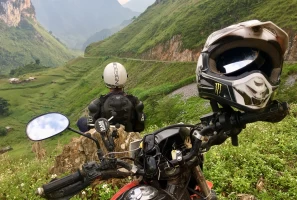
Vietnam motorcycle tour rider riding through a remote mountain road under changing weather conditions
Overwhelming realities on the road
Constant horn usage: In Western countries, honking often signals anger. In Vietnam, it is a way of saying “I am here, do not turn suddenly.” You will need to adapt to living in this noisy soundscape for hours every day.
Risky overtaking and lane encroachment: Do not be surprised to see buses overtaking on sharp mountain bends. Observation and avoidance skills are essential.
Inconsistent road signage: Narrow village roads often lack clear signs, or signs are hidden behind trees. Getting lost or entering restricted roads is common.
→ Explore more Top 08 Scenic Destinations For Vietnam Motorbike Tour
3. Vietnam’s Weather: Harsh and Highly Unpredictable
Weather is one of the biggest challenges on a Vietnam motorcycle tour. Unlike traveling in an air-conditioned car, you are exposed directly to nature for many hours, leading to extreme physical fatigue and making this experience unsuitable for travelers used to resort-style holidays.
Facing climate extremes
Extreme heat of 38 to 40 degrees Celsius: Especially in central and southern Vietnam during the dry season, intense heat can quickly cause dehydration, exhaustion, and heatstroke without proper clothing and hydration.
Sudden heavy rain: Vietnam’s rainy season often brings intense downpours with little warning. Even after checking the forecast, you may find yourself soaked within minutes. Heavy rain makes roads slippery, reduces visibility, and increases accident risk.
Vietnam motorcycle tour reality showing dusty roads and unpredictable conditions beyond Instagram images
Dense mountain fog: Famous riding regions such as Ha Giang, Cao Bang, and the northwest are often covered in thick fog during early mornings or late afternoons, especially in winter. Visibility can drop to just a few meters, requiring high concentration and strong riding experience.
Physical and mental impact
- Riding for hours in such conditions is extremely demanding.
- You may be constantly sweating or shivering from the cold.
- Dust sticks to your body, clothes, and gear.
- Your health can deteriorate quickly without proper preparation.
→ Explore more Vietnam Weather Month 2026: A Complete Travel Climate Guide For Adaptive Travel & Seasonal Hunting
4. High Physical and Endurance Demands
A Vietnam motorcycle tour is not a leisure holiday. It is a physically demanding activity disguised as travel. Many international travelers are shocked by the endurance required.
Physical preparation required
Riding 5 to 7 hours per day: On average, riders spend at least five to seven hours on the bike each day. Your body must endure constant vibration and maintain the same posture for long periods.
Challenging terrain: You will not only ride on smooth highways. Many of Vietnam’s most beautiful routes involve mountain passes filled with potholes, gravel, rough construction sections, and muddy roads. Handling these conditions requires strong focus and muscular endurance in the legs, arms, and back.
Body pain and fatigue: If you are not used to long-distance riding, shoulder, back, and wrist pain can appear after just a few days.
If you think this is a relaxing holiday, you are mistaken. This is an adventure that requires physical preparation.
→ Read more Is It Safe To Ride A Motorcycle In Vietnam?
5. Language and Communication Barriers: When Google Translate Is Not Enough
In major cities like Hanoi or Ho Chi Minh City, English communication is relatively easy. But once you travel into remote regions, the situation changes completely.
Real-world challenges
Limited English in rural areas: In remote villages in Ha Giang, Cao Bang, or the Central Highlands, locals primarily speak their native languages or Vietnamese. Asking for directions, buying food, or finding accommodation can become a test of body language skills.
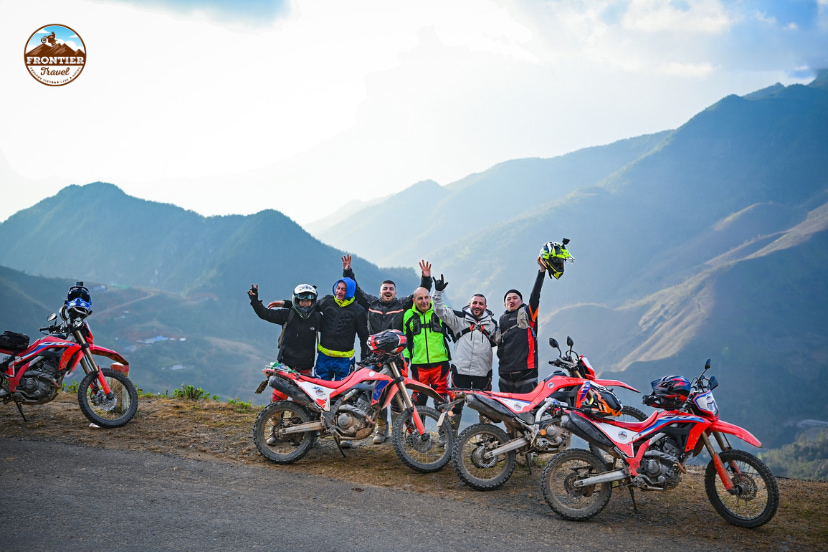
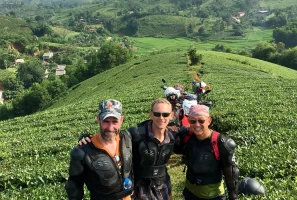
Motorcycle rider enjoying a remote mountain landscape in Vietnam after a challenging journey
Vietnamese-only signage: While major traffic signs follow international standards, temporary warning signs, detours, or landslide notices are usually written only in Vietnamese. Not understanding them can lead to confusing or even dangerous situations.
Handling emergencies: Imagine your motorbike breaking down on a deserted mountain pass or getting lost near sunset. Managing such situations without a shared language is extremely challenging for independent riders.
→ Explore more Vietnam Natural Wonders: A Journey Through Cinematic Routes And Landscapes
6. Not Suitable for Comfort Seekers
If your idea of a perfect holiday involves complete relaxation by a swimming pool, Vietnam motorcycle tours can be a shock. This journey is for adventurous dreamers, not for travelers seeking five-star service.
Reality of accommodation on remote routes
Simple guesthouses and homestays: In highland villages or border towns, “luxury” often means a clean bed and a roof over your head. There is no luggage service, no fancy breakfast buffet, and no 24-hour room service.
Basic amenities: You may encounter weak hot water, unstable electricity due to limited infrastructure, or shared bathrooms with other guests.
Food experiences that may not suit everyone: Eating during a motorcycle tour is about refueling, not gourmet dining. Meals are often at small roadside eateries where menus depend on what is available that day. Local flavors may be too strong, spicy, or unfamiliar for travelers accustomed to Western cuisine.
.jpg)
Vietnam motorcycle tour focusing on authentic travel experiences rather than luxury comfort
Clear distinction: Motorbike tour is not a resort tour
Motorbike tour means dust, sweat, and overcoming challenges to reach places inaccessible to regular tour vehicles. Resort or cruise travel offers maximum comfort, enclosed spaces, and full-service experiences.
If you cannot live without air conditioning or worry about getting dust on your hands, a Halong Bay cruise may suit you better than riding mountain roads. On the other hand, if you are willing to trade comfort for genuine freedom, these hardships often become the highlights of the journey.
A professional tour operator will always try to maximize comfort where possible by selecting the cleanest homestays and reliable local restaurants. However, the essence of the journey remains authentic experience, not artificial luxury. Reviewing Vietnam accommodation standards for 2026 can help set realistic expectations before departure.
→ Conquer more Northwest Legends: 7-Day Motorcycle Quest Across Vietnam’s Highest Peaks
7. Comfort: Optimized by Frontier, Without Changing the Essence
Frontier Travel Vietnam always prioritizes: The cleanest available homestays Well-planned rest stops Safe and reputable local food
But we do not turn motorcycle tours into mobile resorts. This is a real experience, not manufactured comfort.
Conclusion: Not for Everyone and That Is Why Frontier Exists
Vietnam motorcycle tours are not for the masses, and Frontier Travel Vietnam does not try to change that.
We exist to: Guide the right people Prepare carefully so challenges are meaningful, not reckless Preserve the authentic spirit of exploration in Vietnam
If you want to understand Vietnam from the inside, accept challenges instead of avoiding them, and value the journey more than comfort, then a motorcycle tour may be an experience that changes how you see the world.