Riding along a Vietnam historic towns motorcycle route is more than just a journey on two wheels. It is a chance to travel through centuries of culture, architecture, and local life. Each historic town reveals its own story shaped by history, trade, and everyday traditions. Exploring these places by motorbike allows you to connect more deeply with local communities and experience Vietnam’s heritage in an authentic and immersive way.

1. Why choose a motorcycle route to explore historic towns
Freedom and flexibility: Traveling by motorcycle allows you to control your pace and itinerary. You can stop anytime to explore an old street, local market, or historical landmark without being tied to fixed schedules.
Easy access to old quarters and narrow streets: Historic towns often have small lanes and restricted areas that are difficult for cars or buses. A motorbike lets you ride directly into ancient quarters and park close to key cultural sites.
Deeper cultural interaction: Motorbike travelers are more approachable to locals. This makes it easier to start conversations, visit family-run shops, observe traditional crafts, and experience authentic daily life.
Stronger connection to the landscape: Riding a motorcycle allows you to feel the environment around you—from changing weather and road textures to the sounds and scents of villages, rivers, and rice fields.
More authentic travel experience: Without barriers like windows or fixed routes, you experience historic towns as they are, not just as tourist attractions. This helps you understand their cultural and historical context more naturally.
2. Best time to ride through Vietnam’s Historic towns
Vietnam stretches over a long north–south axis, and each region has its own climate, landscape, and cultural rhythm. Understanding seasonal differences by area helps riders enjoy safer roads, clearer scenery, and more authentic local experiences. Below is a regional guide to help you plan the ideal riding time for each historic destination.
Northern Vietnam: Best from October to April
Northern Vietnam offers some of the most culturally rich and visually dramatic historic routes, but weather conditions vary greatly throughout the year.
From October to November, the weather is cool and dry, making it an excellent time to ride through ancient villages such as Duong Lam, where laterite houses and village gates reveal traditional Red River Delta life. The clear skies also enhance rides around Hoa Lu Ancient Capital, especially when exploring limestone valleys and rural backroads.
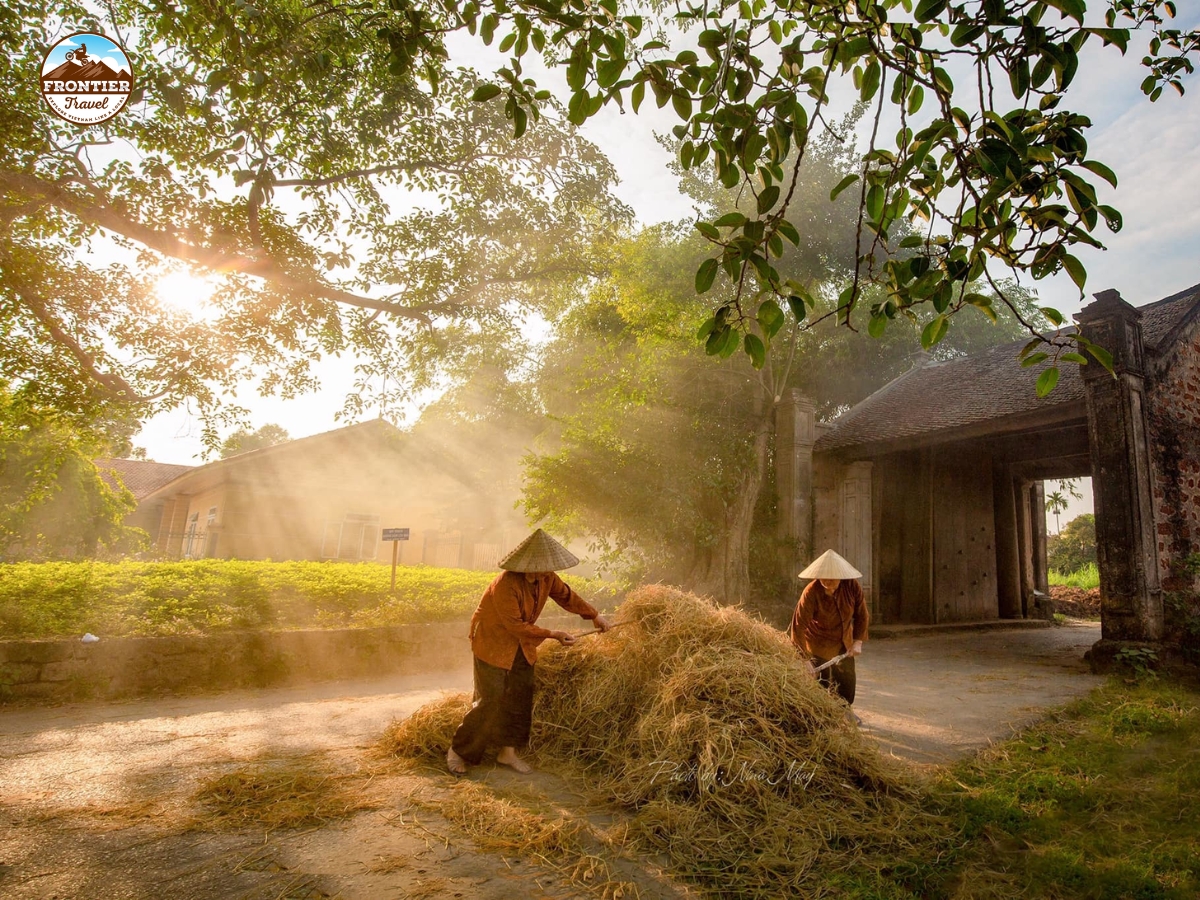
Gentle morning sunlight filters through the trees, creating a clear and peaceful scene in Duong Lam Ancient Village.
December to February brings colder temperatures, particularly in mountainous areas like Ha Giang or Sapa. While mornings can be foggy and chilly, this season is ideal for riders who enjoy quiet roads and misty landscapes that add a timeless atmosphere to historic mountain towns.
From March to April, spring arrives with mild temperatures and blossoming scenery. This is one of the best periods for long-distance motorcycle routes from Hanoi toward historic northern towns, combining pleasant riding conditions with vibrant local life.
Note: Summer months (May–September) are generally hot and rainy, increasing the risk of slippery mountain roads and landslides.
Central Vietnam: Best from February to August
Central Vietnam is home to some of the country’s most iconic historic towns and UNESCO heritage sites, making timing especially important for motorcycle travelers.
From February to April, the weather is dry and comfortable, perfect for riding between Hue’s Imperial Citadel and Hoi An Ancient Town. This period allows riders to explore heritage streets, royal architecture, and coastal routes without extreme heat or heavy rain.
May to August offers longer daylight hours and generally stable conditions, ideal for coastal and countryside rides. Early morning and late afternoon rides are recommended to avoid midday heat, especially when navigating historic towns where walking and sightseeing are part of the experience.
For adventure-focused riders, Phong Nha–Ke Bang National Park is best explored from late spring to summer, when caves and forest roads are accessible and river levels are suitable for exploration.
Note: Avoid September to November, as this is the typhoon and flood season, particularly around Hue and Hoi An, where historic streets can be submerged.
Southern Vietnam: Best from December to April
Southern Vietnam has a more stable climate, making it suitable for year-round riding, but some seasons offer better road conditions.
The dry season from December to April is ideal for exploring historic towns and cultural landmarks in the Mekong Delta. Smooth rural roads, low humidity, and clear skies make long-distance rides comfortable, especially when navigating narrow village paths and river-crossing routes.
During this time, riders can combine historic exploration with local life, visiting old pagodas, traditional markets, and colonial-era buildings without weather disruptions.
From May to November, the rainy season brings lush scenery but also frequent downpours. While still rideable, planning shorter daily distances and flexible schedules is recommended, especially when riding through low-lying delta regions.
>>> See more: Top 04 best Vietnam motorbike tours most loved by travelers
3. Suggested motorcycle routes connecting historic towns
Below are some suggested motorcycle routes that connect Vietnam’s most notable historic towns while delivering rich cultural and scenic experiences.
Hanoi – Duong Lam – Ninh Binh – Mai Chau
This route begins in Hanoi, Vietnam’s thousand-year-old capital, where colonial architecture and ancient temples reflect layers of history. Riding west to Duong Lam Ancient Village, travelers can explore traditional laterite houses and rural village life that has remained unchanged for centuries.

Ninh Binh is known for its majestic limestone mountains, peaceful riversand ancient temples.
Continuing south to Ninh Binh, often called “the inland Ha Long Bay,” the route passes through historic temples, limestone karsts, and former royal capitals. The journey ends in Mai Chau, a peaceful valley known for Thai ethnic stilt houses and traditional weaving, offering insight into highland culture and slow-paced rural life.
Note: This suggested route is shared as a travel reference. Frontier Travel Vietnam does not currently offer this itinerary, but you can find similar tours from other tour operators on the market to suit your travel plans.
Hue – Lang Co – Hai Van Pass – Hoi An
One of the most iconic motorcycle routes in Vietnam, this journey connects two UNESCO-recognized historic towns. Starting in Hue, the former imperial capital, riders explore royal tombs, citadels, and pagodas before heading south along the coast.
The route passes through Lang Co Beach and climbs the legendary Hai Van Pass, where panoramic views of mountains and sea create an unforgettable riding experience. The journey ends in Hoi An Ancient Town, a well-preserved trading port known for lantern-lit streets, heritage houses, and vibrant local culture.
Hoi An – Kon Tum – Pleiku – Buon Ma Thuot
For travelers seeking deeper cultural diversity, this route heads inland from the coast into the Central Highlands. Riding through Kon Tum and Pleiku introduces travelers to historic wooden churches, ethnic minority villages, and coffee plantations.
Buon Ma Thuot, known as the coffee capital of Vietnam, adds another cultural layer shaped by Ede and Mnong communities. This route highlights how geography and ethnic heritage influence historic towns beyond the main tourist corridors.
Note: This suggested route is shared as a travel reference. Frontier Travel Vietnam does not currently offer this itinerary, but you can find similar tours from other tour operators on the market to suit your travel plans.
Hanoi – Ha Giang – Dong Van – Meo Vac
This route is ideal for adventurous riders interested in historic highland towns and ethnic culture. Leaving Hanoi, the road gradually climbs into Ha Giang, where ancient villages and dramatic karst landscapes dominate the scenery.
Dong Van Old Quarter, with its stone houses and weekly markets, reflects the trading history of the region. Riding through Meo Vac and the Ma Pi Leng Pass reveals some of Vietnam’s most spectacular mountain landscapes and offers close interaction with Hmong, Tay, and Dao communities.
>>> You can explore our Ha Giang motorbike tours here.
Traveling by motorbike through these heritage landscapes shows that a Vietnam historic towns motorcycle route is not only about moving between destinations, but about experiencing the living history along the way. Each road, town, and encounter adds depth to the journey, revealing how culture, tradition, and daily life are woven into Vietnam’s past and present. For riders seeking meaningful travel, this route offers an authentic connection to the country’s heritage through every mile.
>>> See more: The ultimate Vietnam motorbike tour guide for beginners
FAQs
1. Is Vietnam suitable for historic town motorbike trips?Yes, Vietnam is ideal for exploring historic towns by motorbike.
2. When is the best time to ride historic routes in Vietnam?October to April is best for most regions.
3. Do I need a license to ride in Vietnam?Yes, a valid license or IDP is required.
4. Are historic towns easy to access by motorbike?Yes, motorbikes can easily enter old quarters and narrow streets.
5. Are these routes beginner-friendly?Some routes are easy; mountain routes need experience.
6. How long should a historic motorbike route take?Usually 3–7 days.