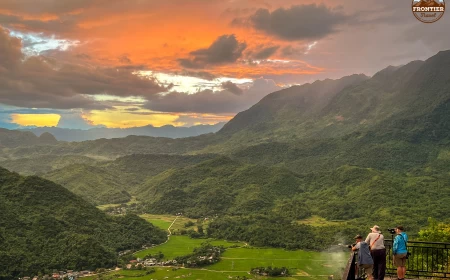
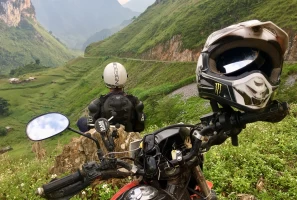
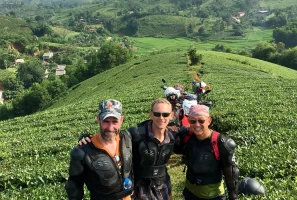
For those captivated by the beauty of the Northwest mountains, the sight of stilt houses lined up along the hills is a sign of the peace and richness of this remote land. Exploring Thai stilt houses by motorbike offers you a close encounter with nature and a chance to experience the simple yet vibrant lifestyle of the Northwest mountain communities.
1.What is a Thai Stilt house?
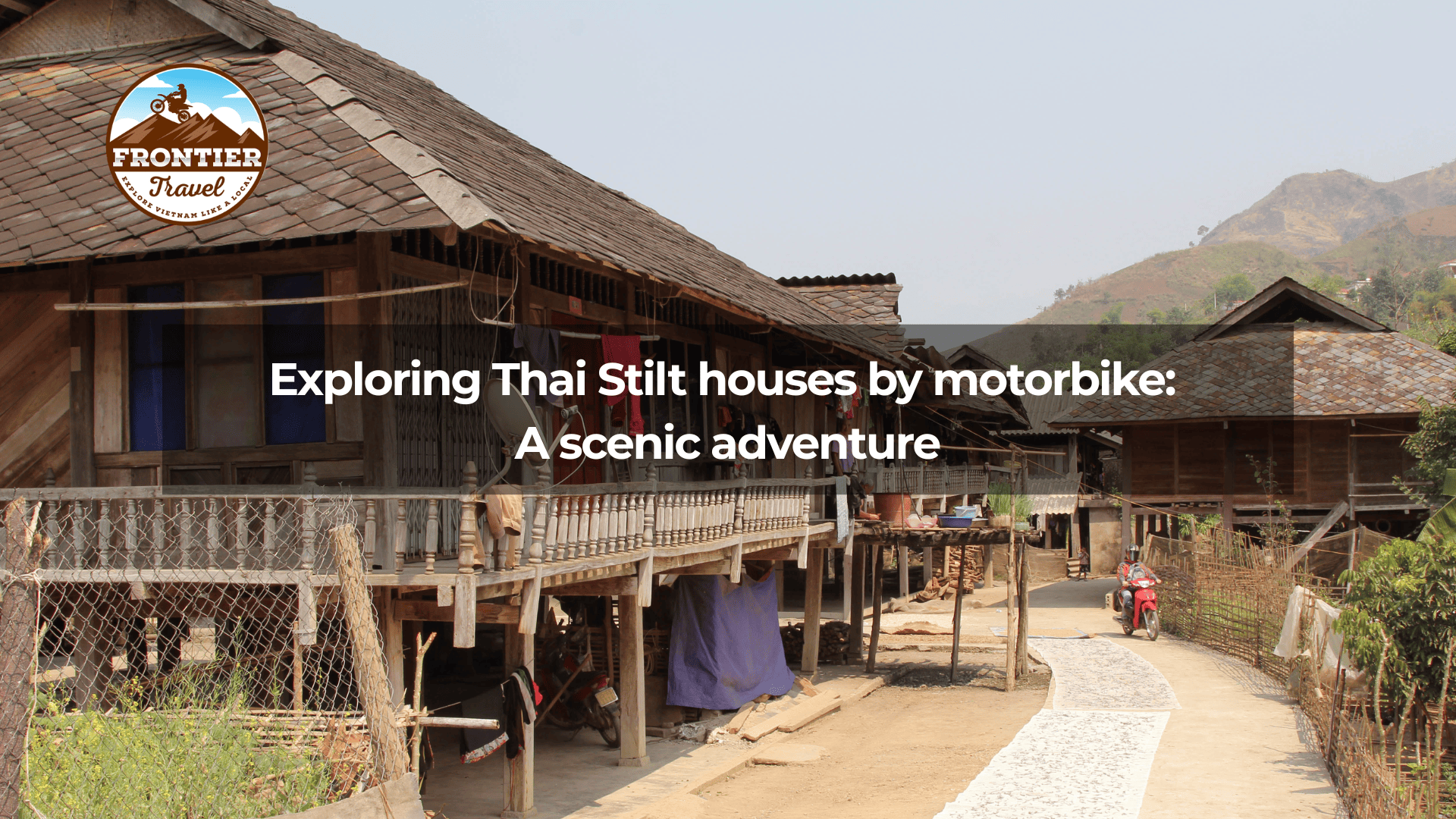
Thai stilt houses are traditional elevated wooden homes built by the Thai ethnic group in Vietnam. They are raised on stilts above the ground to protect against flooding, dampness, and wild animals, while also providing a cool and airy living space.
These houses reflect the Thai people’s culture, craftsmanship, and connection to nature, often featuring intricate woodwork, symbolic decorations, and layouts designed for both family life and spiritual practices.
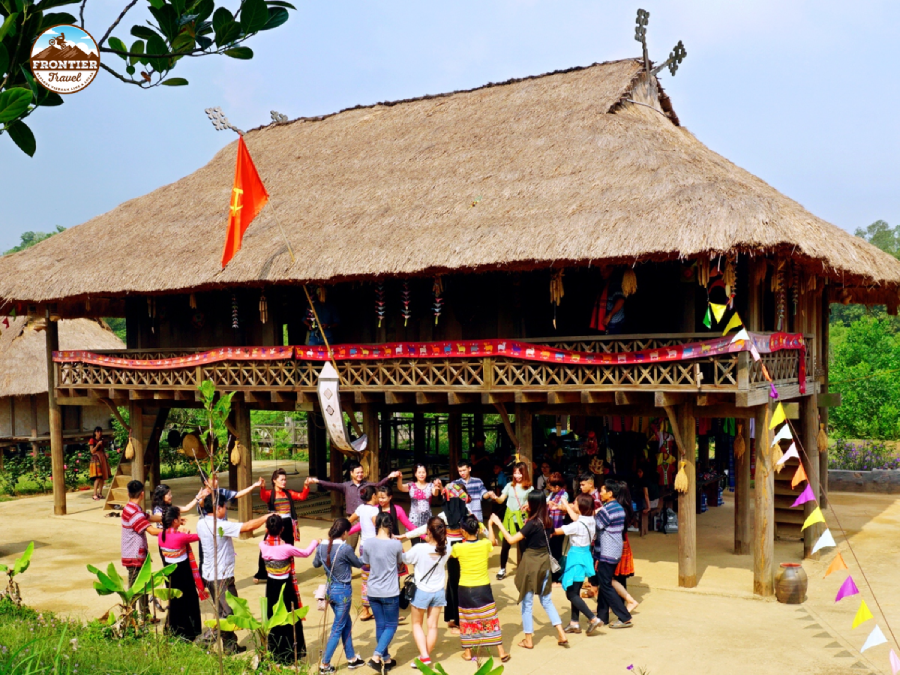
Thai stilt houses are a cultural hallmark closely associated with the daily life and traditional spiritual beliefs of the Thai ethnic people.
2.Characteristics of Thai stilt houses
Traditional Thai stilt houses reflect the cultural values and aesthetic sensibilities of the Thai people. Every element of the house, from its materials to its sacred pillars, embodies a delicate balance of practicality, spirituality and artistry.
Materials: Thai stilt houses are built entirely from high-quality wood, without using any metal; all joints are intricately tied with bamboo strips and rattan.
“Khau cút”: The two ends of the roof feature crossed wooden beams called “Khau cút,” which help block the wind and give the house its distinctive appearance.
Sacred Pillar: Inside the house, there is always a sacred pillar called ‘sau hẹ’ topped with a “chóp nguôm” representing the sky. Hanging from it are symbolic items such as a wooden turtle, rice stalks, male and female spirit figures, and a sword. Carvings on the roof beams and window frames depict natural motifs, reflecting the yin-yang principle and symbolizing strength and family happiness.
Roof: Traditionally, the roof is made of dried thatch, which keeps the house cool and becomes more durable due to smoke from the kitchen. Nowadays, tiles or modern roofing sheets may be used to improve longevity. Houses usually have two kitchens, one inside and one outside.
Number of compartments: Houses typically have 3 or 5 compartments, and sometimes up to 13 compartments to accommodate multiple families. The main room is for receiving guests and male household activities, while the other rooms are divided according to the roles of the occupants and gender.
3. Diversity in Thai stilt house architecture
The stilt house architecture of the Thai people is highly diverse, influenced by geography and cultural exchanges with neighboring ethnic groups. In Northwest Vietnam, Black Thai houses typically feature a turtle shell style structure with a pair of khau cut decorations at the ends of the roof ridge, which later evolved into various stylized forms.
In contrast, White Thai houses usually have a four roof design without khau cut. In the mountainous areas of Thanh Hoa, Thai stilt houses commonly have four roofs, two main roofs and two side extensions, mostly without khau cut. In some regions, the ends of the roof ridge are decorated by weaving bamboo panels over the top, known as “đầu mèo” or “vòi voi”.
>> See more: Discover Vietnam’s mountain villages with motorcycle tours in Vietnam
4. Where can these Thai stilt houses be explored?
Thai stilt houses are mainly found in the mountainous regions of Northern Vietnam, where many Thai communities live. Travelers can explore these traditional houses in provinces such as Lai Chau, Yen Bai, Hoa Binh, Son La and Lao Cai.
You can go on a motorbike trip to discover Thai villages tucked away in the majestic mountains, enjoy the fresh air, admire the unique architecture of Thai stilt houses, and learn about the local people's culture and traditions.
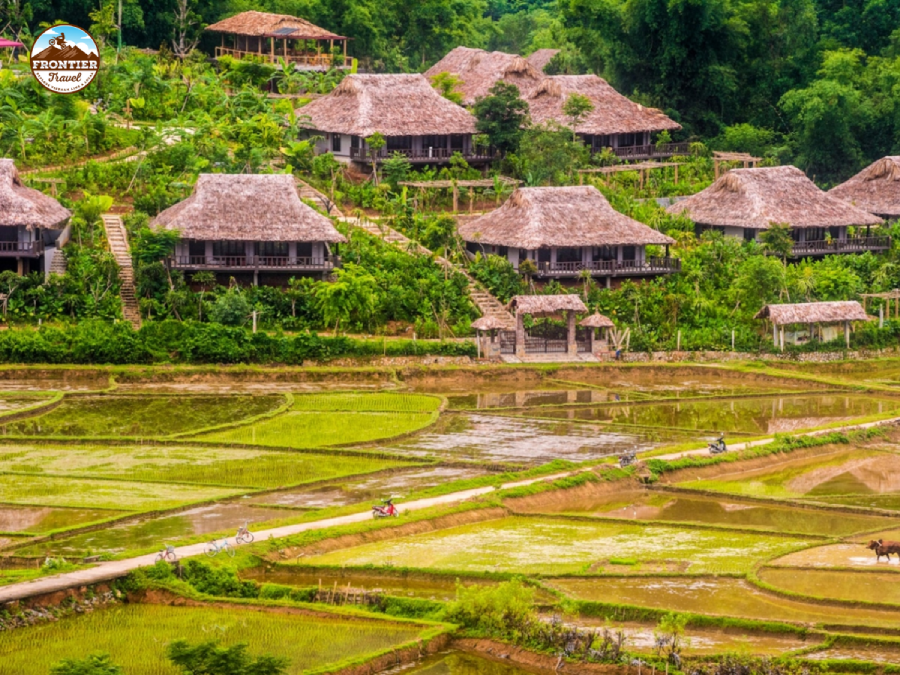
Mai Chau is known for its many traditional stilt houses belonging to the Thai ethnic community.
5. Motorbike tours take you to explore the traditional stilt houses of the Thai people
Here are some tours recommended by Frontier Travel Vietnam, taking you through the majestic mountains of Northwest Vietnam, exploring the traditional stilt houses of the Thai people, and experiencing the unique culture of the local communities.
| Tour | Departure date | Duration | Route | Price |
| An 8-day Ride built for the experienced | 3Rd - 10Th Dec, 2026 | 8 days | Hanoi - Mai Chau - Phu Yen - Nghia Lo - Mu Cang Chai - Sapa - Thac Ba - Hanoi | From $1.720 |
| 7-Day Northwest Motorbike Journey Through Untamed Peaks | 03Th –09Th August, 2026 | 7 days | Hanoi - Phu Yen - Son La - Dien Bien - Lai Chau - Sapa - Thac Ba Lake - Hanoi | From $1.505 |
| 14-Day Journey Through Vietnam: North To South Adventure Along The Ho Chi Minh Trail | 24Th February - 9Th March, 2026 | 14 days | Hanoi - Mai Chau - Tan Ky - Phong Nha - Khe Sanh - Hue - Hoi An - Mang Den - Buon Ma Thuot - Nha Trang - Da Lat - Cat Tien National Park - Sai Gon | From $3.150 |
| Vietnam On Big Bikes: 17 Days Of Scenic Riding From Hanoi To Saigon | 17 days | Hanoi - Nghia Lo - Ngoc Chien - Ta Xua - Mai Chau - Tan Ky - Phong Nha - Khe Sanh - Hue - Hoi An - Mang Den - Buon Ma Thuot - Nha Trang - Da Lat - Cat Tien National Park - Sai Gon | From $3.825 |
Thai stilt houses are a distinctive cultural hallmark of the Northwest mountains, reflecting the traditional lifestyle and close connection to nature of the Thai community. If you love exploring unique cultural experiences and have a passion for adventure, don’t miss the motorbike tours that take you through majestic mountains, peaceful villages, and offer an authentic glimpse into the daily life of local people.
6. FAQs
1. What is a Thai stilt house?
A Thai stilt house is a traditional wooden home built on stilts by the Thai ethnic people in Northern Vietnam.
2. Why are Thai stilt houses built on stilts?
They are elevated to protect against flooding, humidity, and wild animals, while allowing good airflow.
3. What materials are used to build Thai stilt houses?
They are mainly built from natural wood, bamboo, and rattan, without using metal nails.
4. What is “khau cút” in Thai stilt houses?
“Khau cút” is a pair of crossed wooden beams on the roof, symbolizing protection and cultural identity.
5. Are Thai stilt houses still used today?
Yes, many Thai families still live in stilt houses, especially in rural and mountainous areas.
6. Where can travelers see Thai stilt houses in Vietnam?
They are commonly found in Mai Chau, Son La, Hoa Binh, Lai Chau, Yen Bai, and Lao Cai.
7. Can visitors stay overnight in a Thai stilt house?
Yes, many villages offer homestays that allow travelers to stay in traditional stilt houses.
8. Why explore Thai stilt houses by motorbike?
Motorbike tours provide access to remote villages and offer a closer connection to nature and local life.