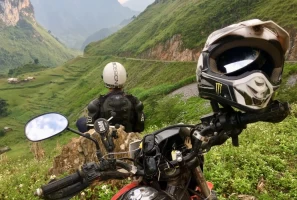
Conquering the sweeping switchbacks of the northern loops requires a unique set of skills that goes far beyond basic city driving, making Vietnam mountain road motorbike safety tips a mandatory study for any adventure seeker. To help you navigate these jaw-dropping crests with total confidence and zero mishaps, Frontier Travel Vietnam has compiled the ultimate survival blueprint for tackling highland topography.
1. Golden Vietnam mountain road motorbike safety tips for highland riding
Ascending the massive step-topography of the northern border provinces introduces demanding technical challenges that test the physical endurance of both rider and machine. Standard commuting practices fail completely when applied to steep alpine gradients that drop hundreds of vertical meters within a single valley sector. Frontier Vietnam Travel trains adventure enthusiasts to handle these immense elevation shifts through precise body weight distribution and strategic gear selection.
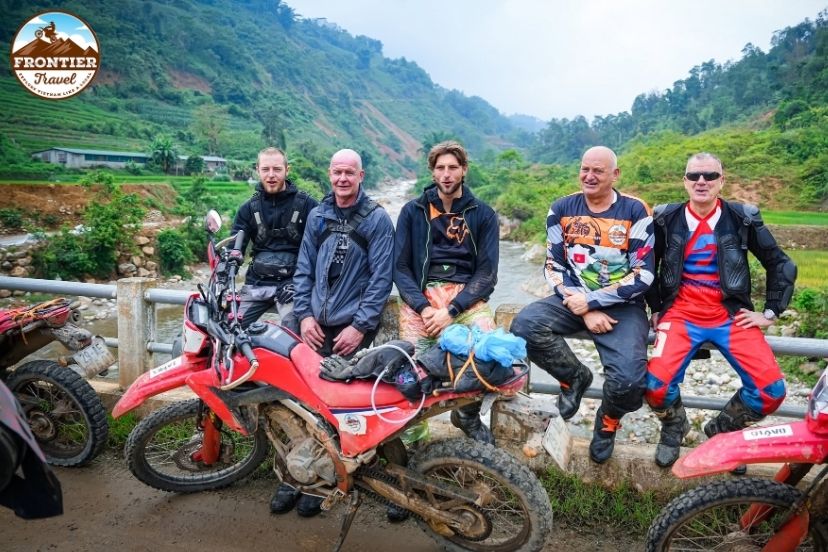
1.1. Using engine braking correctly to prevent brake fade on steep descents
Riders navigating continuous fifteen percent downhill gradients must never rely solely on their mechanical friction brakes to regulate speed. Continuous application of the front and rear levers generates extreme thermal expansion, causing hydraulic fluid vaporization and sudden, catastrophic brake fade.
Reviewing foundational Vietnam mountain road motorbike safety tips reveals that operators must instead select a low gear ratio like second or first gear to exploit natural vacuum compression. This tactical mechanical constraint allows the machine to maintain a steady velocity under forty kilometers per hour without transferring excessive thermal loads to the brake pads.
1.2. Maintaining the ideal lane positioning when entering sharp blind curves
Tackling the sharp limestone switchbacks of the Dong Van Karst Plateau requires keeping your motorcycle strictly within the outer two-thirds of your designated lane. Hugging the centerline too closely exposes your upper torso to oncoming commercial trucks that routinely cross over the painted boundary lines.
Conversely, drifting too far toward the extreme right edge brings your tires into contact with loose shale deposits and collapsing asphalt shoulders. Practicing defensive Vietnam mountain road motorbike safety tips means maintaining a central buffer zone to give you the necessary lateral space to adjust your leaning angle.
1.3. Managing throttle control on slick asphalt and loose gravel patches
The sudden transition from dry, highly coarse asphalt to damp clay surfaces demands extremely smooth, linear inputs on the twist grip. Abruptly opening the throttle over loose river stone deposits triggers immediate wheel spin, causing the rear tire to lose lateral tracking stability instantly.
Motorcyclists should follow essential Vietnam mountain road motorbike safety tips by maintaining a light, flexible grip on the handlebars while allowing the suspension to track minor surface deviations independently. Keeping your body posture centered prevents minor wheel deflections from turning into uncontrollable high-side tank slappers.
2. Reading the mountain road and anticipating hazards
The structural integrity of remote highland transport routes fluctuates wildly throughout the year due to heavy seasonal agricultural activity and intense seismic settling. A corridor that appears completely smooth during the dry spring months can develop significant structural deficiencies after a single week of heavy transport use.
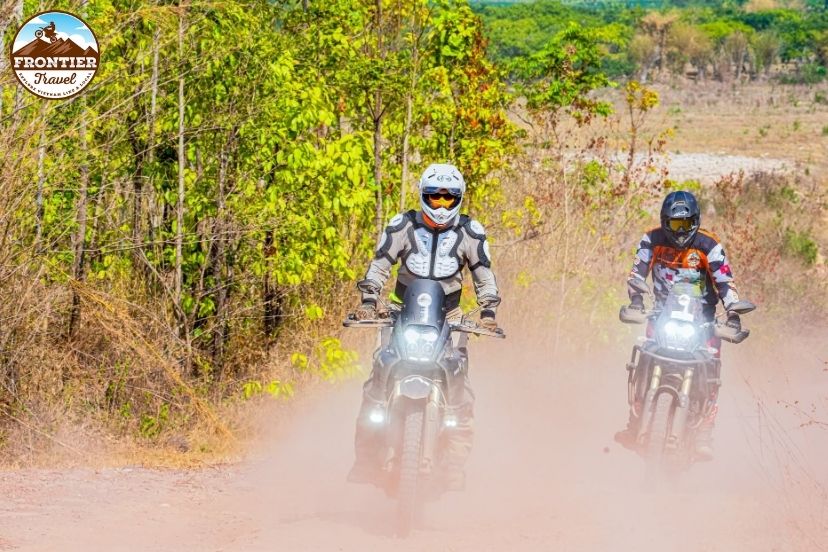
2.1. Staying alert for hidden potholes and sudden deep ruts after rainstorms
Intense water accumulation from high-altitude runoff creates deep erosion channels and hidden structural voids beneath the top layers of provincial highways. These severe depressions are frequently camouflaged by pooling rainwater, making them look like completely flat road segments until impact occurs.
Striking a twenty-centimeter deep pothole at high speed can fracture aluminum wheel rims or rupture front fork oil seals instantly. Adhering to tactical Vietnam mountain road motorbike safety tips requires reducing your cruising speed to under thirty kilometers per hour while searching for clean bypass lines.
2.2. Sharing narrow passes safely with oversized trucks and local buses
Heavy multi-axle freight vehicles and inter-provincial passenger buses dominate the narrow mountain passes, requiring smaller dual-sport motorcycles to yield absolute right of way. Commercial operators sound air horns continuously when approaching blind corners to signal that they are occupying both lanes to maintain climbing momentum.
When encountering these massive vehicles, your immediate Vietnam mountain road motorbike safety tips response should be to slow down and pull onto the paved shoulder safely. Attempting to pass a long commercial vehicle on a blind hill crest is an extremely high-risk maneuver that must be avoided.
2.3. Expecting the unexpected from roaming livestock to slow moving tractors
Remote agricultural communities utilize the national highway corridors as communal thoroughfares for moving herds of heavy water buffalo between mountain pastures. These massive animals possess unpredictable temperaments and will frequently step directly into your traveling path if startled by aggressive engine revving.
Additionally, homemade agricultural tractors moving at less than ten kilometers per hour regularly emerge from hidden dirt access tracks without warning. Proper Vietnam mountain road motorbike safety tips dictate maintaining a wide visual focus that sweeps across the landscape continuously to spot these obstacles early.
3. Dealing with erratic mountain weather patterns
Atmospheric conditions across major geographic gaps like the Khau Pha Pass shift with incredible speed, dropping ambient temperatures significantly within brief intervals. A clear morning can transition into a blinding rainstorm as moisture-laden air masses collide with high limestone peaks.
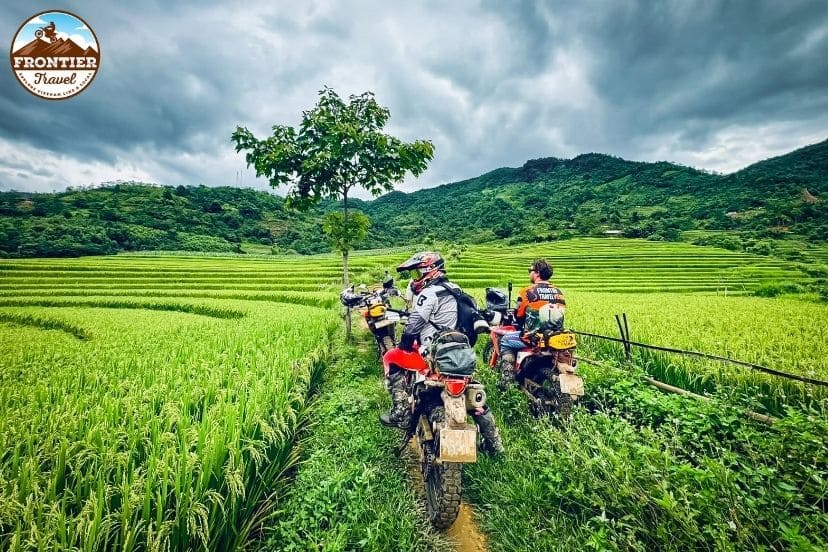
3.1. Riding defensively through dense blankets of high altitude fog
Thermal mountain fog can instantly reduce your horizontal field of vision to less than three meters along high-altitude sections of National Highway 4D. Under these extreme visibility constraints, specialized Vietnam mountain road motorbike safety tips advise activating your hazard lights and following the painted yellow edge lines at twenty kilometers per hour.
Avoid tracking the center white line, as oncoming drivers will be drifting across lanes while struggling to find their way through the mist. If the fog layer grows too thick to navigate safely, park your machine at a roadside cafe until conditions improve.
3.2. Adjusting your speed and visibility gear during sudden tropical downpours
Torrential cloudbursts deposit massive volumes of water onto mountain slopes, reducing tire adhesion values by nearly fifty percent within the first five minutes of rainfall. This initial wetting phase lifts oil residues and fine dust to the surface, creating an incredibly slick film across the asphalt.
Standard Vietnam mountain road motorbike safety tips recommend pulling over immediately to don full-face visors and high-visibility waterproof suits before continuing at a heavily reduced pace. Maintaining smooth, progressive braking inputs ensures your tires retain mechanical traction.
3.3. Recognizing early warning signs of potential mudslides or falling rocks
Saturated mountain slopes along the northern loops represent a major geological hazard that can trigger massive debris flows during the monsoon season. Motorcyclists should follow regional Vietnam mountain road motorbike safety tips by monitoring the upper cliff faces carefully for falling small pebbles or trickling red clay.
If you encounter a section where fresh mud has breached the guardrails, do not attempt to ride through the unstable mass. Turn back immediately to the nearest town and wait for provincial road clearance crews to stabilize the mountain wall.
Additional warning signs include newly cracked asphalt, leaning roadside trees, blocked drainage channels, and streams of muddy water running across the riding lane. These signals indicate that the slope above may still be moving, even if the visible road surface looks passable. Riders should reduce speed immediately, increase following distance, and avoid stopping directly beneath unstable cliffs where loose stones can fall without warning.
4. Preparing your machine for the ultimate altitude test
Operating a motorcycle in remote frontier districts requires total mechanical self-reliance due to the absolute absence of specialized repair facilities over long distances. Treating mechanical preparation as one of your core Vietnam mountain road motorbike safety tips keeps you safe throughout your expedition.
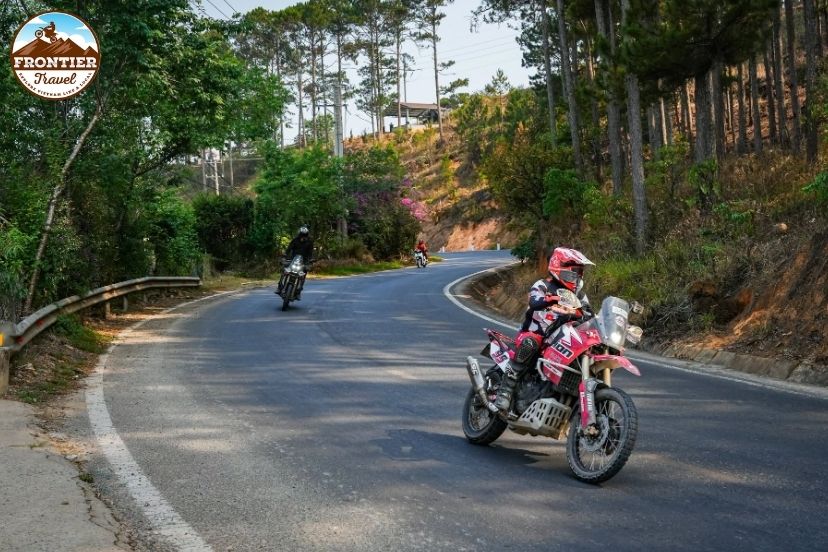
4.1. Apply Vietnam mountain road motorbike safety tips to check your brake
Before climbing into the mountains, you must confirm that your brake pads have at least three millimeters of usable friction material remaining on the backing plates. Tires must display deep tread channels to evacuate water efficiently and should be inflated to the manufacturer's exact specification for carrying heavy luggage.
Utilizing smart Vietnam mountain road motorbike safety tips regarding inflation prevents sidewall flexing, which overheats the inner tubes and leads to sudden tire failure on sharp rocks. Ensuring optimal rubber-to-asphalt contact is crucial for handling extreme leaning angles.
4.2. Keeping your chain lubricated and checking fluid levels daily
Continuous gear changes on steep inclines place massive mechanical stress on your drive chain, requiring daily applications of high-viscosity lubricants to prevent link binding. Check the total vertical chain slack every morning, adjusting it to fall within the optimal twenty-five to thirty-five-millimeter tolerance range.
Additionally, standard Vietnam mountain road motorbike safety tips suggest verifying that your engine oil and brake fluid reservoirs are filled to their maximum markers. Maintaining proper lubrication and fluid levels prevents internal engine overheating when tackling high-altitude passes.
4.3. Ensuring your headlights and horn are fully functional for communication
Your horn functions as your primary acoustic radar signal when approaching blind mountain curves where visibility is completely obscured by dense rock faces. Emitting a loud, double blast before entering a tight corner alerts oncoming vehicles of your presence, prompting them to stay within their respective lanes.
Following these acoustic Vietnam mountain road motorbike safety tips is mandatory for cutting through daytime fog blankets and communicating your position. Verifying the operation of these signaling devices ensures you can communicate your position to surrounding traffic at all times.
5. Frequently asked questions about riding northern passes
Embarking on a long-distance journey through complex highland terrain naturally generates important safety and logistical questions among international motorcyclists. Knowledge remains your single best asset when exploring remote border territories.
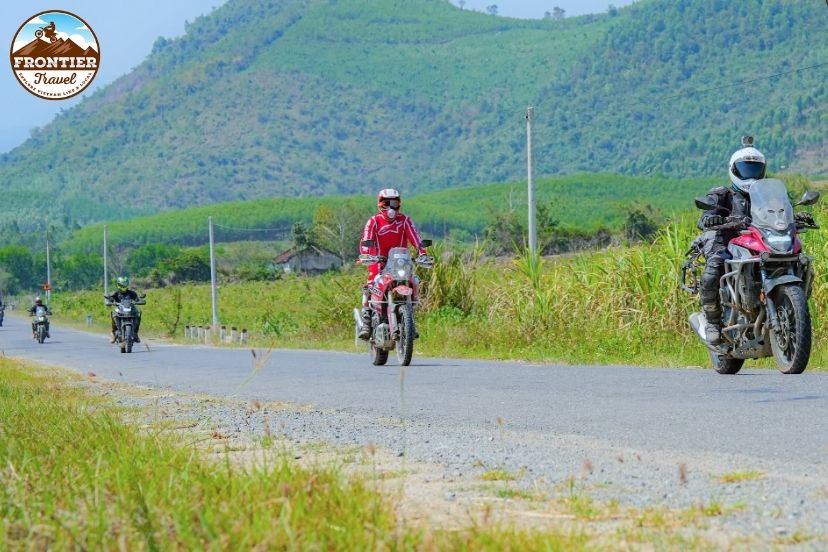
5.1. What are the most physically demanding mountain roads in Vietnam?
The Ma Pi Leng Pass along the Ha Giang Loop is widely considered the most physically demanding route due to its extreme vertical drops and narrow, guardrail-free segments, making it a legendary choice for riders seeking Off-Road Thrills in northern Vietnam. This legendary pass features over twenty kilometers of continuous switchbacks carved directly into vertical limestone cliffs, requiring absolute concentration from the operator.
Learning advanced Vietnam mountain road motorbike safety tips is highly recommended before tackling this terrain, as navigating these specific routes demands excellent throttle control, precise body weight management, and a complete lack of vertigo.
5.2. How do I handle a mechanical breakdown in a remote valley?
If your motorcycle suffers a mechanical failure like a broken control cable or a punctured inner tube, move the machine safely to the right shoulder. Walk to the nearest small settlement and locate a basic repair shop, easily identified by prominent roadside signs reading "Sua Xe May."
Local mechanics are exceptionally skilled at fixing common components and can patch a tire or weld a broken bracket within minutes for a nominal fee. For complex engine failures on a tour package, your lead guide will arrange an immediate swap with a spare machine from the support vehicle.
5.3. Is it safe to ride these high passes during the winter months?
Riding through high-altitude northern passes between December and February introduces significant hazards due to a major drop in ambient temperatures and dense winter fog layers.
Temperatures can plunge to near-freezing levels on the highest ridges, numbing your fingers and significantly slowing your physical reaction times on the controls. If you choose to tour during the winter season, your primary Vietnam mountain road motorbike safety tips should include wearing specialized thermal riding gear and reducing your average daily mileage targets by half.
Conclusion
Climbing into the clouds on two wheels is an exhilarating rite of passage, but your success rests entirely on respecting these Vietnam mountain road motorbike safety tips from the moment you kick into first gear. Connect with Frontier Travel Vietnam today to secure premium, mountain-ready adventure bikes and custom-mapped routes designed by professionals who live to ride the peaks safely.