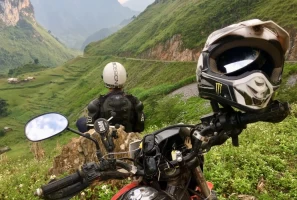
Vietnam mountain pass blind corner technique safety skills are essential for riders exploring Ha Giang, Ma Pi Leng, Hai Van Pass, and Northwest Vietnam roads with Frontier Travel Vietnam. This guide explains how to approach blind corners safely, improve cornering control, and reduce risks while riding Vietnam’s mountain passes.
1. Why Vietnam Mountain Pass Blind Corner Technique Safety is Crucial
Navigating the sweeping loops of the highlands requires a total shift in how you approach the road ahead. Mastering a defensive Vietnam mountain pass blind corner technique is absolutely critical because the margins for error disappear completely when your line of sight is cut off by natural barriers.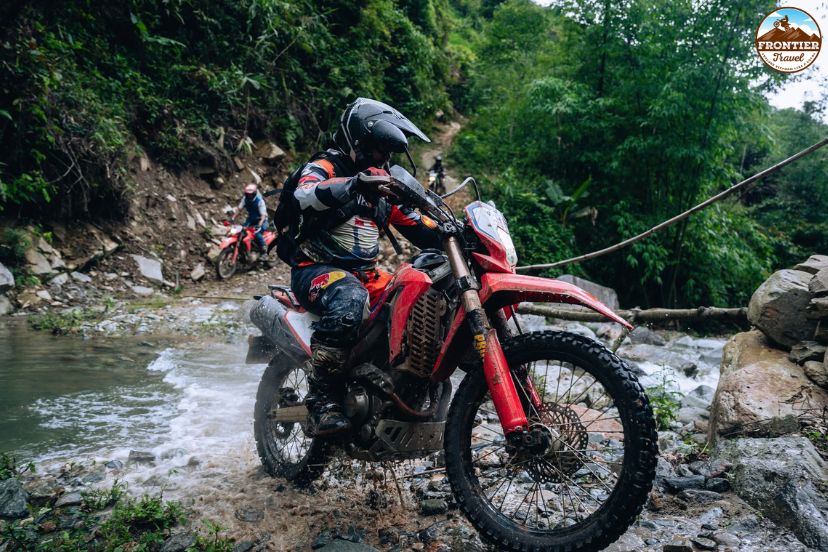
Staying safe through blind curves in the mountains
- Encroaching vehicles: Heavy multi-axle cargo trucks, massive sleeper buses, and local drivers routinely cut completely over the center line into your lane to maintain their own momentum on sharp bends.
- Sudden obstacles: A blind apex in the mountains frequently hides stationary hazards, including broken-down agricultural vehicles, stray livestock, large fallen boulders, or deep asphalt potholes.
- Zero visibility: Towering limestone karsts, sheer cliff faces, and dense roadside jungle foliage make it physically impossible to see oncoming traffic until you are already fully committed mid-turn.
2. Core Mechanics of the Vietnam Mountain Pass Blind Corner Technique Safety System
Maximizing your safety margins involves shifting your position dynamically to buy critical reaction time. Our seasoned road captains at Frontier strictly enforce these four structural adjustments for every unviewable turn to ensure you handle the highlands with complete composure.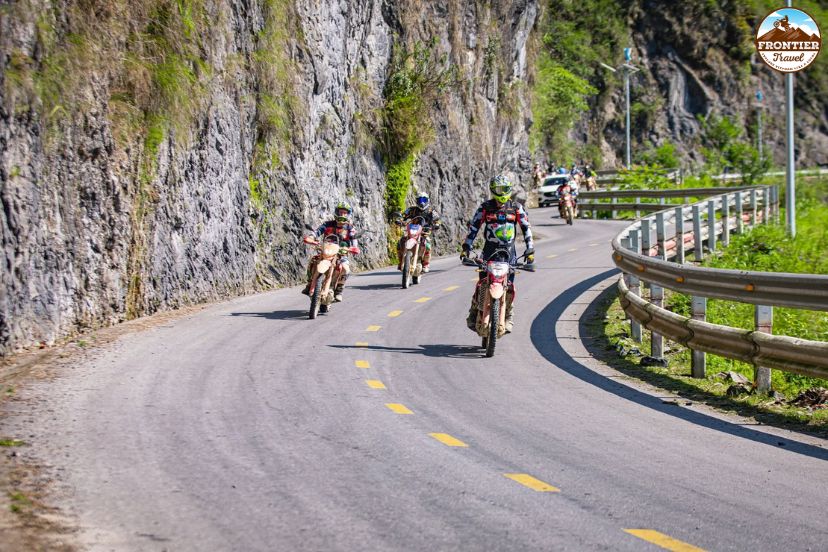
Navigating sharp bends on Northern Vietnam roads
2.1 The "Outside-Inside-Outside" Line
Enter the corner wide near the outer shoulder to open up your field of view and look deeper into the turn. Utilizing this proper Vietnam mountain pass blind corner technique allows you to spot oncoming hazards a few crucial seconds earlier than a tight line permits. Once you see the exit is clear, transition toward the inner apex before drifting back out.
This path ensures you have plenty of physical space to alter your direction safely without making panic corrections while leaned over. It gives your tires a cleaner path and keeps the chassis balanced through the apex.
2.2 Strict Lane Discipline
Never hug, touch, or cross the yellow center line when entering an unviewable mountain curve. You must always assume a massive passenger bus or overloaded truck is rushing down from the opposite direction and occupying half of your lane. Perfecting your Vietnam mountain pass blind corner technique requires keeping your motorcycle centered safely away from oncoming blind spots.
Sticking close to the outer edge of your lane provides a vital buffer zone between your handlebars and oncoming traffic. This small pocket of asphalt is often the only thing saving you from an encroaching vehicle's wide turning radius.
2.3 The Horn Rule
Sound your motorcycle's horn two or three times loudly right before you enter the mouth of any blind corner. Executing this Vietnam mountain pass blind corner technique step projects an audible warning forward around the rock face to alert oncoming traffic of your presence before they can physically see your headlight.
In the quiet highland passes, a crisp horn blast serves as a standard, polite communication tool rather than an aggressive gesture. It prompts oncoming drivers to check their speed and stay within their designated boundaries.
2.4 Speed Control
Complete all mechanical braking and gear downshifting in a stable, straight line well before you lean the motorcycle into the bend. Integrating speed management into your Vietnam mountain pass blind corner technique allows you to maintain a stable, well-balanced suspension platform throughout the entire arc of the turn.
Entering a corner with excessive speed forces you to brake or chop the throttle mid-turn, which can cause your tires to slide instantly. Managing your velocity early keeps your focus entirely on choosing the safest line rather than fighting your bike's momentum.
3. Vietnam Mountain Pass Blind Corner Technique Safety Guide for Different Road Conditions
Weather changes and surface debris drastically alter your tire traction. Applying a customized Vietnam mountain pass blind corner technique to the changing elements ensures your tires stay firmly planted on the tarmac no matter what the terrain throws at you.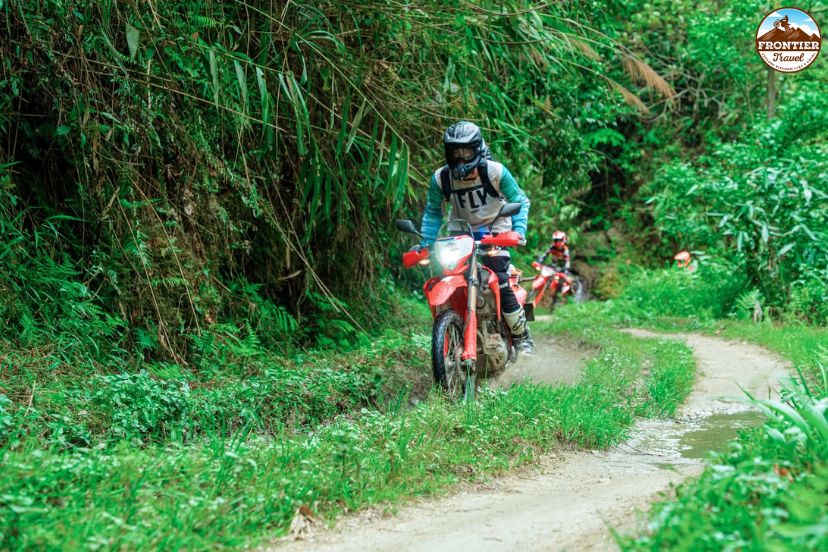
Defensive riding strategies for mountain pass corners
3.1 Riding During Foggy Conditions
Thick mountain fog drops visibility dramatically, compounding the natural dangers of an unviewable apex. When the cloud layer settles on the pass, it completely masks the road geometry and hides oncoming headlights until they are dangerously close.
Adapting your Vietnam mountain pass blind corner technique here means cutting your entry speed by more than half and significantly increasing your following distance behind the leader. This slower pace provides the necessary reaction cushion to handle obstacles that suddenly emerge from the whiteout.
3.2 Riding on Wet Roads
Monsoon rains and damp mountain mist leave a greasy, low-friction film across the asphalt that reduces tire traction during aggressive cornering. Leaning your bike too deeply on a wet, blind curve invites an immediate low-side slide.
To maintain your Vietnam mountain pass blind corner technique safely on wet surfaces, apply incredibly smooth, progressive braking inputs and purposefully reduce your bike's lean angle. Keeping the motorcycle more upright maximizes the tire contact patch on slick roads.
3.3 Riding on Gravel or Rough Terrain
Loose stones, construction debris, and broken asphalt regularly pool along the outer edges of mountain bends. Hitting a patch of loose gravel while changing direction can instantly upset your chassis balance and cause a sudden loss of control.
Refining your Vietnam mountain pass blind corner technique on rough surfaces requires exceptionally smooth throttle control and flexible body positioning. Stand up slightly on the footpegs to let the bike move beneath you, and avoid making any sudden, aggressive steering adjustments.
3.4 Riding on Steep Descents
Downhill blind curves are highly technical because the motorcycle's weight transfers heavily onto the front tire, reducing rear traction. Gravity constantly pulls you forward, making it much harder to slow down if a hazard appears mid-turn.
A proper downhill Vietnam mountain pass blind corner technique dictates that you handle speed management by downshifting early into a lower gear to let engine braking control your descent. Avoid entering steep corners too quickly, and preserve your mechanical brakes so they remain cool and effective.
4. Famous Passes to Practice Vietnam Mountain Pass Blind Corner Technique Safety
Testing your road execution requires understanding the specific corridors where natural topography completely cuts off your view of oncoming traffic. Our regional road captains map out the precise geographic zones across the northern highlands where you must deploy defensive cornering strategies.
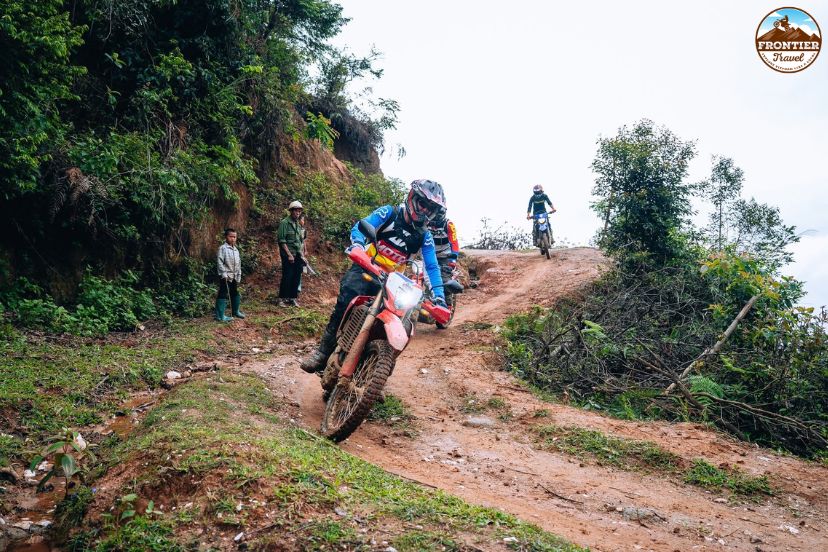
Reading the road ahead on winding mountain routes
4.1 Ma Pi Leng Pass (Ha Giang)
The King of Vietnamese passes on the Ha Giang Loop Motorbike Tour features exceptionally tight, narrow cliffside bends with sheer drop-offs into the Nho Que River canyon. Navigating these sweeping limestone walls while executing a proper Vietnam mountain pass blind corner technique ensures you never find yourself surprised by sudden oncoming tourist traffic.
- The Danger: Exceptionally tight, narrow cliffside bends with sheer drop-offs and heavy tourist traffic.
- The Application: Use a slow entry speed, maximize your horn usage before the rock face, and stay firmly planted in the right-hand lane tracking the mountain wall closely.
4.2 O Quy Ho Pass (Lao Cai to Lai Chau)
As one of the longest and highest mountain passes in northwestern Vietnam, this high-altitude highway on a Northwest Vietnam Ride features continuous sweeping blind corners that can test any rider's endurance. Implementing a strict Vietnam mountain pass blind corner technique along this route is essential for managing the high-speed heavy freight trucks that cross the provincial border.
- The Danger: Long, continuous sweeping blind corners coupled with high-speed heavy freight trucks.
- The Application: Maintain a wide entry line on the right shoulder to spot oncoming sleeper buses as early as possible before cutting toward the apex.
4.3 Khau Pha Pass (Yen Bai)
This rugged giant is notorious for its sharp, blind switchbacks that climb directly through dense cloud cover and unpredictable weather layers. Perfecting your Vietnam mountain pass blind corner technique on this slick surface helps you maintain absolute chassis balance when traction limits drop suddenly.
- The Danger: Blind, sharp switchbacks frequently made worse by low-hanging cloud cover and damp asphalt.
- The Application: Combine smooth engine braking with a forward-leaning posture to control your entry speed safely through wet, blind apexes.
Mastering the unpredictable curves of Ma Pi Leng and the massive switchbacks of Khau Pha requires expert guidance and a bulletproof road plan. Join Frontier Travel Vietnam for guided mountain riding adventures and improve your Vietnam mountain pass blind corner technique safety skills on some of the country’s most scenic and challenging roads.
5. Common Mistakes in Vietnam Mountain Pass Blind Corner Technique Safety
Failing to modify your cornering line when approaching unviewable curves can quickly leave you exposed to oncoming heavy vehicles. Avoid these three frequent rider blunders to keep your mountain transit seamless: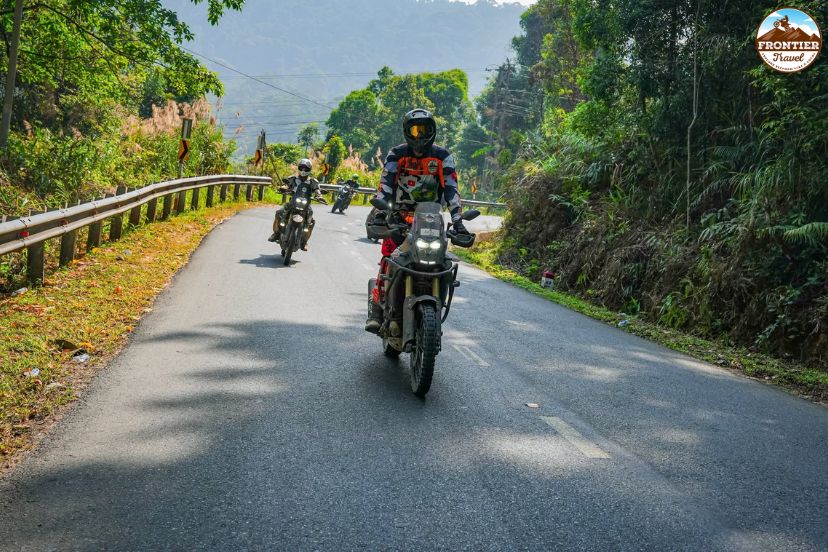
Motorbike rider positioning before a blind turn
- Apexing Too Early: Cutting inward toward the corner too soon severely blinds your view of the exit. This premature turn leaves you completely vulnerable to oncoming vehicles cutting into your lane, showing why a wide entry is a core component of a sound Vietnam mountain pass blind corner technique.
- Braking Hard Mid-Turn: Grabbing a handful of front brake while leaned over on a blind corner instantly straightens the motorcycle up. This sudden momentum shift forces your bike directly into the opposite lane of traffic or off the unprotected cliffside edge.
- Relying Solely on Your Mirrors: Motorcycle mirrors have massive physical blind spots on sharp mountain curves due to the extreme angles of the road. Always rely on a quick, active head check before altering your line or position when executing your Vietnam mountain pass blind corner technique.
6. Applying Vietnam Mountain Pass Blind Corner Technique Safety to Frontier Fleet Bikes
Matching your motorcycle's physical dimensions and mechanical power to unviewable curves is the key to maintaining a stable trajectory. At Frontier, we analyze how each bike behaves mid-turn so you can execute every maneuver smoothly.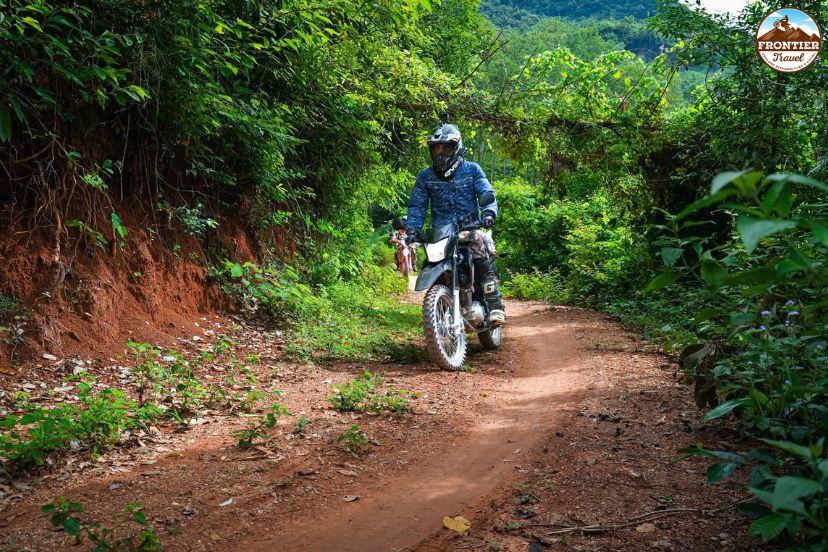
Approaching a hidden curve on a mountain road
6.1 Honda CRF300L (Newest Version)
This modern dual-sport machine gives you a distinct advantage on sharp mountain curves due to its long-travel suspension and upright ergonomics. Applying a proper Vietnam mountain pass blind corner technique on this model relies on maximizing your elevated viewpoint.
- Official Specs: Packing 27 bhp with a nimble chassis weighing 153 kg and a tall 34.8-inch (885mm) seat height.
- The Tip: Leverage its high seating position to look completely over low barriers and mountain bushes, helping you spot oncoming truck roofs before they round the corner.
6.2 Yamaha WR250R
This responsive dual-sport provides immediate handling feedback, making it an exceptional tool for tight, technical mountain switchbacks. Managing this high-clearance machine through a defensive Vietnam mountain pass blind corner technique requires subtle, active balance adjustments.
- The Feature: Responsive, high-clearance dual-sport providing sharp chassis feedback through tight twisties.
- The Tip: Keep your body weight centered and use light, deliberate pressure on the footpegs to smoothly pivot the bike around sudden, unexpected road hazards mid-turn.
6.3 Kawasaki KLX
The incredibly lightweight and forgiving nature of this platform makes it easy to handle when a corner suddenly tightens up. Relying on this bike for a clean Vietnam mountain pass blind corner technique allows you to make split-second positional changes without disrupting your traction.
- Official Specs: Ultra-light frame of 146 kg delivering a manageable 24.7 bhp engine.
- The Tip: Benefit from its effortless maneuverability to quickly drop lower and tighter into your lane if an oncoming truck suddenly encroaches on your personal riding space.
6.4 Yamaha Tenere 700 & Honda Transalp 750 (Big Bike Tours)
Heavy multi-cylinder adventure tourers demand a highly disciplined approach because their weight creates significant momentum as you lean into a turn. Executing an effective Vietnam mountain pass blind corner technique on these large machines requires managing your entry speed early.
- Yamaha Tenere 700 Specs: Power output of 72 hp, weighing 204 kg wet with an 875mm seat height.
- Honda Transalp 750 Specs: Pumping 90.5 hp, weighing 208 kg wet with an 850mm seat height.
- The Tip: These heavy adventure touring bikes carry high forward inertia; you must brake early, downshift to 2nd gear well before the turn, and use a wide line to keep their heavy frames stable.
7. FAQ: Vietnam Mountain Pass Blind Corner Technique Safety
Navigating unviewable bends safely requires clear, immediate decision-making when an obstacle appears. Here are the most critical mountain queries our team handles at Frontier.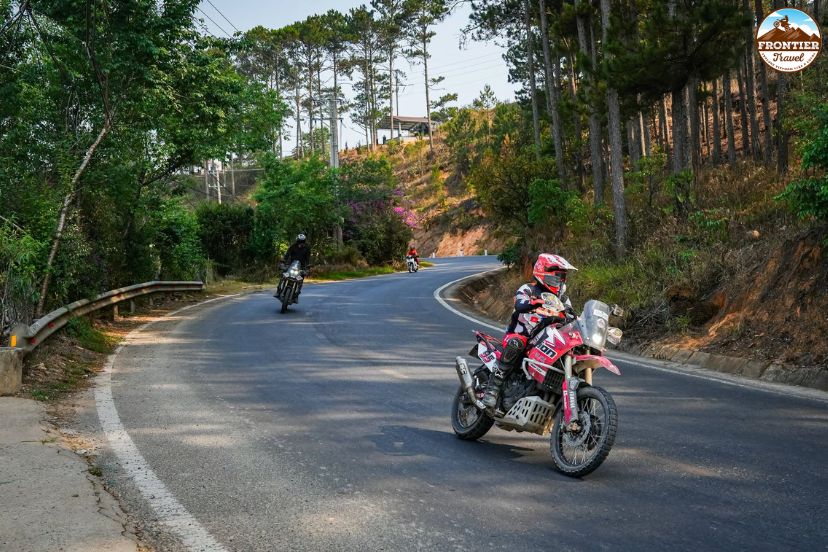
Safe techniques for blind corners on Vietnam mountain passes
7.1 What should I do if an oncoming truck is entirely in my lane mid-corner?
Stand the bike up immediately, apply hard progressive pressure to your brakes, and look directly at the escape gravel zone on the far right shoulder. When executing an emergency Vietnam mountain pass blind corner technique, you must never swerve left into the oncoming lane, as trailing traffic will block your path.
7.2 Is it safe to pass slower moving vehicles right before a mountain bend?
Absolutely not. You must never attempt an overtake anywhere near an unviewable curve because you cannot see oncoming traffic. Always wait patiently behind the slower vehicle until you have a completely clear, straight line of sight on the asphalt ahead.
7.3 How should I handle blind corners at night or during heavy rainfall?
Drop your overall road speed significantly, double your following distance behind the lead rider, and rely heavily on your horn before entering the turn. Adjusting your Vietnam mountain pass blind corner technique for nighttime or rain means watching the reflective road studs closely to track the lane shape through the darkness.
8. Conclusion
Perfecting your Vietnam mountain pass blind corner technique is vital for staying safe on winding highland loops. Maintaining strict lane discipline, dropping your entry speed, and signaling your horn allows you to navigate unpredictable traffic with ease. Contact Frontier Travel Vietnam today to pick your ideal machine, sharpen your mountain skills, and explore the legendary passes with confidence!