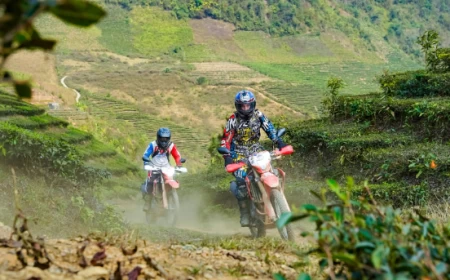
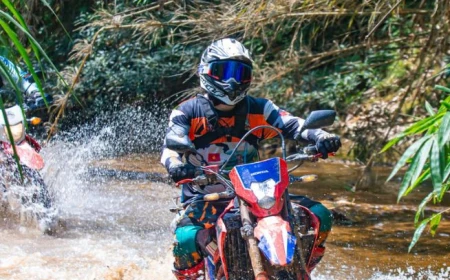
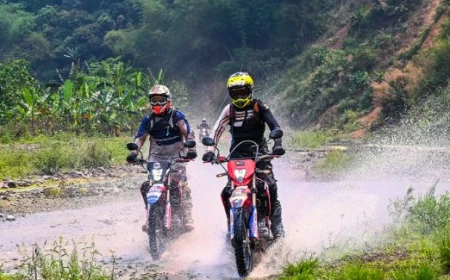
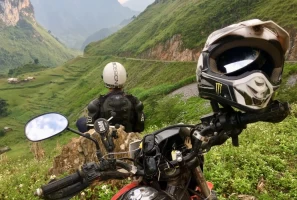
Vietnam motorcycle tours in 2026 remain one of the most practical ways to explore the country, especially for travelers who want to ride beyond main highways and changing terrain with experienced local guides.

In 2026, motorcycle travel in Vietnam is increasingly shaped by changing road conditions, traffic density, and traveler expectations. Well designed tours now focus more on timing, local access, and adaptability than on fixed routes or classic highlight lists.
Why Vietnam motorcycle tours are different from other ways to travel
Vietnam motorcycle tours are considered one of the most effective ways to experience the country because they match Vietnam’s geography and road network better than most other forms of travel. In regions where terrain changes quickly and distances are deceptive, traveling by motorcycle allows the journey to be shaped by real conditions rather than fixed plans.
More importantly, motorcycle travel places the rider inside the landscape instead of moving past it. Speed, direction, and stopping points are dictated by the road itself, not by schedules designed for large vehicles.
>> See more: Why is Vietnam perfect for big bike tours?
Riding beyond main highways in Vietnam
Motorcycle travel changes how distance is experienced. Instead of covering long stretches quickly, riders move through the landscape at a pace that allows frequent stops, small detours, and unplanned breaks.
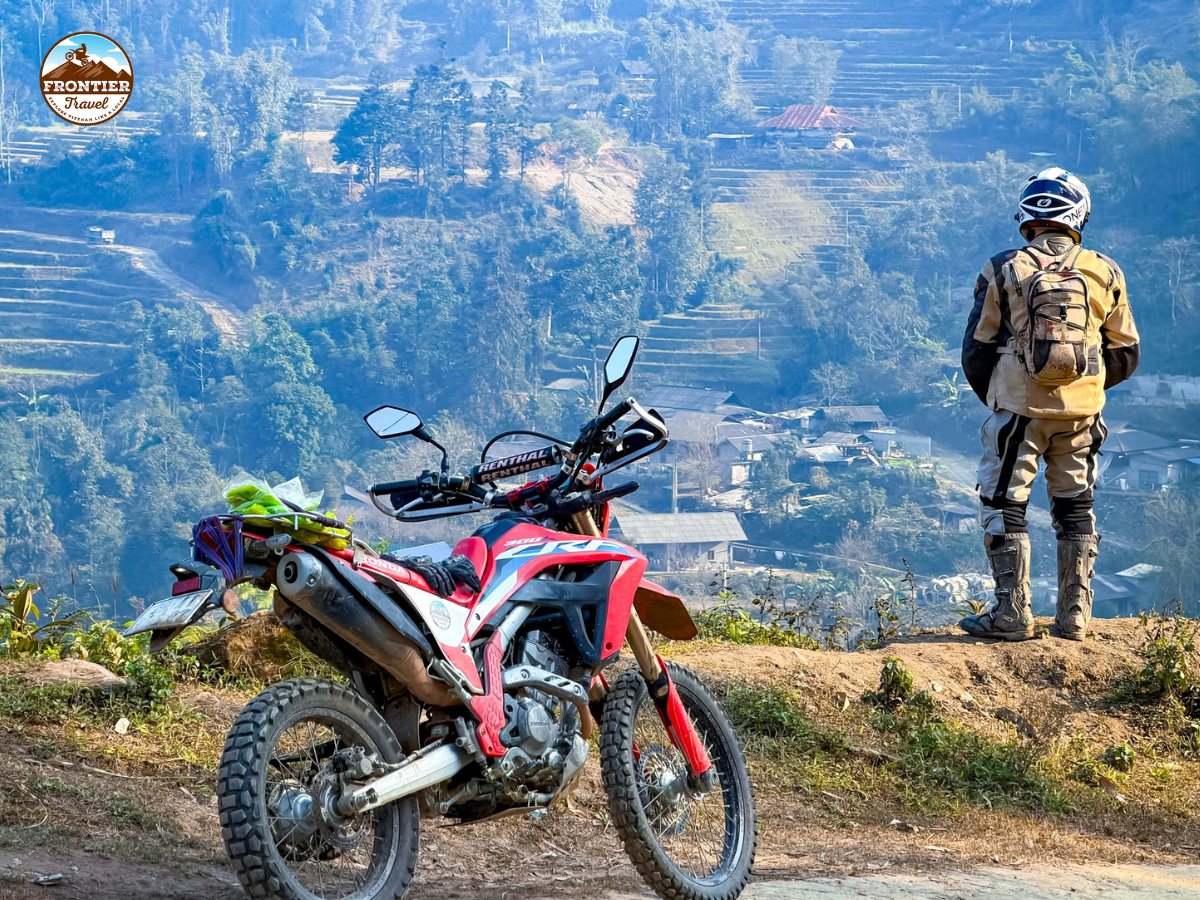
Motorcycle travel places riders directly into Vietnam’s roads, landscapes, and daily movement.
This rhythm makes the journey feel less compressed and less performance-driven. Time is spent riding, observing, and adjusting, rather than rushing to meet predefined arrival times.
Route flexibility based on Vietnam road and weather conditions
One of the main advantages of motorcycle travel is the level of control it gives the rider over daily decisions. Routes, riding time, and rest points can be adjusted based on fatigue, weather, or unexpected conditions.
This flexibility reduces pressure and improves overall comfort, especially on longer journeys where maintaining a sustainable riding pace matters more than completing a set itinerary. This is why motorcycle travel in Vietnam works best when routes and decisions are shaped on the ground, not designed solely in advance.
Access to remote regions and local communities
Motorcycle tours tend to integrate more naturally into local environments. Passing through villages, farms, and small towns happens without the separation created by large vehicles or tightly scheduled stops.
This allows interactions to develop more organically, whether it is stopping at a local market, observing daily routines or simply moving through areas where tourism is not the primary activity.
For travelers considering Vietnam motorcycle tours in 2026, these differences affect not only how routes are chosen, but also how days unfold on the road and what kind of planning and support become essential for a well-balanced journey.
Guided Motorcycle Tours in Vietnam - Riding with local experts
In Vietnam, authenticity on a motorcycle tour does not come from how remote the road looks. It comes from how naturally the journey fits local conditions, timing, and daily life. This is where local experts matter most.

Local experts guide motorcycle tours in Vietnam by managing routes, timing, and on road decisions.
Instead of following a fixed list of highlights, the journey unfolds through local knowledge and timing, often in small but meaningful moments:
Knowing where to stop because something is happening, not because it is listed
Moving through villages and rural areas in a way that feels natural rather than intrusive
Discovering everyday places such as markets, food stops and local gathering points
Adjusting the pace of the day to match local rhythms rather than fixed schedules
The difference between guided and self-guided motorcycle travel is less about navigation and more about attention. Without the need to constantly plan the next move, riders remain present on the road and engage more naturally with their surroundings.
Local guides do not simply lead the route. They shape how experiences emerge through context, timing, and an understanding of how to approach places where tourism is not the main activity.
Types of Vietnam motorcycle tours
Vietnam motorcycle tours 2026 are not built on a single format. Different riders look for different rhythms, levels of flexibility, and types of interaction along the road. Understanding how each tour type works helps travelers choose an experience that fits both their riding style and their expectations.
Group adventure motorcycle tours
Group adventure motorcycle tours bring together riders who often meet for the first time at the start of the journey. The experience is shaped by shared movement on the road, with the group gradually finding a common pace over the first riding days.
Key characteristics
Group motorcycle tours combine riders with different backgrounds and experience levels
The main motorbike route is planned in advance, with small adjustments made during the day
Riding pace is moderated to keep the group moving together
Daily experience develops through regrouping points, breaks and shared time off the motorcycle
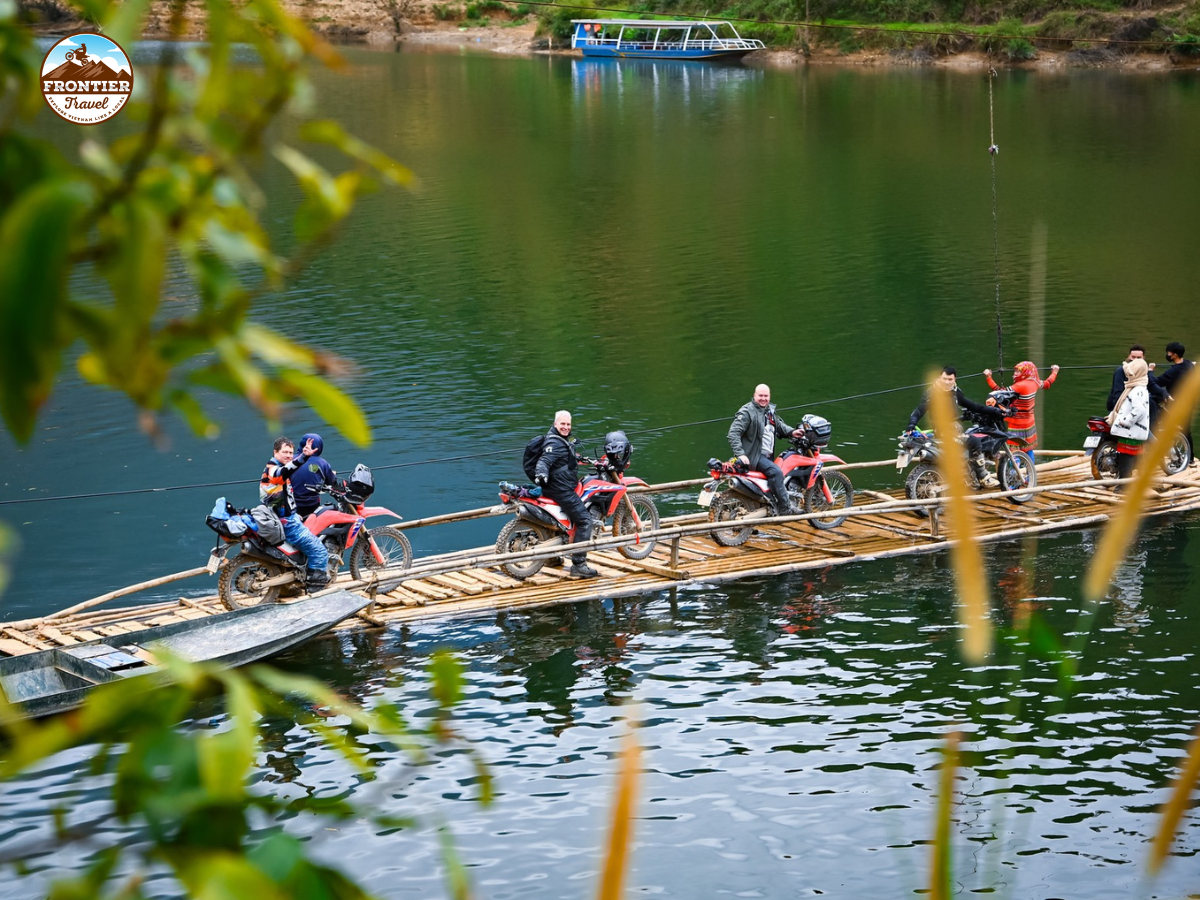
A shared riding day on a group adventure motorcycle tour.
Best suited for
Solo travelers joining an organized Vietnam motorcycle tour
Riders comfortable adapting to a shared pace
Travelers who enjoy the social side of multi-day motorbike journeys
>> See more: The most popular group motorcycle tours in Vietnam for 2026
Private adventure motorcycle tours
Private adventure motorcycle tours are designed for riders who already know each other. Friends, couples or families travel together, and the journey is shaped around how that group prefers to ride and spend time on the motorbike.
Key characteristics
Routes allow more flexibility in daily riding distance and timing
Decisions made during the day affect only the private group
The pace reflects the group’s riding style rather than a fixed schedule
The journey feels personal while still following a clear structure
Best suited for
Small groups traveling together on a private motorbike tour
Riders who value flexibility without removing overall planning
Travelers with similar riding expectations and comfort levels
Custom-built motorcycle adventures
Custom-built motorcycle adventures start without a predefined route. The journey is planned from the ground up, focusing on how riders want each day on the motorbike to feel rather than adapting existing itineraries.
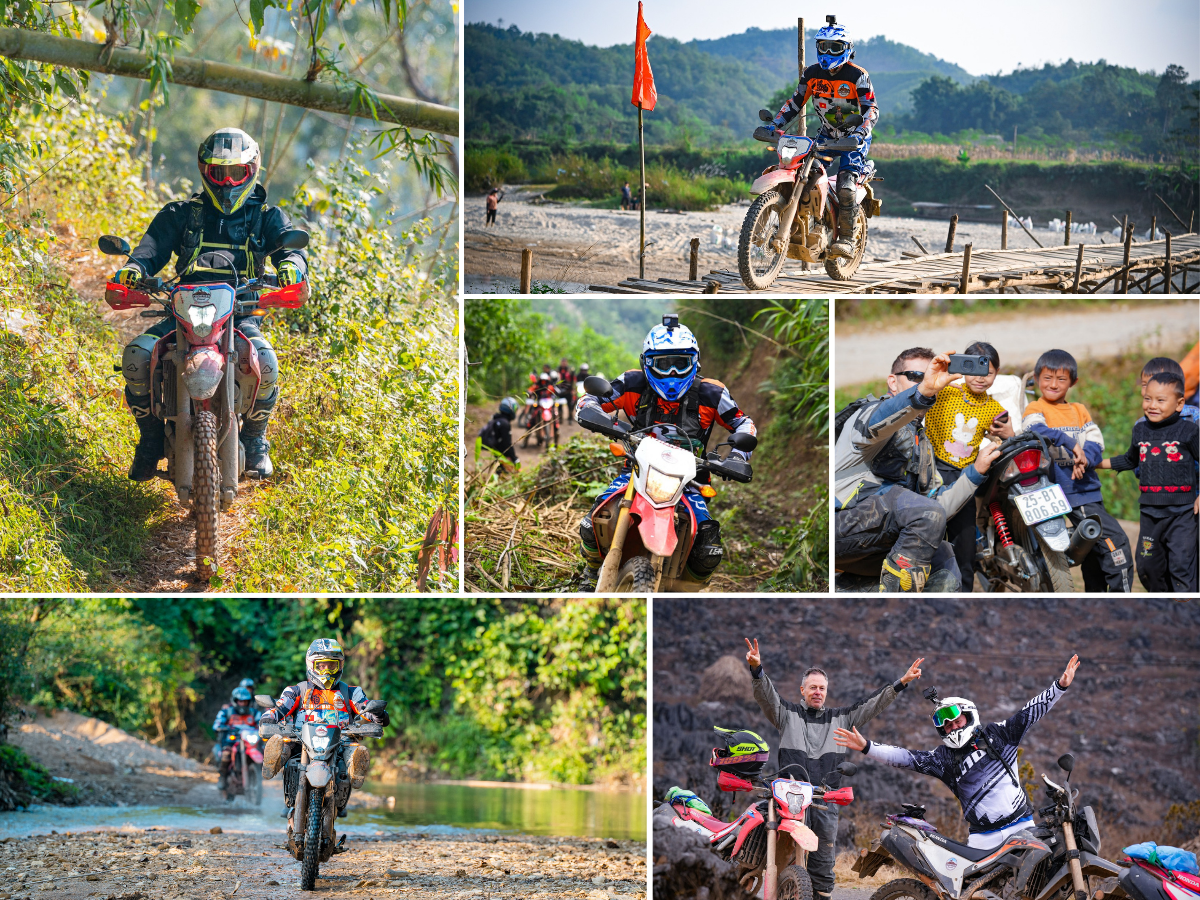
Custom built journeys within Vietnam motorcycle tours 2026 are shaped around the riders, not fixed routes.
Key characteristics
Routes are designed specifically around rider experience and preferred terrain
Daily distance and riding intensity are defined during planning
Fewer major changes are needed once the tour begins
The experience remains consistent from the first day on the motorcycle
Best suited for
Experienced motorcycle riders with clear expectations
Travelers seeking a purpose-built Vietnam motorbike tour
Riders who want the journey shaped around personal riding preferences
Popular Motorcycle Tour routes in Vietnam
Vietnam has a wide range of motorcycle touring routes that run across the country, shaped by its long geography and diverse terrain. Traveling by motorcycle allows riders to experience clear shifts in landscape, road conditions and local life as they move from one area to another.
Vietnam motorcycle tour routes are usually grouped into three regions: Northern Vietnam, Central Vietnam and Southern Vietnam. The sections below outline typical routes and riding experiences found in each region.
>> See more: Top 6 scenic routes for a 3 days motorcycle trip in Vietnam
Northern Vietnam motorcycle routes
Northern Vietnam offers several well defined motorcycle touring zones, each with distinct terrain, elevation, and riding conditions. Rather than following a single route, most northern motorcycle tours are built by combining these regions based on season, rider experience, and desired level of challenge.
Northwest Vietnam routes (Mai Chau - Moc Chau - Mu Cang Chai)
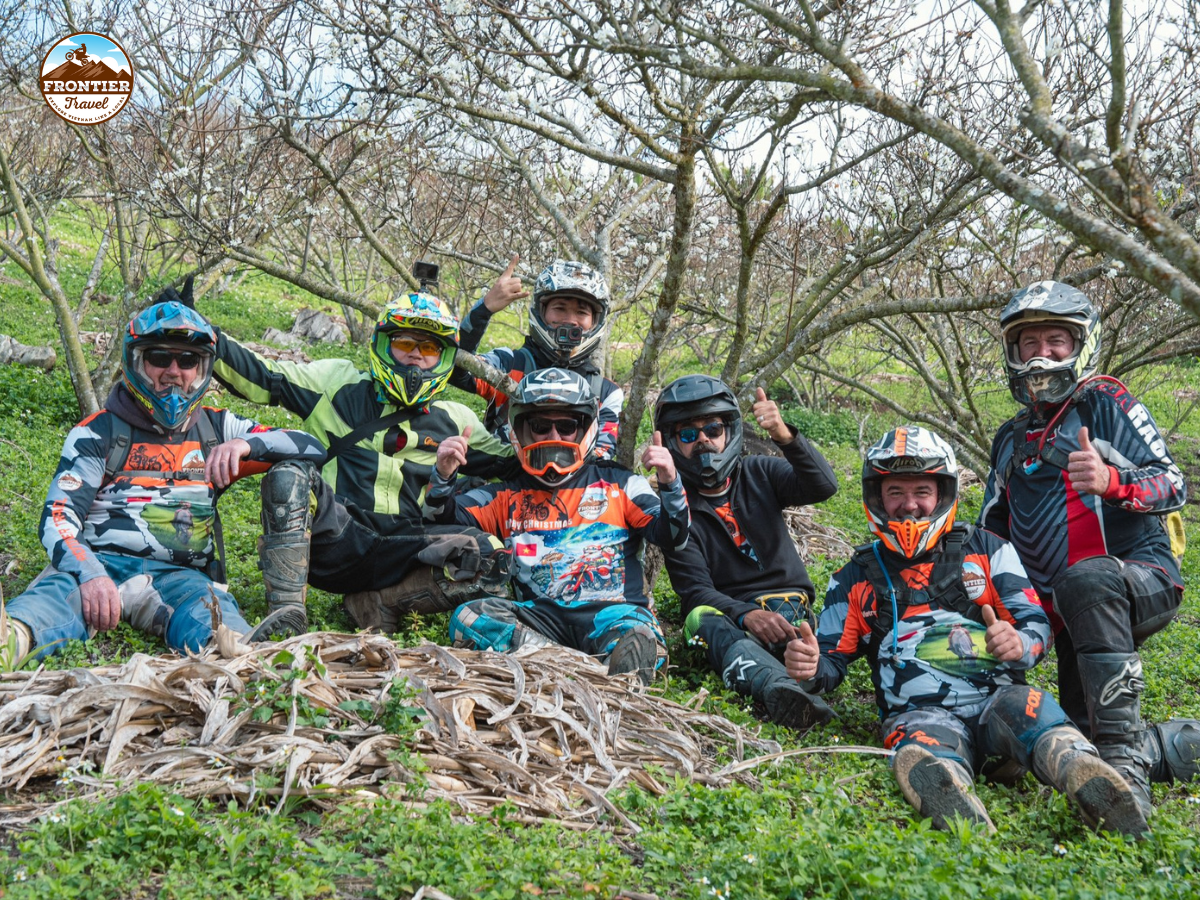
A seasonal stop along the Northwest Vietnam routes in Moc Chau.
Northwest routes run through upland plateaus and mountain valleys west of Hanoi, typically at elevations ranging from 500 to 1,000 meters above sea level. Riding conditions here are varied but approachable, with a mix of paved mountain roads and gentler rural sections.
Rolling highland terrain with long, moderate mountain passes
Curves are frequent but not overly technical, suitable for sustained daily riding
Strong presence of ethnic minority communities, particularly in areas such as Mai Chau, where village life remains closely tied to agriculture
Cooler temperatures than the lowlands, with misty mornings common in higher sections
This region is well suited for riders who want mountain scenery, cultural depth and balanced riding days without constant technical pressure.
Northeast Vietnam routes (Cao Bang - Lang Son Borderlands)
Northeast routes follow limestone mountain systems and borderland roads, with elevations generally between 600 and 1,200 meters. Roads here are quieter and more remote, often passing through sparsely populated countryside.
Gradual elevation changes combined with narrow mountain roads
Long riding days with fewer services between towns
Borderland communities and rural settlements where tourism remains limited
Weather can be cooler and more humid, especially in autumn and early winter
These routes appeal to riders who enjoy immersive, slower paced journeys through less developed regions.
Far north high mountain routes (Ha Giang Loop)
Routes in the far north around Ha Giang represent the most demanding motorcycle touring conditions in northern Vietnam. Elevations frequently reach 1,200–1,600 meters above sea level, with continuous climbs, descents and tight mountain passes shaping each riding day.
Steep gradients and sharp corners on narrow mountain roads
Limited flat sections and sustained time on the bike
Remote highland communities with strong local identity
Cooler temperatures year-round, with fog and cloud cover common at higher elevations
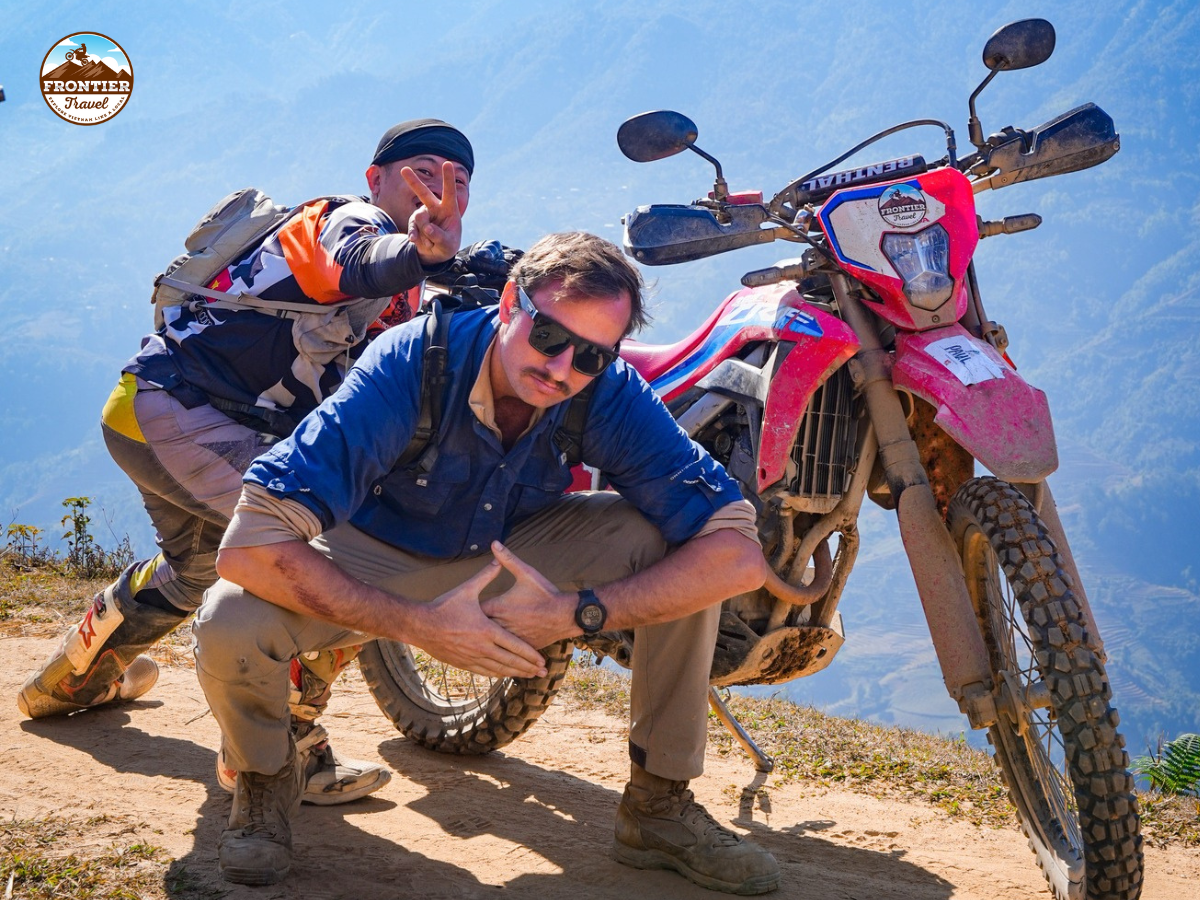
Pausing above the clouds during a Ha Giang riding day.
These routes are best suited for experienced motorcycle riders who are comfortable handling long mountain days and changing road conditions.
|| These regions are often combined differently depending on season, rider experience and tour structure.
>> See more: Ha Giang Loop motorbike tour: Complete guide, itinerary & big bike tips for 2026
Central Vietnam Motorcycle routes
Central Vietnam motorcycle routes are often selected for tours that need long, reliable riding days rather than constant terrain challenges. This region works as a natural transition zone, connecting northern mountains with southern lowlands through a network of inland corridors and plateaus.
Compared to the north, surface quality is generally more predictable, distances between stops are longer, and routes allow riders to maintain a steady pace on the motorbike for most of the day.
Truong Son Mountains & Ho Chi Minh Trail routes
Motorbike routes along the Ho Chi Minh Trail run through the Truong Son range at elevations of roughly 400–1,000 meters. Roads are generally quiet, lightly trafficked, and avoid major cities.
These routes are often chosen for motorcycle tours that plan long riding days (around 180–250 km), where surface quality and road continuity matter more than sharp elevation changes.
Central highlands routes
Motorcycle routes across the Central Highlands (Kon Tum – Gia Lai – Dak Lak area) are shaped by plateau terrain:
Elevations around 500–800 meters, with cooler mornings and evenings
Wider roads and gentler curves, suitable for sustained motorbike travel
Longer distances between towns and fuel stops
These routes favor endurance-oriented motorcycle touring rather than technical riding.
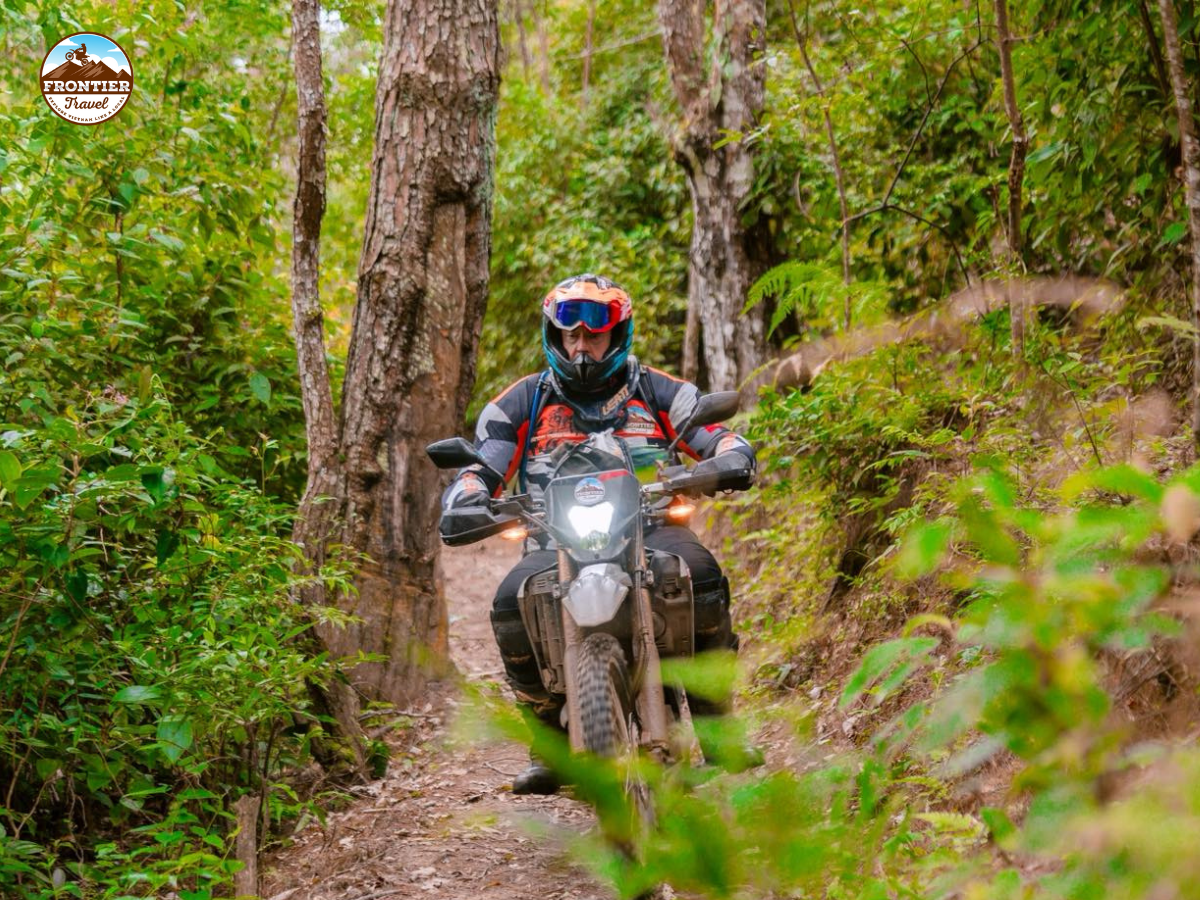
Riding across the open plateau roads of Vietnam’s Central Highlands.
Coastal inland connector routes
Coastal inland motorcycle routes are mainly used to link regions within a tour. They combine flat coastal roads with gradual inland climbs and are often adjusted based on wind and seasonal weather rather than road difficulty.
|| These regions are often combined differently depending on season, rider experience and tour structure.
Southern Vietnam Motorcycle routes
Southern Vietnam motorcycle routes are shaped by low elevation, dense waterways, and rural road networks rather than mountains. Motorcycle travel in this region is less about terrain difficulty and more about navigating everyday movement villages, canals, ferries and agricultural roads that connect local communities.
Compared to the north and central regions, motorcycle touring in the south focuses on shorter daily motorbike distances, frequent stops and a slower riding rhythm.
Mekong Delta routes
Motorcycle routes in the Mekong Delta follow a web of narrow rural roads, small bridges and ferry crossings across flat terrain at 0–10 meters above sea level.
Flat roads shared with local motorbikes and small vehicles
Regular ferry crossings instead of long continuous highways
Constant interaction with local life along canals, markets, and villages
These routes suit motorcycle tours that prioritize observation and local interaction over speed or distance.
Southern highlands & border routes
Some southern motorcycle tours extend toward upland border areas near Cambodia, where terrain rises slightly and traffic thins out.
Gentle elevation changes compared to northern mountain regions
Longer rural motorbike sections with fewer services
Hotter daytime temperatures, especially during the dry season
These routes are often used to add variation to southern motorcycle itineraries without introducing technical mountain riding.
|| These regions are often combined differently depending on season, rider experience and tour structure.
Safety, support and logistics on a Vietnam Motorcycle Tour
On a motorcycle tour, small problems add up quickly if they are not handled early. Clear route management, realistic daily structure and practical support help keep the journey smooth without turning it into a controlled or rigid experience.
Route planning and daily structure
Route planning on a Vietnam motorcycle tour is based on how roads are actually used by motorbikes throughout the day. Traffic flow, surface condition, elevation changes and local movement patterns all influence how long a section realistically takes to ride.
Daily structure is designed to keep motorcycle riding effort stable across multiple days. Distances are calculated to avoid late finishes and to limit fatigue building up from one day to the next.
On-Tour support and coordination
Support on a guided Vietnam motorcycle tour is practical and focused on keeping the journey moving smoothly, not on supervising every action. Responsibilities are clearly divided so riders are not dealing with coordination issues on the road.
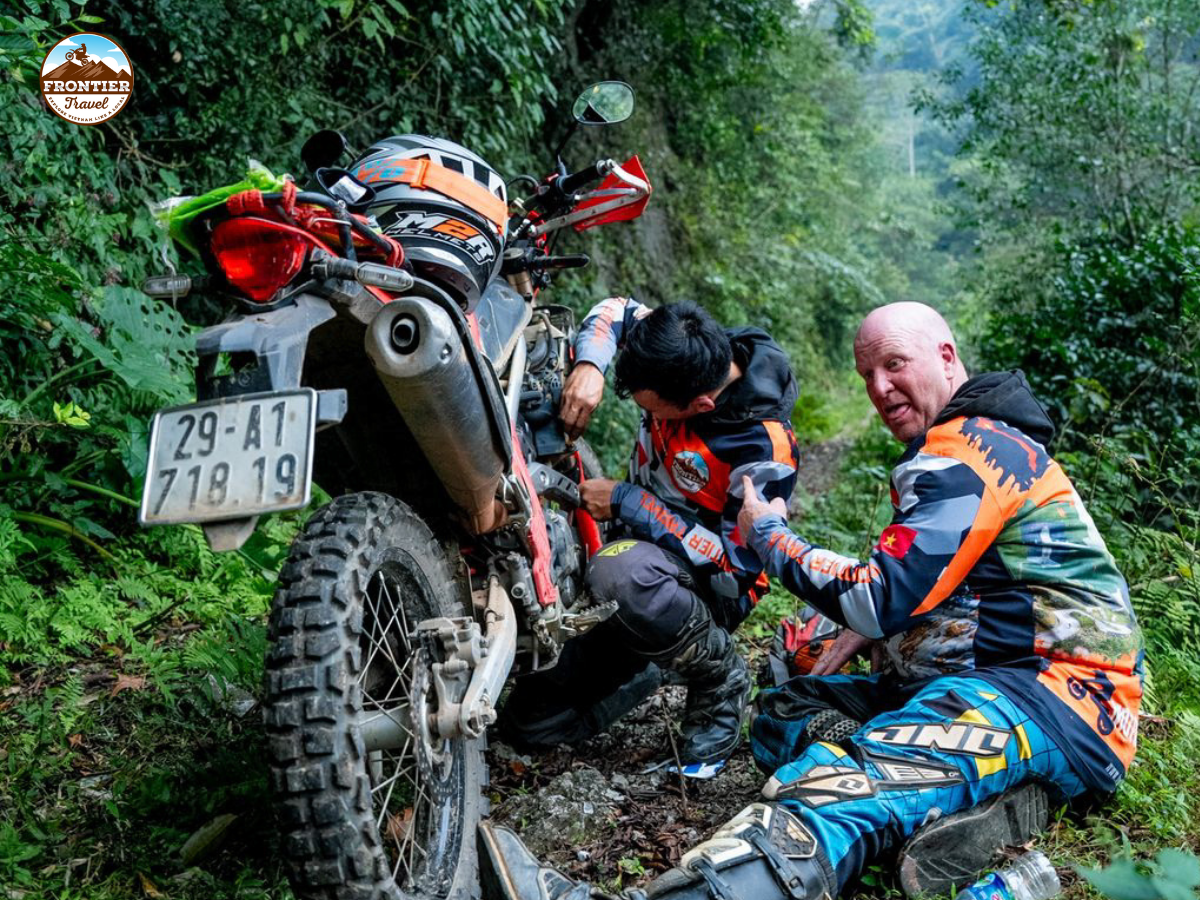
On-tour support in action during a Vietnam motorcycle journey.
A lead guide manages motorcycle routes, timing and on-road decisions
Assistance is available if a motorbike has mechanical issues
Accommodation and fuel planning are handled by the tour team
Local contacts are used for repairs and overnight arrangements
Riders concentrate on controlling their own motorcycles
Logistics and equipment handling
Logistics are organized to remove small but repeated decisions from each motorcycle riding day. Accommodation is chosen close to the planned route and luggage is secured in a consistent setup to maintain balance and comfort on the motorbike.
When logistics are handled consistently, riders spend less mental energy managing details and more attention on road conditions, physical recovery and maintaining riding focus throughout the Vietnam motorcycle tour.
Choosing local experts for a Vietnam Motorcycle Tour in 2026
Vietnam motorcycle tours in 2026 place greater emphasis on local expertise than in previous years. Changing road conditions, denser traffic and more complex route planning mean that the quality of local support directly affects how smoothly a tour operates over multiple days.
Below are practical points travelers should consider when evaluating local expertise for a motorcycle tour in Vietnam.
Understanding of real road conditions
Local experts should be familiar with how specific roads behave, not just where they go. This includes knowing which mountain passes become slow after rain, which rural roads deteriorate seasonally and where traffic congestion regularly builds at certain hours.
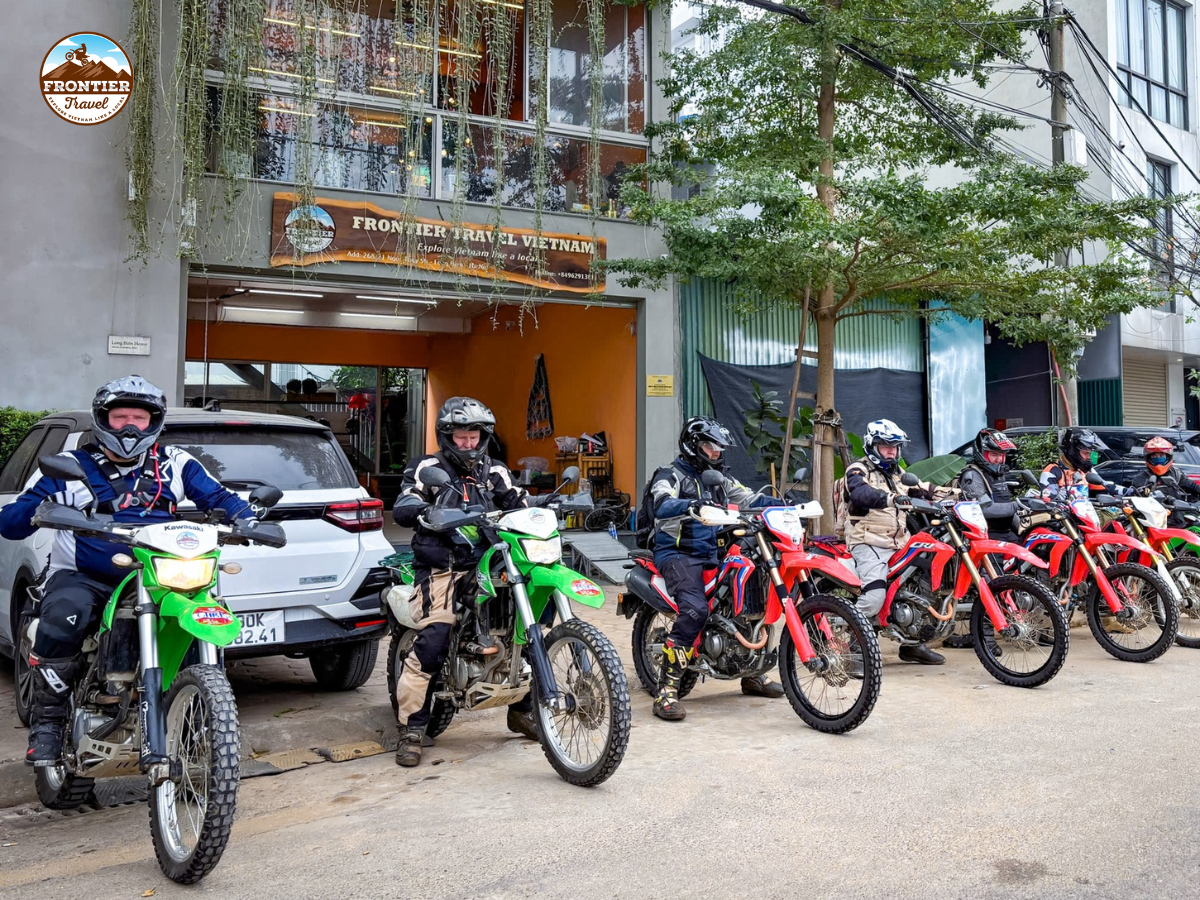
Frontier Travel Vietnam’s local team brings on-the road experience into every motorcycle tour.
On a Vietnam motorcycle tour in 2026, this kind of knowledge affects daily timing, fuel planning and overnight stops. Routes that look efficient on maps often perform very differently once traffic, weather and surface conditions are factored in.
Ability to structure realistic riding days
Well-designed motorcycle tours reflect how long riding actually takes, not how far a destination appears. Local experts should plan days that account for elevation gain, road surface, and cumulative fatigue rather than fixed distance targets.
Consistent daily structure helps riders maintain focus and energy across several days, especially on tours that pass through mountainous or remote regions.
Local access beyond standard tourist routes
Access to local areas is not about reaching isolated places at any cost. It comes from knowing when and how to pass through villages, markets, and rural regions without disrupting daily routines.
Local experts understand which roads are part of everyday movement and which areas require more sensitivity around timing and approach. This awareness allows motorcycle tours to move naturally through local environments rather than treating them as staged stops.
Proven experience designing multi-day motorcycle tours
Local knowledge alone does not guarantee a well-built tour. Experience shows in how routes are combined, how transitions between regions are handled and how daily plans remain workable across changing terrain.
For longer Vietnam motorcycle tours, this planning reduces the need for major adjustments once the journey begins and helps maintain a steady rhythm from the first riding day to the last.
How Frontier Travel Vietnam applies these principles
Frontier Travel Vietnam builds motorcycle tours by combining regional routes, setting realistic daily riding structures, and planning around seasonal and terrain-specific conditions. Tours are designed to remain workable on the road rather than dependent on fixed templates.
This approach allows Frontier’s Vietnam motorcycle tours to adapt naturally during the journey while maintaining clear structure across multiple days.
Conclusion
Vietnam motorcycle tours in 2026 are increasingly shaped by how well a journey responds to real conditions on the road rather than how closely it follows a predefined plan. Traffic patterns, weather shifts and regional differences all influence how riding days unfold, making local knowledge a practical requirement rather than an added extra.
Working with experienced local experts allows motorcycle tours to be structured around these realities, setting daily distances that remain sustainable, choosing routes that perform consistently across seasons and moving through local areas with an understanding of timing and context.
At Frontier Travel Vietnam, this local perspective is the foundation of how Vietnam motorcycle tours are designed. Routes and daily structures are developed by teams who ride and work on these roads regularly, allowing tours to remain adaptable while maintaining a clear and reliable framework throughout the journey.
For travelers considering Vietnam motorcycle tours 2026, Frontier offers an approach grounded in lived experience, where planning decisions are informed by how the road actually works, day after day.