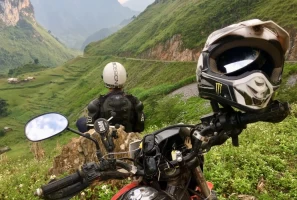
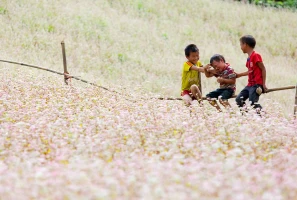
Vietnam motorbike tours Top Gear became a global phenomenon in 2008 when Jeremy Clarkson, Richard Hammond, and James May crossed the "S-shaped" nation. It wasn’t just a TV special; it was a tribute to the freedom of two wheels. Since then, this 1,000-mile route has inspired riders seeking cities, mountain passes, and coastal beauty. Today, Frontier brings that iconic journey to life through expertly crafted adventures across Vietnam.
1. The genesis: why "Top Gear" defined Vietnam motorcycling
The enduring appeal of this route lies in the way story and landscape merged into one unforgettable image. Before the Top Gear special, Vietnam was already admired for its beauty, food, and history. After the episode aired, it became something else in the minds of riders: a country best understood through motion, unpredictability, and immersion.
That shift still matters. When people search for Vietnam motorbike tours Top Gear, they are often searching for more than a route. They are searching for an atmosphere. They want the sense of freedom that comes from leaving city traffic behind, climbing into mountain passes, and reaching places that feel far more vivid on a bike than they ever could through the window of a bus or private car.
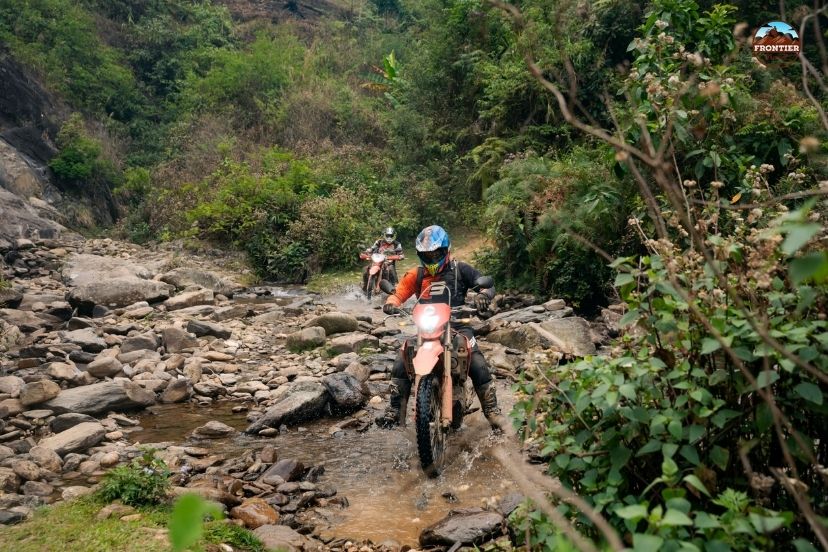
Vietnam motorbike tours Top Gear starts with a legendary ride
1.1. The 2008 Vietnam motorbike tours Top Gear Special: A cultural shift
The 2008 Vietnam special worked because it made adventure look human rather than polished. Jeremy, Richard, and James turned a 1,000-mile struggle into a global bucket-list item by showing the awkwardness, comedy, exhaustion, and beauty of the journey. Their ride did not look luxurious or curated. It looked real, which is exactly why it resonated.
That episode had a huge cultural impact on travel perception. Viewers saw crowded cities, quiet countryside, mountain roads, small roadside stops, and moments of chaos that somehow formed a complete story. You can explore the broader background of the show through Top Gear on Wikipedia and revisit the legacy of the special via IMDb.
1.2. Beyond the TV screen: Why Vietnam is the "motorcycling mecca"
Vietnam earns this reputation because its terrain changes constantly. In one long ride, travelers can move from coastal flatlands to mountain passes, from humid lowlands to cooler elevations, from jungle corridors to sand-dune landscapes. This diversity gives every riding day a different personality, which is why the country never feels monotonous over a long itinerary.
2. The epic 12-day Vietnam motorbike tours Top Gear route
This is the transition Hanoi to Saigon – HCM trail. This route takes you from the misty mountains of the North, cuts through the legendary DMZ and coastal highways, and dumps you directly into the heart of the South. It is a ride built around contrast, which is exactly why it feels so memorable.
2.1. Vietnam motorbike tours Top Gear: The ultimate north-to-south journey
The first day is all about escape. Hanoi is exciting, but leaving it behind on two wheels creates a powerful sense of release. The morning often begins with dense traffic, constant movement, and the controlled chaos that defines the capital. Once you reach the dyke roads and outer districts, the intensity starts to soften. The space opens. The pace changes. The ride begins.
Thung Khe Pass is where the visual drama truly begins. The road is steep, with many hairpin turns and pale stone surfaces that can be slippery in the wet season. This increases the challenge, requiring focus, while also giving a thrilling “riding through nature” sensation as you look down at the green valley below.
2.2. Day 2: Mai Chau to Phong Nha
The road near the edge of Pu Luong Nature Reserve and toward the Laos border brings a greater sense of remoteness. Traffic tends to thin, settlements become less frequent, and the landscape starts to feel broader.
The roads near Pu Luong Nature Reserve and toward the Laos border are narrow, with gentle curves and occasional inclines. Traffic is light, settlements are sparse, and the broadening landscape creates a sense of isolation. This shift in terrain enhances the psychological feeling of leaving civilization behind and committing to the spine of Vietnam.
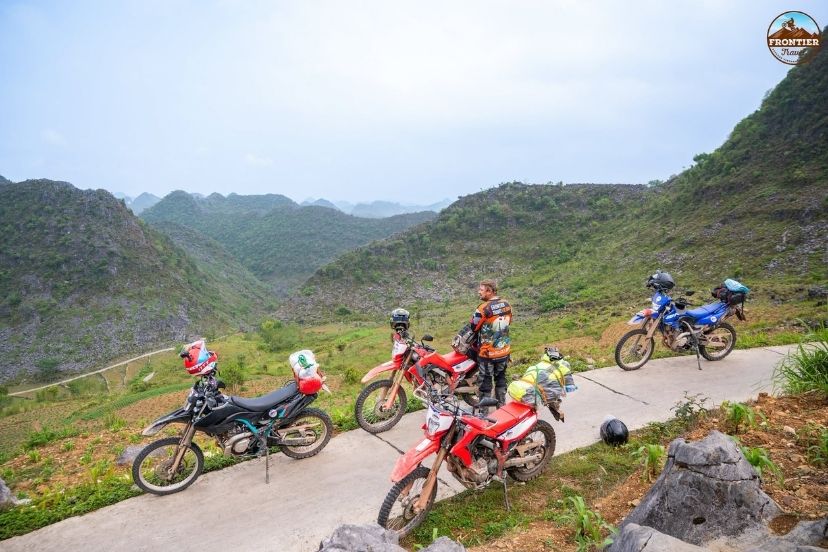
Mountains and remote roads shape the early route
2.3. Day 3: Ho Chi Minh Trail to Phong Nha
Phong Nha-Ke Bang National Park adds enormous value to the itinerary. It is not just another scenic stop. It is a place of global natural significance, famous for cave systems, jungle landscapes, and towering karst formations.
Entering Phong Nha-Ke Bang National Park, roads are mostly small mountain tracks with uneven surfaces or red dirt patches in the forest. Unexpected curves and open viewpoints create a cinematic experience, making the journey feel deeper than just covering miles.
2.4. Day 4: Phong Nha to Khe Sanh on a Vietnam motorbike tours Top Gear route
This is one of the purest riding days of the whole route. The famous Ho Chi Minh Road West Branch offers jungle scenery, mountain curves, minimal traffic, and a sense of isolation that many riders consider unforgettable. It is the kind of road that encourages focus and rewards confidence without overwhelming the rider with urban stress or tourist congestion.
The Ho Chi Minh Road West Branch features continuous curves through jungle and mountain slopes, minimal traffic, and some rough patches. These conditions offer “pure riding,” testing your skills while allowing you to fully absorb the untouched, raw beauty of the mountains.
2.5. Day 5: Khe Sanh to Hue
The descent from mountain terrain toward the coastal plains creates a dramatic change in tone. The route begins to carry more history as well as more open space. Moving through the DMZ brings a reflective element to the trip, especially for travelers interested in Vietnam’s past and the lasting weight of historic conflict.
Descending from the mountains to the coastal plains, the road has multiple gentle curves and slopes, sometimes with gravel patches. Passing through the DMZ adds open spaces and historical context. Riders experience freedom while descending, mixed with reflective moments about the region’s past.
2.6. Day 6: Hue to Hoi An
For many travelers, this is the emotional high point of the entire ride. Crossing the Hai Van Pass, known as the Cloud Sea Pass, delivers exactly the kind of sweeping coastal mountain drama that riders hope for when they imagine this journey. For more background on its geography and history, see Hai Van Pass on Wikipedia. For countless riders, this single day defines Vietnam motorbike tours Top Gear.
Hai Van Pass, known as the Cloud Sea Pass, delivers classic coastal-mountain drama. Steep inclines, hairpin bends, ocean views, and occasional cloud cover make this section challenging but exhilarating. The combination of effort and reward is unforgettable, defining the essence of the journey.
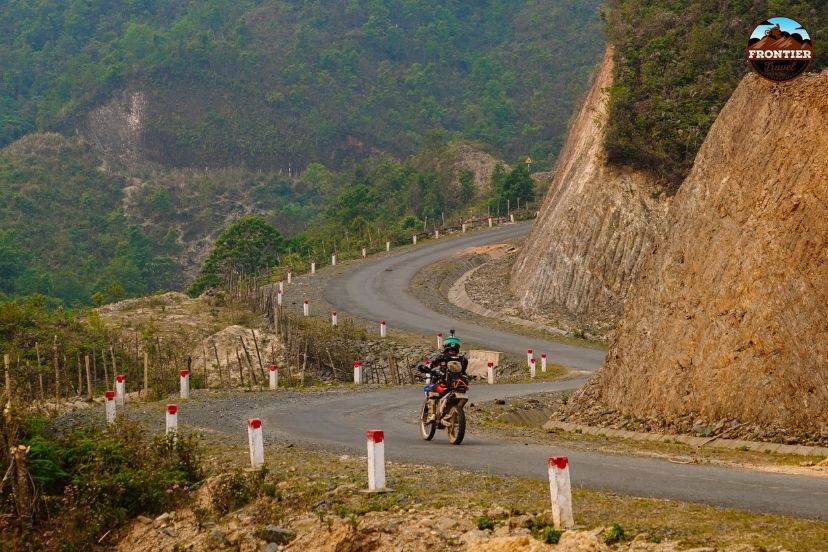
Hai Van Pass delivers the most iconic views
2.7. Day 7: Hoi An (Rest & culture day)
A rest day in Hoi An works perfectly because the town offers a complete change of mood without feeling disconnected from the journey. The old yellow streets, lantern-lit evenings, riverside cafés, and tailored calm of the town allow riders to recover physically while still enjoying something visually rich and distinctive.
It adds charm to the itinerary and gives Hoi An a playful role within a demanding overland ride. After days of mountains, history, and hard mileage, the town feels like a warm pause before the route turns south again. Hoi An’s streets are narrow, smooth, and mostly traffic-free. Riding here is calm and gentle, perfect for recovery while still enjoying the town’s scenic, lantern-lit riverside charm.
2.8. Day 8: Hoi An to Quy Nhon
This leg leans into long-distance coastal cruising. The road unfolds through fishing villages, less-commercial stretches of shoreline, and local roads that reveal a quieter version of central Vietnam. It may not carry the same immediate fame as the Hai Van Pass, but it often surprises riders with its calm beauty and relaxed pacing.
Riders stop chasing iconic images and begin noticing smaller moments: blue-painted fishing boats, roadside markets, hidden beach edges, and the everyday rhythm of communities that live close to the sea. Coastal roads are long, straight, and gently curving, with smooth asphalt and little traffic. This allows a relaxed pace, letting riders notice fishing villages, hidden beaches, and quiet local life along the shore.
2.9. Day 9: Quy Nhon to Nha Trang
This section is visually elegant in a different way. Sweeping curves trace the coastline, cliffs rise beside the road, and the sea remains a constant presence. The ride becomes more fluid and visually open, which many riders find refreshing after the jungle-heavy and history-rich sections earlier in the Vietnam motorbike tours Top Gear journey.
Coastal curves trace the cliffs with sweeping viewpoints over the sea. Roads are mostly smooth and lightly trafficked, creating a flowing riding experience that feels open and liberating after previous jungle-heavy sections.
2.10. Day 10: Nha Trang (Rest & coastal vibes)
A second rest day makes strategic sense. By this point in the tour, rider fatigue may not always feel obvious, but it accumulates in concentration, muscle tension, and reaction speed. Taking time to recover in Nha Trang can dramatically improve comfort and safety for the final push south.
Urban and coastal roads here are smooth and well-maintained, ideal for leisurely riding and bike maintenance. Using this day to rest enhances comfort and safety for the next stage. The best Vietnam motorbike tours Top Gear experiences are memorable because they are well supported, not because they are chaotic.
2.11. Day 11: Nha Trang to Mui Ne
This day offers one of the most surprising landscape transitions in Vietnam. The environment gradually shifts from tropical greenery to a drier, more open coastal terrain that feels almost desert-like. For riders who assumed Vietnam would remain uniformly lush, this segment often feels like entering a different country altogether.
The landscape transitions from tropical greenery to dry, sandy coastal terrain. Some windy sections and light sand on asphalt require careful handling. This change of terrain provides a fresh, almost otherworldly riding sensation, emphasizing Vietnam’s diversity.
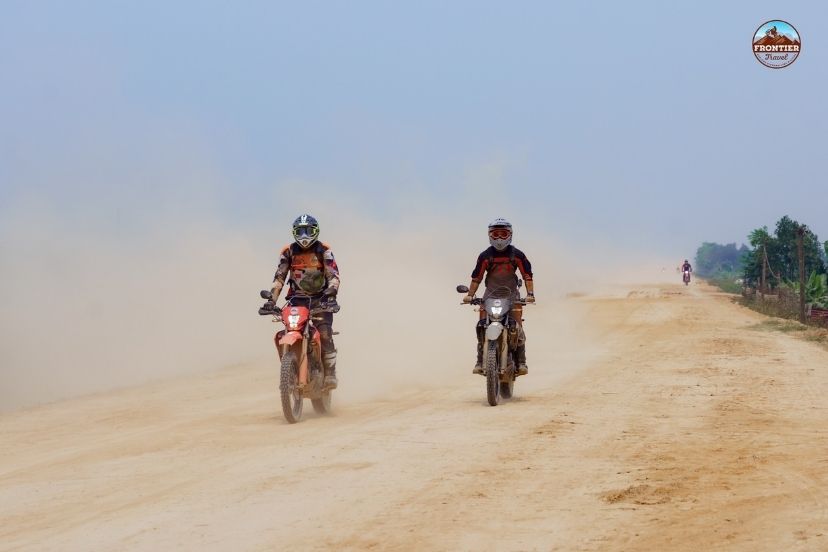
Coastal roads and dunes refresh the journey
2.12. Day 12: Mui Ne to Saigon
The final day brings the Vietnam motorbike tours Top Gear journey back into full intensity. The closer you get to Ho Chi Minh City, the more the road begins to pulse with energy, traffic density, and urban momentum. After so many mountains, villages, coastlines, and quieter roads, the arrival into Saigon feels dramatic and deserved.
As you approach Ho Chi Minh City, roads become busy, with dense traffic and multiple intersections. Smooth asphalt helps, but constant focus is required. The urban pulse creates a dramatic re-entry into civilization, capping off over 10 days of adventure with a vivid city finish.
3. The fleet: Choosing your professional "iron horse"
A journey of this scale depends heavily on the bike beneath you. The right machine can make long days feel manageable and even joyful. The wrong one can turn a dream ride into a tiring, awkward experience. In Vietnam, suitability matters more than ego, and practical bike choice often beats visual prestige.
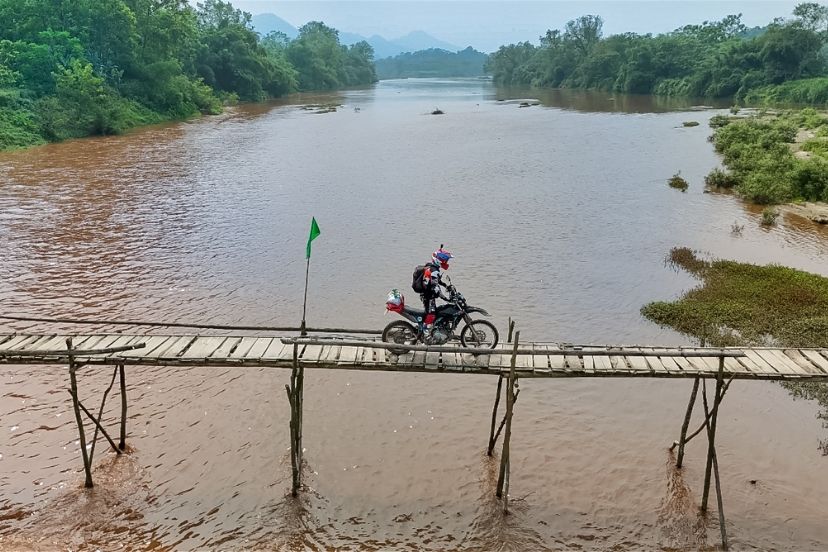
The right bike shapes the whole riding experience
3.1. The all-rounder: Honda CRF300L (Newest Version)
The Honda CRF300L has become a favorite for good reason. It handles mixed conditions exceptionally well, which makes it highly suitable for Vietnam’s blend of pavement, rougher surfaces, occasional loose sections, and changing terrain. It is approachable enough for many intermediate riders but still capable enough for more adventurous segments.
Its suspension travel, fuel efficiency, and reputation for reliability make it one of the most practical choices for long multi-day tours. Riders often appreciate the balance it offers: enough off-road confidence to handle surprises, but still comfortable enough for extended tarmac sections. That balance is exactly what a mixed north-to-south route demands, especially on Vietnam motorbike tours Top Gear itineraries.
3.2. Technical trail masters: Yamaha WR250R & Kawasaki KLX
These bikes appeal more to riders who actively want the route to include a stronger technical component. If a tour involves 50 to 60 percent off-road riding, or if the rider prefers a lighter and more responsive feel on rough terrain, the WR250R and Kawasaki KLX class becomes highly attractive.
They are particularly useful when control, agility, and trail-focused handling matter more than long-distance comfort. However, they are not always the ideal answer for every rider. Someone focused primarily on scenic overland touring rather than technical challenge may find them less relaxing over longer paved days. Matching the machine to the purpose is essential in Vietnam motorbike tours Top Gear planning.
3.3. The big bike category: Yamaha Tenere 700 & Honda Transalp 750
Big bikes create a strong adventure image, but Vietnam’s road realities make them a more specialized choice. Narrow roads, dense local traffic, tight turns in villages, and irregular surfaces can make 700cc-plus machines feel more demanding than glamorous, especially for riders without solid adventure-bike experience.
That said, experienced riders can enjoy them immensely. The Tenere 700 and Honda Transalp 750 bring power, road presence, and greater comfort on long open stretches. The real question is not whether they are impressive. It is whether they are truly appropriate for the specific route and rider profile. In premium Vietnam motorbike tours Top Gear packages, this decision should be discussed carefully.
3.4. Accommodating every rider: Solutions for tall and heavy riders
A quality operator should understand that riders come in many sizes. Taller and heavier travelers often worry that Southeast Asia tours are designed only for smaller body frames, but better companies increasingly solve that problem with customized bike setup and thoughtful preparation.
Handlebar risers, seat modifications, suspension tuning, and small ergonomic changes can significantly improve control and comfort for riders up to 2 meters and 200kg+. These adjustments are not luxuries. They are practical improvements that reduce fatigue and help riders enjoy the road more safely over many consecutive days.
4. Logistics & what to expect on the road (FAQs)
The dream of the ride is powerful, but the practical side is what determines whether that dream feels smooth or stressful. Road conditions, weather, fatigue, food timing, accommodation quality, and operator support all play essential roles. Riders who understand these factors usually enjoy the journey much more.
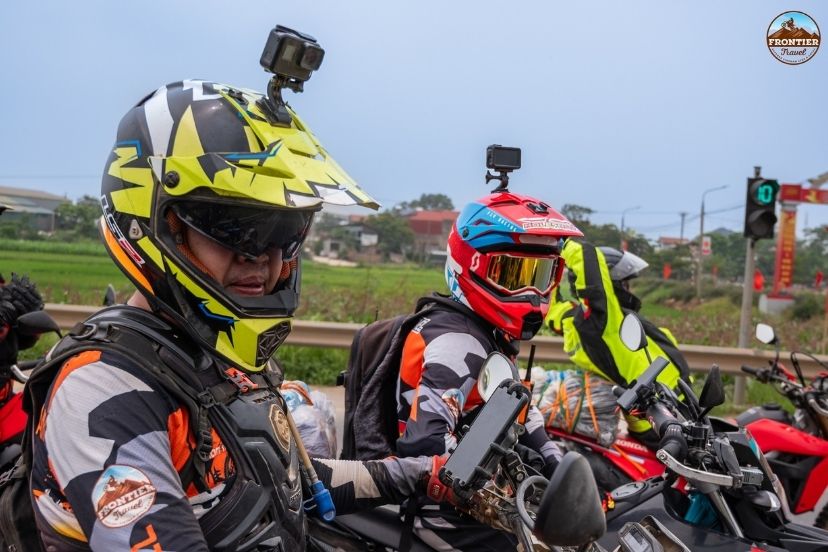
Smart logistics make the adventure smoother
4.1. Riding experience: Is this suitable for beginners?
The answer depends entirely on route style. A scenic Vietnam motorbike tours Top Gear road tour with strong support can be achievable for a rider with modest experience and a sensible attitude. A hard enduro route with extensive off-road demand is a completely different proposition and may be unsuitable for beginners.
4.2. Terrain breakdown: How much off-road vs. on-road?
This should always be discussed clearly before booking. Some routes are almost entirely paved with occasional rough patches, while others involve dirt roads, wet mountain sections, or weather-sensitive alternatives that can quickly change the character of the day.
Flexibility is equally important. Smart tour design allows adjustments based on rain, road conditions, rider fatigue, and group ability. That is especially useful over 12 days, where even a single difficult afternoon can affect the energy of the days that follow. The best Vietnam motorbike tours Top Gear operators are transparent about this balance.
4.3. Navigation: Where exactly will we go?
Many high-quality operators work with a route philosophy rather than a rigid, over-publicized line on a map. They prioritize remote mountains, national parks, minority villages, and quieter local roads over heavily commercialized tourist corridors whenever possible.
4.4. Accommodations: Each day is a new destination
Accommodation variety is part of what keeps the Vietnam motorbike tours Top Gear journey interesting. Depending on the section of the route and the level of package chosen, riders may experience high-end hotels in larger cities, comfortable guesthouses in smaller towns, or authentic ethnic homestays in mountain valleys.
4.5. Nutrition: Is the food safe and good?
Vietnam is one of the most rewarding places in the world to eat while traveling, and rural areas often offer fresh ingredients with minimal delay between source and serving. That freshness can make roadside meals feel surprisingly vibrant and satisfying, especially after long hours on the bike.
Still, good food decisions matter. Safe drinking water, trusted restaurants, reasonable hygiene standards, and sensible pacing with heavier meals all affect rider comfort. Hydration and digestion are not small details on a long tour. They directly influence concentration and stamina, which makes them surprisingly important in Vietnam motorbike tours Top Gear preparation.
5. Planning your trip: Costs, gear, and safety
The smartest travelers do not simply compare prices. They compare value. A cheaper option can become costly if it includes poor maintenance, weak support, unrealistic daily distances, or operators who know how to market the route but not manage it properly on the ground. Smart budgeting is one of the foundations of a successful Vietnam motorbike tours Top Gear experience.
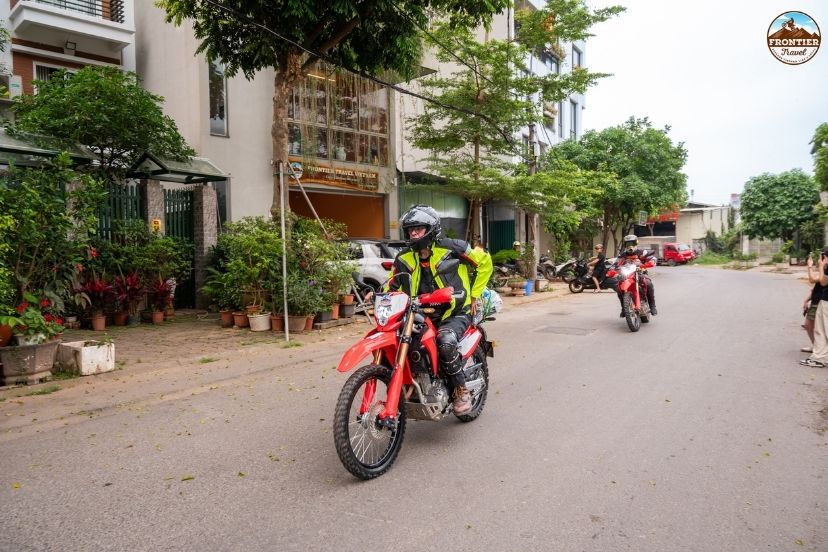
Good planning turns a long ride into a safe journey
5.1. The all-inclusive value: What is included in the tour?
A serious package typically includes the motorbike, fuel, accommodation, meals, entrance fees, and core route support. When these essentials are handled well, the rider can focus on the experience instead of constantly solving small logistical problems.
There is also growing value in digital memories. GoPro footage and drone content are increasingly included in better tour packages, and on a route this scenic, that added documentation becomes more than a gimmick. It gives riders a way to preserve and share an experience that often feels bigger than words alone. In premium Vietnam motorbike tours Top Gear offers, this added value can be a real differentiator.
5.2. Safety and support: The "no-worry" philosophy
A strong guide does much more than lead the front of the group. They read rider ability, adjust the pace, interpret road behavior, choose smart stopping points, and help manage unexpected issues before they escalate. That human layer of judgment is one of the most valuable parts of a professionally run ride.
If this route is on your shortlist, now is the best time to compare operators, check their fleet quality, ask about terrain ratios, and request real details instead of vague promises. A smart booking decision in the middle of your planning process can completely change the outcome of the trip and help ensure your Vietnam motorbike tours Top Gear adventure runs smoothly.
5.3. Choosing the right partner: How to spot a quality tour operator
The first sign is maintenance transparency. A good operator should be able to explain how often bikes are serviced, how tires are checked, how support works during the ride, and what happens if road or weather conditions disrupt the original plan. If these answers are vague, that is a warning sign.
Conclusion
A true Vietnam motorbike tours Top Gear adventure is not only about imitating a famous television journey. It is about transforming that inspiration into a real, expertly planned crossing that respects the road, the rider, and the country itself. The route remains one of the most cinematic and emotionally rewarding rides in Asia. Follow Frontier for the latest updates, expert route insights, and unforgettable Vietnam motorbike tour experiences.