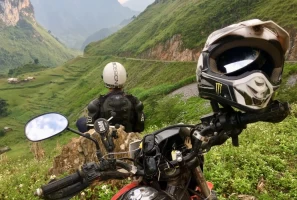
Mastering the standing on pegs motorbike technique is the baseline skill required to survive rocky paths, deep ruts, and unpredictable dirt tracks without losing your balance or exhausting your muscles. Frontier Travel Vietnam explores the fundamental riding techniques behind this essential adventure posture, helping riders build steady balance and handle demanding terrain with greater confidence and precision.
1. The physics of why you must leave the saddle
Riding an adventure motorcycle over unpaved surfaces requires a deep understanding of how mass and energy interact between your body and the machine. Remaining firmly seated over sharp bumps forces every upward impact directly into your spine, destabilizing your steering and disrupting forward momentum. Leaving the saddle completely reconfigures the bike's center of mass, shifting the primary weight distribution down to the lowest possible contact points.
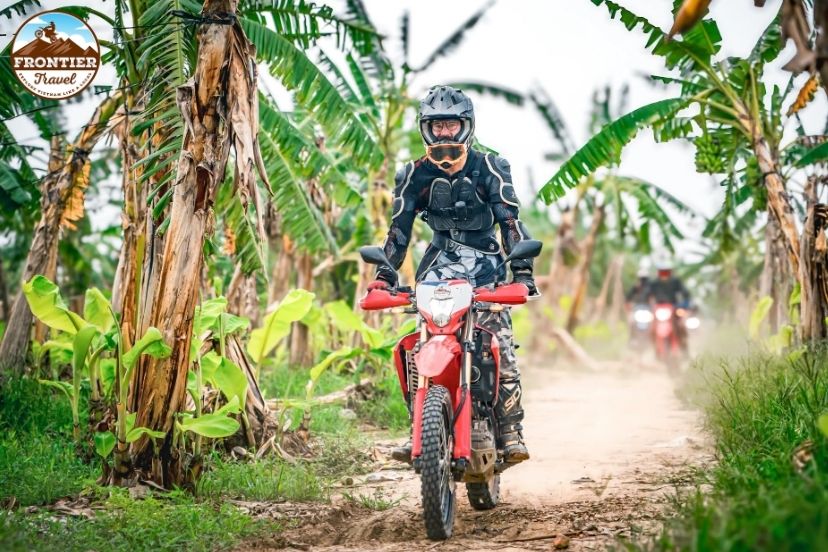
1.1. Lowering the effective center of gravity to the footpegs
The main benefit of this posture comes from lowering your effective center of gravity from the top of the seat down to the footpegs. When a moving motorcycle hits a loose stone at 30 km/h, the impact pushes the wheels sideways away from the main path.
By standing up, you create a low, centralized anchor point that absorbs these horizontal deflections without tipping the machine over. This low center of mass provides immense stability, allowing the bike to self-correct automatically over loose gravel and slippery mud tracks.
1.2. Turning your knees and ankles into secondary shock absorbers
The mechanical suspension components of an adventure bike, though highly advanced, have physical limitations when dealing with rapid 15cm deep ruts. Your ankles, knees, and hips form an interconnected human suspension system capable of managing large compressions that would otherwise bottom out the rear shock.
Keeping these joints slightly bent and flexible allows you to soak up violent upward jolts before they can disturb your head and shoulder alignment. This active cushioning keeps your vision perfectly level, which is absolutely vital for making split-second line choices on technical trails. Practicing standing on pegs motorbike technique helps riders use their lower body more effectively, reducing harsh impacts while keeping the motorcycle balanced over broken ground.
1.3. Decoupling your body weight from the motorcycle chassis movements
When your body remains firmly anchored to the seat, every single twist, bounce, and vibration of the chassis is forced into your torso. Decoupling your mass from the machine allows the motorcycle to dance, pitch, and yaw freely beneath you while your core remains completely stable.
This separation means the front wheel can track through deep sand while your upper body maintains a steady, independent trajectory. By allowing the machine to move around without pulling your weight with it, you reduce the risk of crashing over loose surfaces.
2. Standing on pegs motorbike technique body geometry
Achieving proper body alignment requires much more than simply straightening your legs and pulling yourself away from the seat. A rigid, locked-out posture will quickly cause severe physical fatigue and significantly diminish your control over the handlebars during sudden maneuvers. True mastery of the standing on pegs motorbike technique involves adopting a neutral, athletic stance that optimizes muscle engagement across your entire skeletal frame.
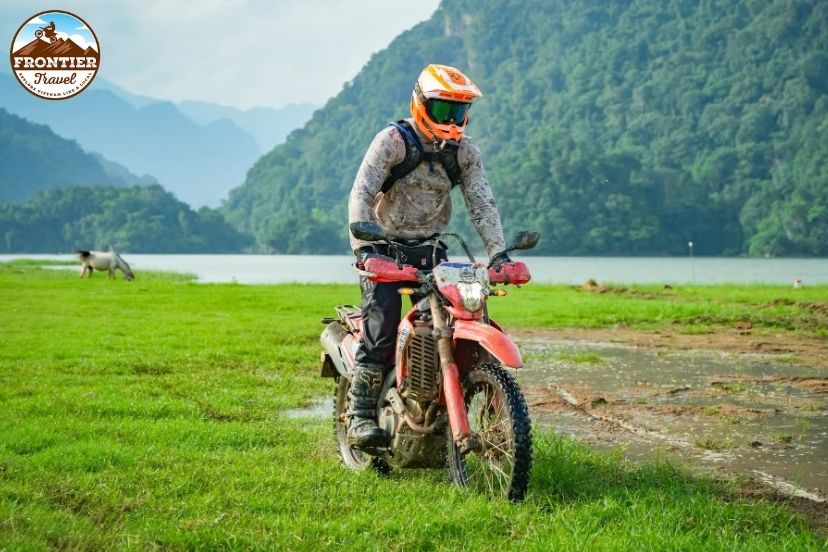
2.1. The athletic stance with bent knees and outward elbows
An ideal off-road stance resembles a dynamic athletic position where your joints remain flexible and ready to react instantly. Your elbows should be raised high and flared outward away from your torso to maximize mechanical leverage over the wide handlebars.
This specific arm positioning provides the upper body strength required to muscle the front wheel through deep mud or gravel tracks without washing out. Your knees must be slightly bent at roughly a 15-degree angle, providing an instant buffer zone against unexpected vertical trail impacts.
2.2. Proper foot placement on the pegs for instant controls access
Placing the arches of your boots directly over the center of the footpegs offers the most stable and balanced platform for long distance standing. However, you must continuously slide your feet forward or backward to maintain instant access to both the rear brake pedal and gear shifter.
Experienced adventure riders use the balls of their feet when navigating open terrain to maximize ankle flex and absorption capability. When approaching technical sections that require heavy braking or rapid downshifting, smoothly slide your feet forward to cover the foot controls. Mastering standing on pegs motorbike technique also helps riders shift foot position naturally without losing balance, especially when terrain changes quickly from open gravel to tight rocky passages.
2.3. Keeping a neutral spine to reduce lower back fatigue
Slouching your shoulders or bending heavily at the waist places immense, unnecessary strain on the lumbar region of your lower back. You must maintain a straight, neutral spine by engaging your core abdominal muscles and hinging exclusively at your hip joints.
This straight back alignment allows your skeleton to transfer vertical shock loads directly down into your legs rather than compressing your spinal discs. Keeping your head held high and your chin parallel to the ground naturally forces your back into this optimal, fatigue-reducing position.
3. Controlling the machine through footpeg pressure dynamics
Modulating your lower body weight allows you to guide the motorcycle through tight single-tracks without disrupting the alignment of the steering head. This advanced standing on pegs motorbike technique principle relies on using your legs as the primary input mechanism, keeping your hands relaxed on the bars. By steering with your feet, you allow the front suspension to move freely, improving front wheel traction over rocky paths.
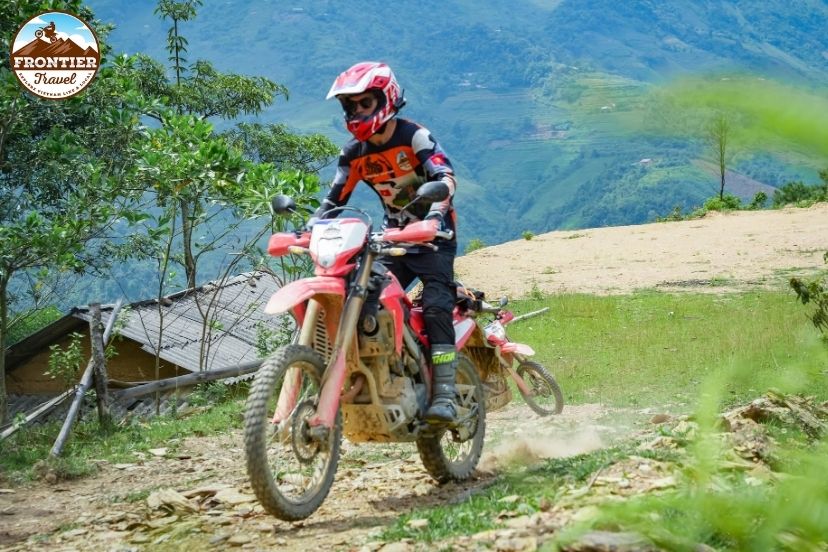
3.1. Utilize the standing on pegs motorbike technique for active steering
Initiating a turn requires you to push your weight downward onto the footpeg inside the direction of your intended corner. For example, pressing hard on the left peg alters the balance of the chassis, causing the bike to lean left naturally.
This method allows you to steer the machine while keeping the handlebars completely isolated from accidental, jerky hand inputs. Mastering this precise leg coordination is what allows veteran backcountry riders to weave through dense forest trails with minimal physical effort.
3.2. Weighting the outside peg to maximize tire traction in dirt corners
When leaning the motorcycle into a loose dirt corner, you must weight the outside footpeg to push the tire side-knobs into the ground. If you are turning left, lean the bike underneath you while standing heavily on the right peg to keep your body weight vertical.
This counter-balancing technique maximizes the downward force acting on the tires, preventing them from sliding out sideways on slick gravel surfaces. Maintaining a strong outside peg weight is the ultimate secret to carrying consistent, safe speed through slippery off-road switchbacks.
3.3. Gripping the fuel tank with your knees during sudden braking
During rapid deceleration or steep downhill descents, your body momentum will naturally slide forward, overloading the front forks. To counter this, press your knees inward to firmly grip the narrow rear section of the fuel tank.
This leg clamping action transfers the heavy deceleration forces directly into the bike's frame rather than your wrists. Keeping your arms relaxed during heavy braking ensures you retain full steering control to avoid large stones or deep ruts.
4. When to stand versus when to sit on adventure routes
The general rule of thumb is to stand whenever the terrain becomes unpredictable, loose, bumpy, or technically demanding. Conversely, you should return to the seat on smooth, hard-packed surfaces where the motorcycle chassis naturally remains calm and stable. This strategic conservation of energy ensures you have plenty of physical strength remaining when encountering truly dangerous, high-hazard trail sections.
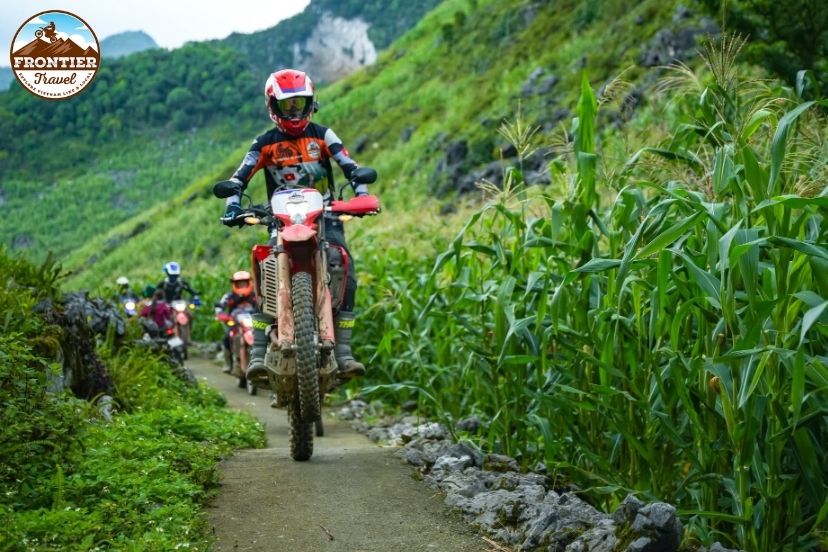
4.1. Transitioning to the pegs before hitting loose gravel fields
As you spot an upcoming patch of deep sand or loose gravel fifteen meters ahead, you must smoothly transition onto the pegs, especially during an Ultimate North Vietnam adventure route. Rising up before entering the hazard allows the chassis to stabilize early, preventing the front wheel from hunting and wobbling wildly upon entry.
Entering a loose surface while still seated can cause immediate panic inputs, often leading to an unnecessary tip-over or crash. This proactive adoption of the standing on pegs motorbike technique ensures you hit difficult obstacles with maximum control and forward drive.
4.2. Returning to the seat to preserve energy on smooth straights
Once the technical trail opens up into a flat, well-graded dirt road or tarmac section, immediately return to a seated position. Use this smooth transit time to relax your leg muscles, shake out your arms, and lower your overall heart rate.
Sit slightly forward near the fuel tank to maintain a comfortable, relaxed arm reach to the handlebars without slouching your spine. Efficiently utilizing these seated rest periods allows you to endure multi-day backcountry tours without experiencing debilitating muscle exhaustion.
4.3. Reading trail changes to anticipate balance shifts early
Expert off-road riding relies heavily on advanced visual scanning techniques to identify changing trail conditions well in advance. Your eyes should constantly track between five meters and twenty meters ahead of your front fender to assess upcoming terrain hazards.
Spotting a series of sharp embedded boulders early gives you ample time to rise onto the pegs and adjust your body weight. This constant forward scanning prevents sudden, reactionary movements, ensuring your transitions between sitting and standing remain smooth and deliberate.
5. FAQ on maintaining balance while riding upright
Overcoming the initial awkwardness of riding while standing involves adjusting both your physical control inputs and your motorcycle's ergonomic setup. Raising your handlebar position slightly with aftermarket risers can significantly improve your upright posture, preventing you from leaning too far forward. Applying the correct standing on pegs motorbike technique principles to these mechanical adjustments will rapidly accelerate your off-road confidence and skill level.
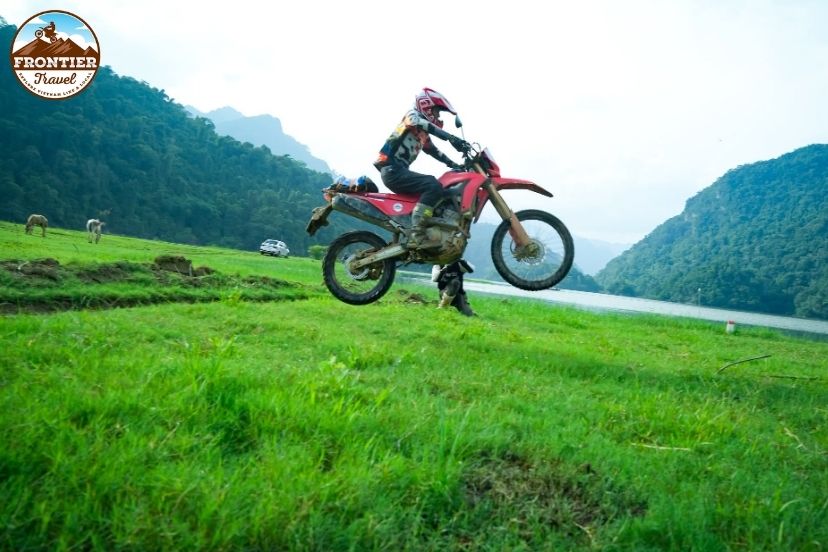
5.1. How do I smoothly shift gears while standing on the pegs?
Shifting gears while upright requires you to slightly rotate your left ankle inward while keeping your heel firmly planted on the peg. You must avoid lifting your entire foot off the peg to shift, as this drastically compromises your balance on rough terrain.
If your heavy off-road boots cannot fit comfortably under the shifter, adjust the shift lever up by one spline. This minor mechanical modification creates the necessary clearance for thick soles, allowing for seamless upshifts while maintaining a secure stance.
5.2. Should I keep my arms completely locked or loose on bars?
Your arms must always remain completely flexible, with your elbows bent high and wide to act as a primary steering lever. Locking your elbows transmits every single rock impact directly into your shoulders, causing rapid muscle fatigue and severe steering instability.
Think of your hands as relaxed guides that allow the handlebars to gently self-correct over shifting stones and loose gravel patches. Maintaining a loose, relaxed grip on the bars prevents arm pump and ensures you retain precise throttle control through bumpy sections. This relaxed upper-body control works together with standing on pegs motorbike technique, helping riders stay balanced while the bike moves naturally beneath them.
5.3. Will standing up cause quicker physical fatigue on long loops?
Standing naturally engages more core and leg muscles than sitting, which can cause early fatigue if your body posture is incorrect. However, maintaining a perfectly straight spine and proper skeletal alignment minimizes the actual muscular effort required to stand for hours.
By hinger at the hips and allowing your bones to bear your weight, you significantly reduce overall muscle strain. Proper execution of this posture actually preserves your long-term energy by preventing the bike from violently tossing your body around.
Conclusion
Instead of fighting the terrain from your seat, executing the proper standing on pegs motorbike technique is what transforms a rough, bone-jarring trail into a fluid and predictable cruise. You do not have to struggle through the learning curve on poorly set up machines or unguided trails. Connect with the off-road veterans at Frontier Travel Vietnam right now to secure a premium, adventure-ready dual-sport bike and get personalized coaching that will have you riding tall and stable across any terrain.