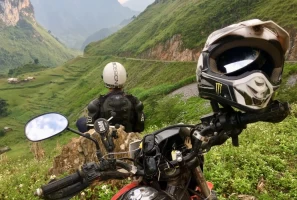
Small bike vs big bike tour Vietnam is one of the most important questions riders should ask before starting an adventure across the country. Vietnam offers everything from narrow village lanes and muddy mountain trails to long highways, coastal roads, steep passes, and remote backcountry routes.
Choosing the wrong bike can make the journey tiring, stressful, or even unsafe. In this guide, Frontier Travel Vietnam will help you compare small bikes and big bikes in real touring conditions so you can choose the perfect motorcycle for your riding style, skill level, and dream route.
1. Why bike choice matters on a Vietnam motorbike tour
Vietnam can include city traffic, mountain passes, gravel, mud, coastal highways, and remote villages in one journey. Because conditions change quickly, this small bike vs big bike tour Vietnam guide treats bike choice as a safety and comfort decision, not just a style preference.
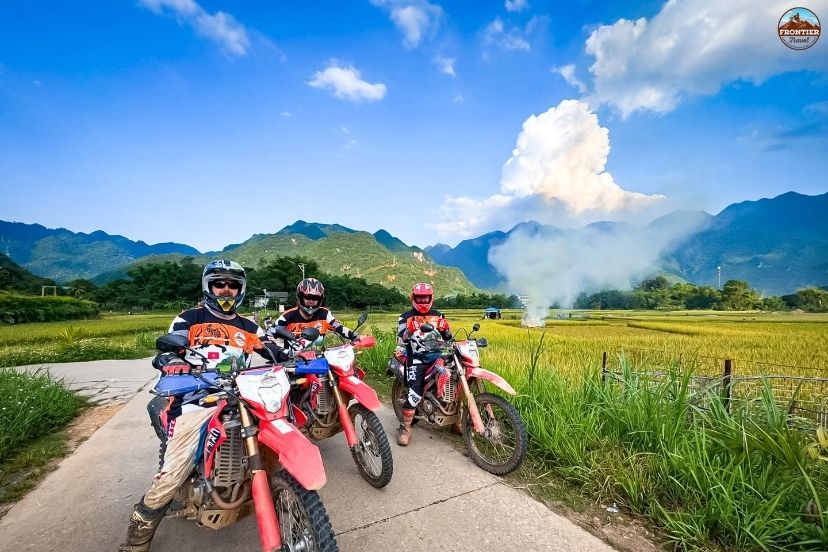
Evaluating motorcycle options for a small bike vs big bike tour Vietnam
Vietnam is not a one-size-fits-all riding destination because every region has a different personality. Hanoi traffic, Ha Giang passes, rocky northern trails, Central Vietnam coastal roads, and Ho Chi Minh Road sections all ask different things from a motorcycle.
Small bikes are usually lighter, easier to control, and more forgiving on technical roads. Big bikes offer stronger power, better comfort, higher stability, and a more premium feeling on long-distance tours.
2. What is considered a small bike or big bike in Vietnam tours?
Before comparing performance, riders need to understand what “small” and “big” mean in Vietnam touring. In small bike vs big bike tour Vietnam planning, engine size matters, but weight, seat height, wheel size, luggage, terrain, and rider skill matter just as much.
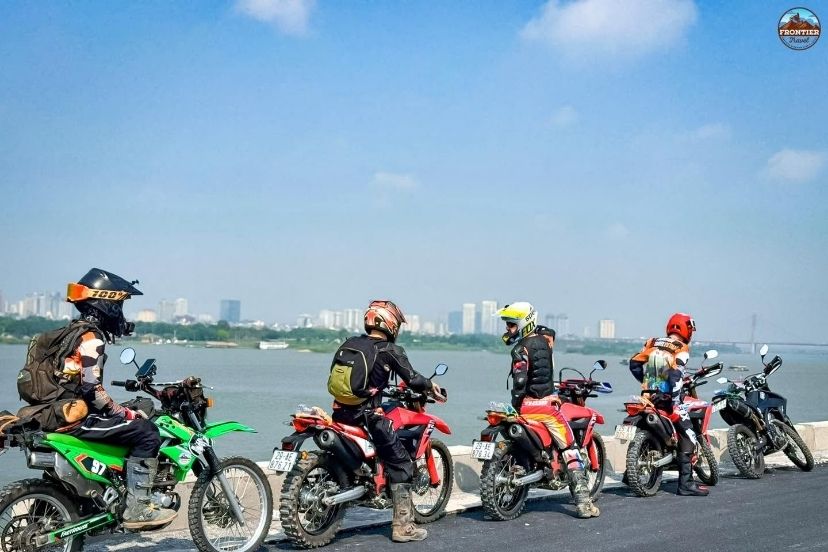
Understanding engine displacement and weight classes for touring bikes
2.1. Small Bikes and Lightweight Dual-Sport Motorcycles
Small bikes in Vietnam tours are usually lightweight motorcycles from around 150cc to 300cc. Common examples include the Yamaha WR155R, Kawasaki KLX250, and Honda CRF300L, which work well for mountains, mixed roads, and light off-road riding.
2.2. Big Bikes and Adventure Touring Motorcycles
Big bikes are usually mid-size to large adventure motorcycles, often from around 650cc upward. Examples include the Yamaha Tenere 700, Honda Transalp 750, and BMW R1250GS, which offer more comfort, power, and stability for longer touring routes.
2.3. Why Engine Size Is Not the Only Factor
A 700cc motorcycle may sound better than a 250cc motorcycle, but Vietnam does not always reward power. Seat height, wet weight, suspension, tires, luggage load, rider skill, and route type can matter more than engine size. Many riders choose the biggest bike because it looks premium in photos. However, small bike vs big bike tour Vietnam decisions should focus on terrain, weather, road width, and rider ability.
3. Advantages of small bikes for Vietnam motorbike tours
Small bikes are often underestimated by riders used to wide highways and open roads. In Vietnam, small bike vs big bike tour Vietnam often favors agility because routes may include narrow lanes, steep turns, mud, traffic, and broken surfaces.
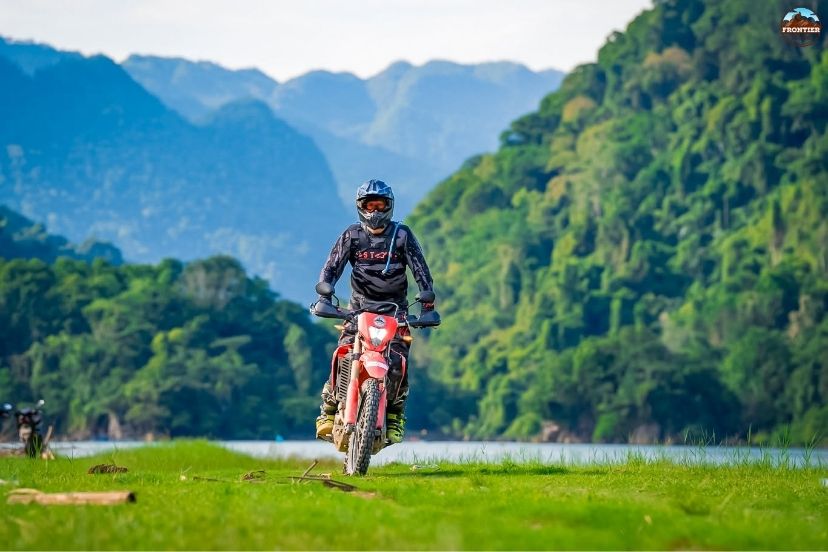
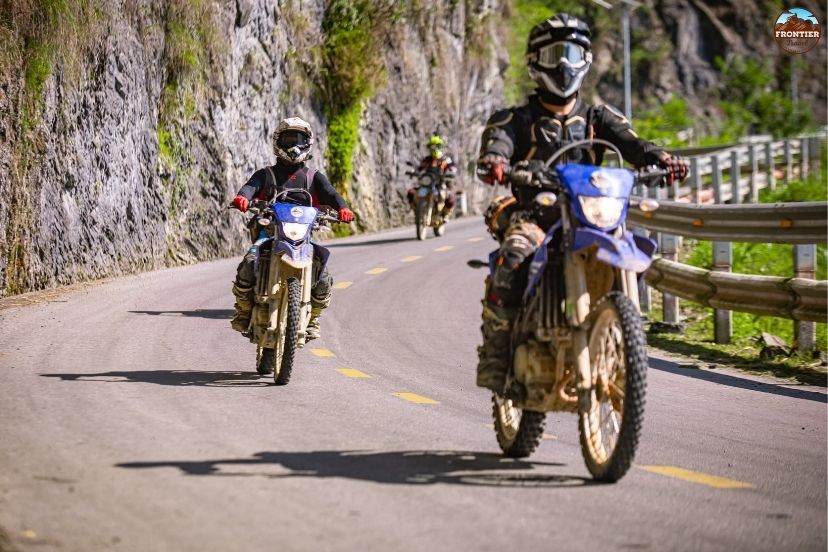
Lightweight dual sport motorcycles offering superior agility on muddy trails
3.1. Easier handling on narrow roads
Small bikes are easier to maneuver through village lanes, crowded towns, tight switchbacks, and narrow mountain roads. Their lighter weight helps riders turn, stop, balance, and correct mistakes with less physical effort. This is especially useful in Vietnam, where roads can suddenly change from smooth pavement to narrow paths, sharp corners, or busy local traffic.
3.2. Better control on off-road and technical trails
Lightweight bikes are usually better for rocky paths, muddy tracks, river crossings, steep climbs, and slow off-road sections. When the rear wheel slips or the road becomes uneven, a small bike is easier to recover and control. Riders can react faster, put a foot down more comfortably, and adjust the bike’s direction without using too much strength.
3.3. Less fatigue for long riding days
A long Vietnam riding day is not tiring only because of distance. Lifting, balancing, turning, braking, and correcting a motorcycle on rough roads all use energy, so a lighter bike can reduce fatigue. Small bikes allow riders to stay more relaxed during long hours on the road, especially when the route includes many stops, tight corners, steep hills, or uneven surfaces.
3.4. More beginner-friendly for many riders
Small bikes are more forgiving for riders who can ride motorcycles but are not used to heavy adventure machines. In small bike vs big bike tour Vietnam planning, riders who feel unsure in traffic or mountain stops often become more confident on a lighter dual-sport. Small bikes usually consume less fuel and are simpler to manage in remote areas. They are also easier to move, park, and handle at villages, homestays, viewpoints, or rough roadside stops.
4. Advantages of big bikes for Vietnam motorbike tours
Big bikes are not always the easiest option, but they have serious advantages on the right route. In small bike vs big bike tour Vietnam planning, they become attractive when experienced riders want power, comfort, stability, luggage capacity, and long paved sections.
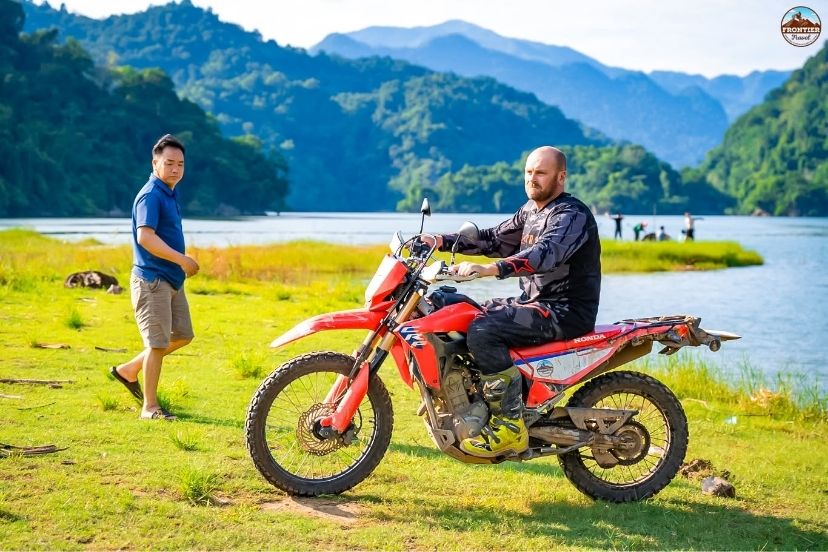
Premium adventure motorcycles delivering high speed stability on highways
4.1. More power for highways and long distances
Big bikes offer stronger acceleration, easier overtaking, and more relaxed cruising on longer paved roads. This can be useful on Central Coast routes, open highways, and smoother sections of the Ho Chi Minh Road.
4.2. Better comfort for multi-day touring
A bigger seat, stable chassis, stronger suspension, smoother engine, and better wind protection can make multi-day touring more comfortable. Riders who spend many hours on the road may appreciate how a big bike reduces vibration and fatigue.
4.3. Stability on mountain passes and open roads
When comparing a small bike vs big bike tour vietnam, stability is one of the main advantages of a larger motorcycle. Big bikes often feel more planted on sweeping bends, long climbs, and open mountain roads when handled by experienced riders. Their weight can create more confidence at speed, especially on wider and smoother sections where the bike can maintain momentum comfortably.
4.4. Better for riders carrying luggage or a passenger
Big bikes are usually better for riders carrying heavier luggage or traveling with a passenger. They offer more load capacity, stronger braking, and more room for longer journeys where comfort matters every day.
4.5. Premium riding experience
Many big bikes come with ABS, riding modes, traction control, larger fuel tanks, and stronger braking systems. These features improve comfort and confidence, but they do not replace skill, route awareness, or careful riding in Vietnam.
5. Small bike vs big bike tour Vietnam: Route-by-route comparison
The best way to choose between a small bike and a big bike is to look at the route. This small bike vs big bike tour Vietnam route comparison shows where each bike type naturally fits, from tight mountain roads to coastal highways.
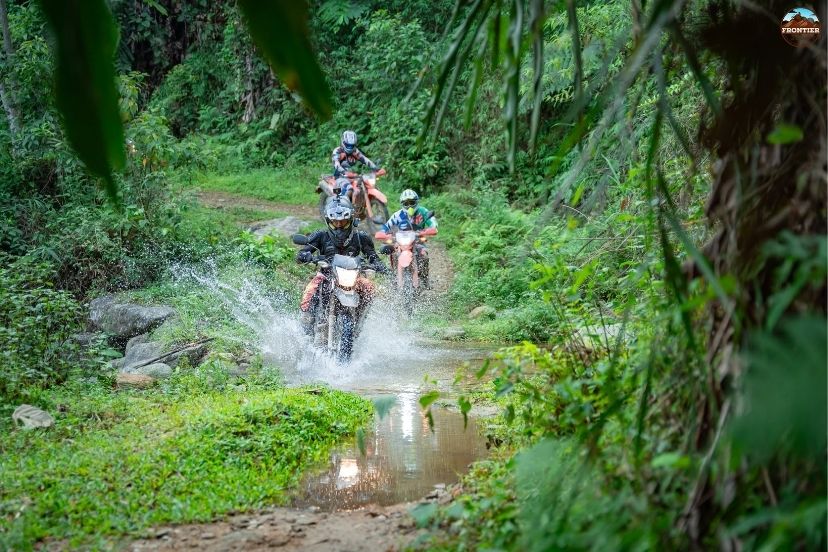
Comparing small and big bike performance across iconic Vietnamese routes
5.1. Ha Giang Loop and Northeast Vietnam
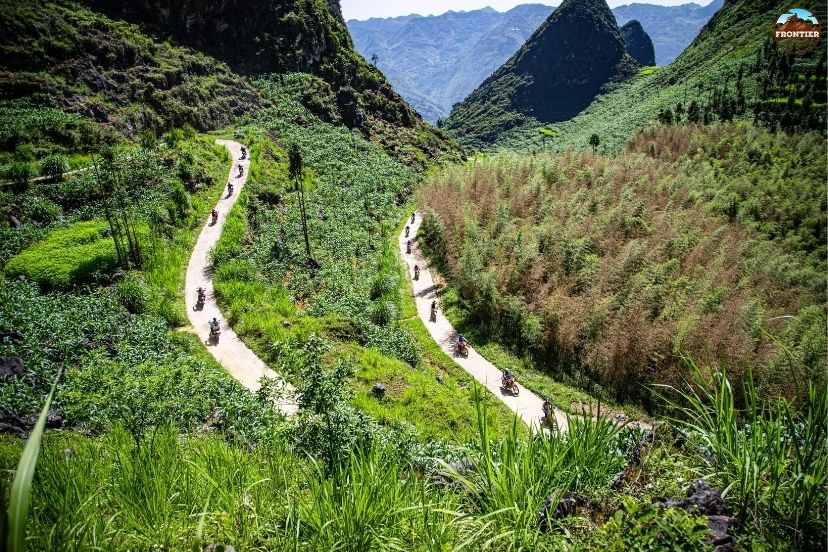
Small bikes are excellent for Ha Giang and Northeast Vietnam because the roads can be narrow, steep, sharp, and unpredictable. Big bikes can work on main scenic roads if the rider is experienced, but they require more confidence at slow speed and tight corners.
5.2. Northwest Vietnam: Sapa, Mu Cang Chai, Ta Xua, and Son La
Northwest Vietnam includes steep climbs, rice terrace roads, landslide-prone sections, fog, and winding passes. Small bikes win on agility and easy correction, while big bikes win on comfort, power, and stability when the surface stays open.
5.3. Ho Chi Minh Road and Long-Distance Touring
When comparing a small bike vs big bike tour vietnam, the Ho Chi Minh Road and other long-distance touring routes often show the comfort advantage of bigger motorcycles. On extended paved stretches, big bikes can feel smoother, more stable, and less tiring, especially for riders covering many kilometers in one day.
5.4. Central Coast and Highway Routes
Central Coast and highway routes often favor big bikes because they reward stability, power, luggage comfort, and wind protection. Small bikes can still complete these routes, but they may feel less relaxed on faster paved sections.
6. Which bike fits your riding level?
Skill level should always come before ego when choosing a motorcycle for Vietnam. In small bike vs big bike tour Vietnam decisions, honest self-assessment matters because a showroom dream bike can feel stressful on a muddy hill or crowded mountain town.
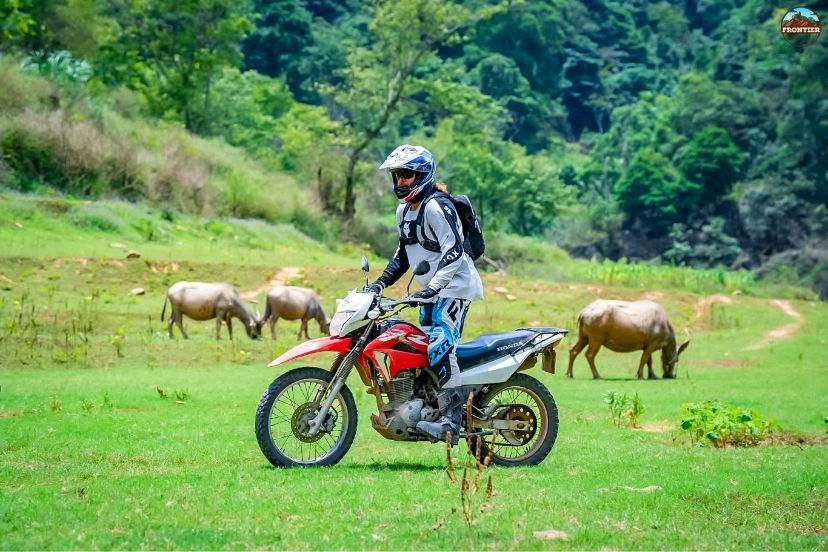
Matching rider experience with appropriate motorcycle size and power
6.1. Beginner or first-time Vietnam Rider
Beginners and first-time Vietnam riders should usually start with a smaller, more manageable bike or join a guided tour. Confidence, braking control, smooth clutch use, and road awareness are more important than engine power. Experienced local leads not only know the safest, most scenic routes, but they also understand the unwritten "rules of the road" in Vietnam such as how to blend into roundabout traffic, anticipate trucks around blind corners, and handle sudden weather changes.
6.2. Intermediate adventure rider
When comparing a small bike vs big bike tour vietnam, intermediate adventure riders have more flexibility because they can choose between a small dual-sport bike and a mid-size adventure motorcycle depending on the route. If the plan includes rough mountain roads, narrow village tracks, gravel sections, or technical terrain, a CRF300L or KLX250 may be easier to control and less tiring.
6.3. Experienced big bike rider
Experienced riders who understand tall, heavy motorcycles can enjoy big bikes in Vietnam on suitable routes. They must be comfortable with weight, seat height, braking distance, luggage, and slow-speed balance before choosing larger adventure bikes.
Comfort-focused riders may prefer big bikes because they offer smoother cruising, better seats, more luggage space, and stronger road presence. For this rider type, small bike vs big bike tour Vietnam depends on staying mostly on paved or well-graded routes.
7. Safety, licensing, and preparation before choosing your bike
Choosing a motorcycle is also a safety decision, especially for international riders. A responsible small bike vs big bike tour Vietnam plan should include legal checks, riding gear, route planning, guide support, and awareness of rain, fog, gravel, traffic, and blind corners.
Essential safety gear and legal preparation for international riders
7.1. Check your legal riding requirements
International riders should check license and IDP requirements before booking a motorcycle tour. Legal riding status can affect insurance, responsibility, and personal safety if there is an accident or police check.
7.2. Match the bike to your real skill level
In small bike vs big bike tour Vietnam preparation, riders should be honest about height, strength, off-road skill, and slow-speed control. A powerful bike can become a problem if the rider is not comfortable stopping on slopes, turning on rough roads, or managing weight in traffic.
7.3. Wear proper riding gear
Proper riding gear should include a quality helmet, riding jacket, gloves, knee protection, boots, rain gear, and warm layers for mountain regions. Gear may feel uncomfortable at first, but it matters when weather changes or road conditions become difficult.
7.4. Understand road and weather conditions
Vietnam’s roads can change quickly after rain, fog, landslides, roadworks, or heavy local traffic. A route that feels easy in the morning can become slippery and demanding by the afternoon, especially in northern mountains.
A professional guide helps with navigation, bike choice, mechanical issues, weather, communication, and emergency support. With Frontier Travel Vietnam, riders can choose a route and motorcycle that match their ability instead of guessing alone.
8. Small Bike vs Big Bike Tour Vietnam: FAQs and final recommendation
Most riders want a simple answer, but the right bike depends on the journey. These small bike vs big bike tour Vietnam FAQs give clear recommendations for technical mountain riders, beginners, premium tour riders, and long-distance explorers.
Frequently asked questions regarding motorcycle selection for Vietnam travel
8.1. Small bike vs big bike tour Vietnam: Is a small bike better?
A small bike is better for technical terrain, narrow roads, off-road sections, and riders who want easy control. A big bike is better for long-distance comfort, highways, premium touring, and experienced riders who can manage weight.
8.2. Are big bikes suitable for beginners in Vietnam?
Big bikes are usually not ideal for beginners because they are heavier, taller, and harder to control at low speed. On mountain roads, muddy surfaces, or crowded towns, this can make the ride more stressful than enjoyable.
8.3. What is the best bike for the Ha Giang Loop?
When comparing a small bike vs big bike tour vietnam, a lightweight dual-sport bike is usually the best choice for most riders on the Ha Giang Loop. Bikes such as the CRF300L or KLX250 are easier to control on steep climbs, sharp corners, narrow village roads, and uneven mountain sections.
8.4. What is the best bike for long-distance Vietnam tours?
For long-distance Vietnam tours with highways, coastal roads, and extended paved sections, mid-size or big adventure bikes can be excellent. Bikes like the Tenere 700, Transalp 750, or BMW R1250GS give more comfort and cruising stability.
8.5. Can Frontier Travel Vietnam help me choose the right bike?
Yes, Frontier Travel Vietnam can recommend the most suitable motorcycle based on rider experience, height, fitness, route difficulty, travel goals, and preferred comfort level. This makes small bike vs big bike tour Vietnam selection safer and helps riders avoid a bike that looks exciting but does not fit the actual tour.
9. Conclusion
Small bike vs big bike tour Vietnam ultimately depends on riding skill, route, comfort needs, and travel style. Small bikes are ideal for technical trails, narrow mountain roads, muddy sections, and off-road adventures, while big bikes offer more comfort, power, and stability for long-distance touring.
There is no perfect motorcycle for every Vietnam tour, but there is a perfect motorcycle for your route. Frontier Travel Vietnam can help match your experience level with the right bike and guide you through a safe, exciting, and unforgettable Vietnam motorbike adventure.