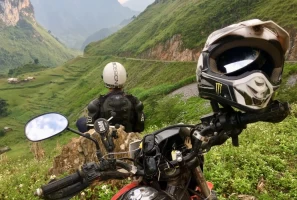
Climbing into the jagged limestone peaks of the northern frontier brings you face-to-face with loose shale, sharp boulders. Developing a solid rocky trail motorbike riding technique Vietnam mountains setup is the ultimate skill that separates a stressed traveler from a smooth backcountry explorer. We have teamed up with the expedition experts at Frontier Travel Vietnam to dissect the technical weight distribution.
1. Physical forces at play on mountain stone fields
Riding through the northern highlands means battling unique geological structures that actively work against your motorcycle's chassis stability. Unlike soft mud or predictable tarmac, loose stone fields present a constantly shifting surface where kinetic energy can quickly deflect your tires sideways. Understanding how gravitational forces and mass distribution change when climbing 25-degree scree slopes allows you to anticipate traction loss before it results in a damaging low-side crash.
1.1. The deflection factor on loose shale
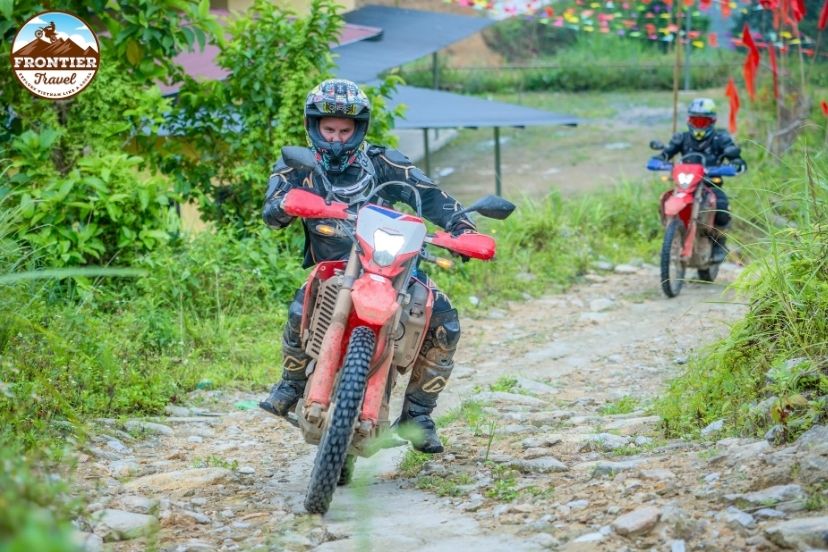
When your front tire strikes a loose piece of limestone shale at a 45-degree angle, the stone slides, causing immediate steering deflection. To counteract this, riders must maintain a loose upper body grip to let the handlebars move naturally without transferring the shock to the frame. Forcing a rigid grip causes the entire bike to wobble, destabilizing your balance and increasing the risk of dropping the machine on sharp rocks.
1.2. Momentum over speed for chassis stability
Maintaining a steady momentum between 15 to 25 km/h is far more effective than relying on sudden bursts of speed. High speed creates violent impacts that can puncture tires or bend aluminum rims, while slow speeds cause the bike to stall or get stuck in deep rock ruts. A balanced, continuous forward drive allows the suspension to compress and rebound predictably, keeping the chassis level over uneven terrain.
1.3. Unsprung weight reaction on steep climbs
On steep mountain climbs, the unsprung weight of your wheels and swingarm reacts aggressively to rapid successions of sharp rock bumps. If your rear shock rebound setting is too fast, the rear tire will repeatedly launch into the air, losing critical forward traction. Keeping your body weight centered over the rear wheel helps compress the suspension, forcing the knobby tire to bite into the stone gaps.
2. Advanced rocky trail motorbike riding technique Vietnam mountains
To successfully navigate the treacherous mountain passes of Ha Giang or Cao Bang, you must completely overhaul your standard riding posture. Relying on basic street-riding habits will quickly exhaust your muscles and lead to severe arm pump within the first three kilometers of a rocky ascent. By applying specific physical levers to your footpegs and handlebars, you transform the motorcycle into an extension of your body.
2.1. The active standing posture on footpegs
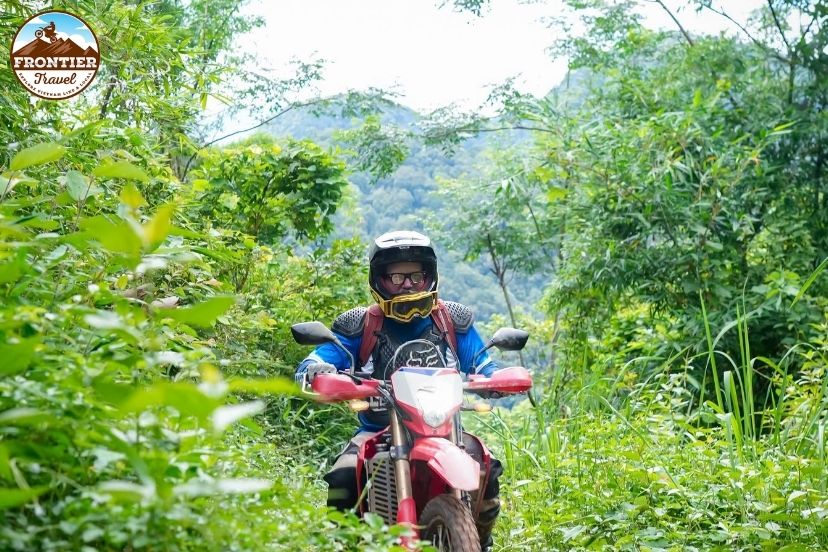
Standing up on the footpegs with your knees slightly bent and elbows flared out acts as a secondary, highly adaptive suspension system. Your knees should grip the fuel tank lightly, allowing the bike to rock side-to-side beneath you while your torso remains completely upright. This posture lowers your overall center of gravity to the footpegs, maximizing stability when rolling over shifting stones.
A relaxed upper body is just as important as strong leg control in this position. If your arms become stiff, every impact from the rocks transfers directly into your shoulders and causes fatigue quickly. Keeping your legs active and your hands light allows the motorcycle to move naturally beneath you, making rocky trail motorbike riding technique Vietnam mountains safer and more stable on unpredictable terrain.
2.2. Unweighting the front wheel over boulders
When approaching a prominent boulder higher than 20 centimeters, you need to unweight the front end to prevent a harsh head-on impact. Lean your hips backward just before contact while giving a precise, synchronized blip of the throttle to lift the front wheel slightly. This technique allows the front tire to skim over the crest of the rock rather than slamming into it.
Timing matters more than force when crossing larger stones on narrow mountain trails. Too much throttle can make the bike jump unpredictably, while too little lift can stop the front wheel against the obstacle. A controlled movement helps the rear tire follow through smoothly, reducing the chance of losing balance or damaging the rim.
2.3. The peg pressure steering method
Steering on loose rocks should be accomplished through your feet rather than by turning the handlebars with your hands. Pressing down hard on the left footpeg shifts the bike's weight bias, causing the machine to track left without washing out the front tire. This advanced method preserves steering traction, preventing the front wheel from tucking into loose gravel gaps.
This foot-led steering approach is especially useful when the handlebars feel unstable over scattered stones. Instead of forcing direction with your arms, let peg pressure guide the motorcycle while your eyes stay focused on the chosen line. With practice, rocky trail motorbike riding technique Vietnam mountains creates smoother cornering, better grip, and less front-end deflection on technical rocky trails.
3. Traction management and control mechanics
Refining your throttle control helps minimize unnecessary wheelspin which rapidly destroys tire knobs and destabilizes forward momentum. Proper clutch slipping serves as a mechanical buffer, preventing the engine from coughing and stalling when the rear wheel experiences sudden resistance. This level of control is fundamental to executing a flawless rocky trail motorbike riding technique Vietnam mountains run up steep, slippery inclines.
3.1. Master rocky trail motorbike riding technique Vietnam mountains via gear choice
Selecting the correct gear is paramount to maintaining traction over jagged topography. First gear is often too aggressive, causing the rear tire to break traction and spin wildly on loose slate. Utilizing second gear keeps the engine RPMs in a smooth, manageable torque band, delivering steady power that prevents unnecessary tire spin.
Riders should also anticipate upcoming terrain before shifting, especially on narrow mountain paths where stopping mid-climb can be difficult. A stable gear choice helps the motorcycle crawl over uneven stones without sudden jerks. This approach gives the rider more confidence when facing loose gravel, sharp inclines, or broken rock sections.
3.2. Two finger clutch coverage for smooth power
Keeping two fingers constantly covering the clutch lever allows you to feather the power output with micro-adjustments. When the rear tire begins to slip on a smooth rock slab, pulling the clutch in a few millimeters instantly reduces torque to regain traction. This rapid modulation prevents the bike from stalling while maintaining enough forward drive to clear the obstacle.
This technique is especially useful when riding slowly through tight rocky corners or technical uphill sections. Instead of relying only on throttle control, the clutch becomes a fine-tuning tool for balance and momentum. With regular practice, riders can keep the engine alive, reduce wheel spin, and move through difficult sections more smoothly.
3.3. The rear brake drag on steep descents
Descending steep, rocky switchbacks requires you to lightly drag the rear brake to stabilize the chassis and control your descent speed. Locking the front brake on loose gravel will instantly wash out the front wheel, resulting in an immediate crash. By applying roughly 70 percent rear brake and 30 percent front brake, you keep the motorcycle aligned and manageable.
Body position should support this braking method by shifting weight slightly rearward while keeping the arms relaxed. The rider needs to look ahead through the turn instead of staring directly at the rocks below the front wheel. Combining rear brake control with calm vision helps maintain balance, direction, and confidence on long downhill trails.
4. Tactical line choice and rock hazard mitigation
Visual scanning routines must become automated habits so that your subconscious mind calculates entry and exit trajectories continuously. Aiming for flat, embedded shelves rather than loose, rolling river rocks guarantees a much more predictable surface for your tires. Incorporating these scanning principles directly enhances your execution of the rocky trail motorbike riding technique Vietnam mountains on unpredictable single tracks.
4.1. Scanning far ahead for paths of least resistance
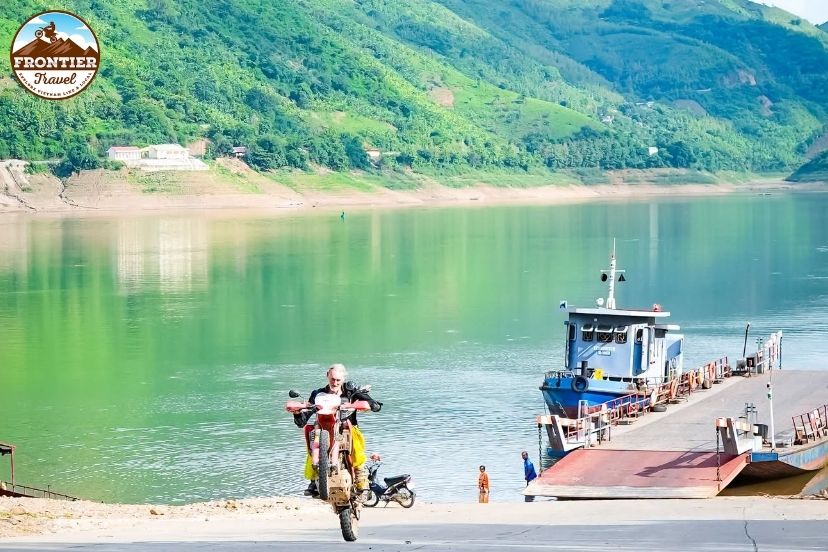
Fixing your gaze directly in front of your front tire is a critical mistake known as target fixation, especially during an Ultimate North Vietnam rocky trail ride. You must keep your chin up and scan the track fifteen to twenty meters ahead to identify the smoothest line. This foresight gives your brain enough time to plan body positioning and throttle adjustments before hitting difficult rock sections.
Experienced riders treat vision as the first safety tool before speed or power. By reading the trail early, you can avoid loose stones, deep ruts, wet slabs, and sudden drops without making panic corrections. This habit also makes rocky trail motorbike riding technique Vietnam mountains more controlled because every movement becomes planned instead of reactive.
4.2. Avoiding sharp limestone tire slashers
The northern mountains of Vietnam are famous for jagged, razor-sharp karst limestone formations that protrude directly out of the dirt tracks. These stones can easily slice through standard dual-sport tire sidewalls, causing instant deflation and stranded riders. Aim for sections of the trail where the rocks are rounded by water erosion or firmly embedded in hard-packed soil.
Tire placement should be calm, deliberate, and slightly defensive when crossing limestone-heavy routes. Instead of attacking every obstacle directly, choose a line that protects the sidewall and keeps the bike upright. Slowing down before sharp rock gardens can prevent punctures, rim dents, and sudden loss of balance far from repair support.
4.3. Correct throttle blip timing for ledges
Conquering a vertical rock ledge requires a perfectly timed combination of body compression and sudden throttle application. Compress the front forks by pushing down on the handlebars, then crack the throttle open just as the suspension rebounds up. This mechanical lift carries the front tire cleanly over the ledge, allowing the skid plate to clear the obstacle safely.
The key is not using excessive throttle, but applying power at the exact moment the suspension releases upward. A short, sharp blip gives the front wheel lift while the rider shifts weight forward again to keep momentum stable. Practicing this rocky trail motorbike riding technique Vietnam mountains helps riders clear ledges smoothly without bouncing backward or spinning the rear tire.
5. FAQ on handling technical high altitude stone tracks
Preparing your motorcycle mechanically before leaving the pavement is just as crucial as sharpening your physical balancing habits. Small modifications to tire pressures or adding protective component guards can mean the difference between a successful ride and a mechanical failure. Reviewing these expert solutions will ensure you possess the ultimate rocky trail motorbike riding technique Vietnam mountains knowledge base before embarking.
5.1. What is the ideal tire pressure to protect motorcycle rims?
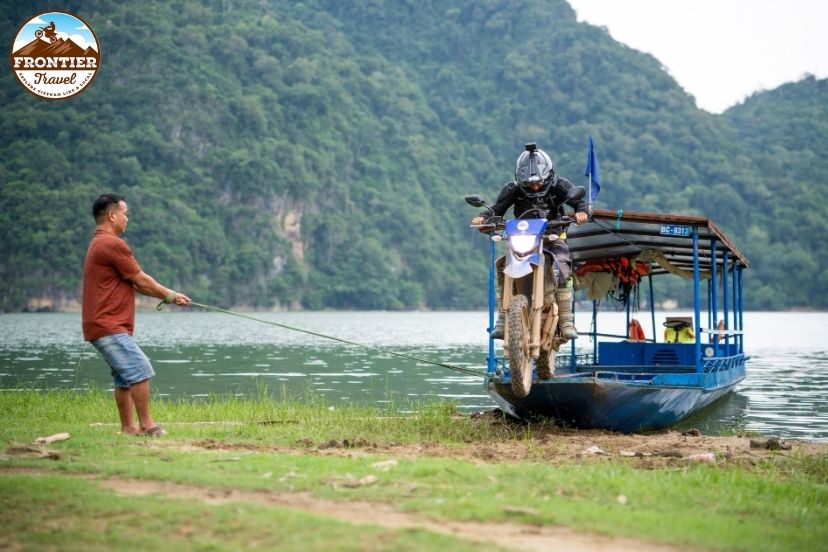
When riding heavy, luggage-laden motorbikes over sharp rocks, dropping your tire pressure too low can cause devastating pinch flats. For technical stone tracks, maintaining a pressure of 18 to 22 PSI provides a crucial balance between traction and rim protection. This pressure allows the tire carcass to flex over stones while preventing the rim from smashing into sharp rocks.
5.2. Why is a heavy duty aluminum skid plate absolutely necessary?
A standard plastic rock guard will instantly shatter when slammed against a jagged limestone boulder on a steep mountain pass. Equipping your motorcycle with a 4mm thick aluminum skid plate is mandatory to protect vulnerable engine cases and exhaust headers. This armor allows the bike to slide safely over high-centered obstacles without cracking the engine oil pan.
5.3. How do you safely recover if the engine stalls mid climb?
If your engine stalls on a 30-degree rocky incline, immediately pull the front brake and drop your boots to the ground. Keep the bike in gear and slowly ease the clutch out to use engine braking as a secondary anchor while re-starting. Once stabilized, angle the front wheel diagonally across the slope to diminish the steepness before attempting to smoothly pull away.
Conclusion
Instead of letting the loose limestone dictate your direction, mastering the rocky trail motorbike riding technique Vietnam mountains setup is what turns a grueling mountain crossing into an unforgettable adventure. You do not have to battle these technical geology challenges completely solo or on an unprotected machine. Reach out to the backcountry crew at Frontier Travel Vietnam right now to lock in an armored.