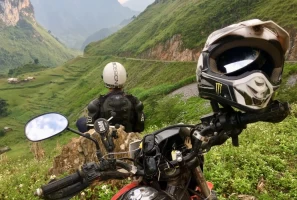
Riding loaded motorbike touring luggage Vietnam tips are essential for riders who want to handle mountain passes, rough trails, and long-distance routes with better control. Carrying extra luggage changes the way a bike brakes, leans, climbs, and reacts on uneven terrain. Frontier Travel Vietnam shares practical riding advice to help you travel lighter, ride steadier, and enjoy Vietnam’s adventure roads with confidence.
1. The physics of carrying heavy gear on mountain loops
Adding 20kg to 40kg of expedition gear to a motorcycle fundamentally alters its dynamic behavior across all three axes of movement. On a standard unladen dual-sport bike, the manufacturer designs the geometry to distribute mass evenly between both axles. Bolting a heavy rack to the rear subframe shifts the overall bias away from the steering head, creating a lighter front contact patch. This fundamental shift affects how kinetic energy forces the motorcycle through high-altitude switchbacks and slippery river crossings.
1.1. Altering the center of gravity dynamics
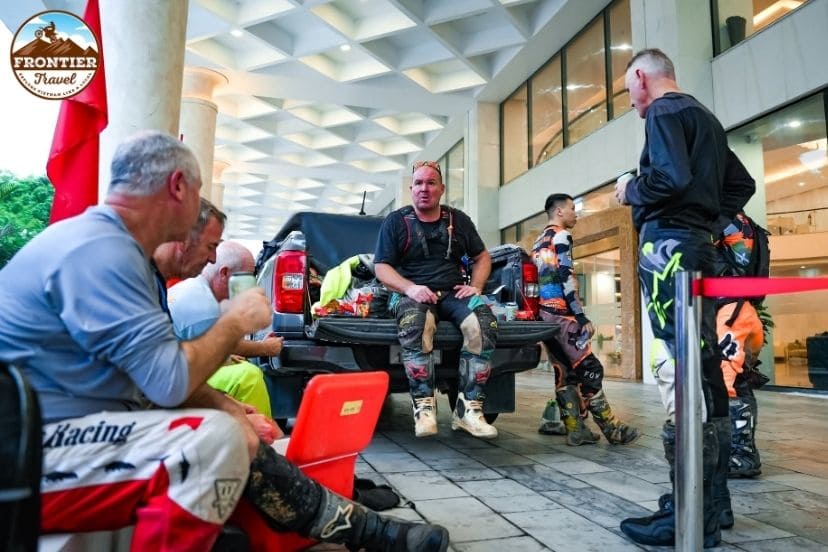
Mounting your luggage high above the rear seat raises the overall center of mass, making the motorcycle feel top-heavy at low speeds. When navigating tight hairpin turns in regions like Ha Giang, a high center of gravity causes the bike to flop into corners aggressively.
This instability requires constant manual correction through the handlebars, which quickly exhausts your shoulder and forearm muscles during a long riding day. Keeping your cargo profile as low as possible reduces this rotational inertia, allowing the machine to lean predictably.
1.2. Changes in front wheel traction levels
A heavy rear payload compresses the rear shock, which naturally lifts the front forks and reduces the downward force on the front tire. This reduction in front-end weight diminishes the steering tire's mechanical grip, causing the handlebars to feel vague, light, and unresponsive.
When accelerating up steep 20-degree mountain inclines, the front wheel can easily lose contact with the dirt trail entirely if you hit a sudden bump. Following riding loaded motorbike touring luggage Vietnam tips helps riders counter this dangerous condition by actively shifting their upper body weight forward over the fuel tank.
1.3. Increased braking distances on steep descents
Descending the massive mountain passes of northern Vietnam with a fully packed machine places immense thermal stress on your braking components. The total kinetic energy that your brake pads must dissipate increases exponentially with every extra kilogram of camping gear and tools.
You will experience significant brake fade within a few kilometers if you rely exclusively on the front lever during long downhill stretches. Combining 60 percent rear brake dragging with engine braking in second gear is essential to keep your speeds manageable.
2. Advanced riding loaded motorbike touring luggage Vietnam tips
To maintain crisp handling characteristics while carrying your entire life on a motorcycle, you must implement strict structural packing principles. Simply throwing loose bags onto a rear rack and tying them down with cheap elastic cords is a recipe for mechanical disaster. True packing efficiency relies on a calculated system that balances weight symmetrically across the machine’s longitudinal centerline. Applying these specific riding loaded motorbike touring luggage Vietnam tips transforms a heavy adventure bike into a highly stable, predictable trail weapon.
2.1. Centralizing heavy weight near the middle
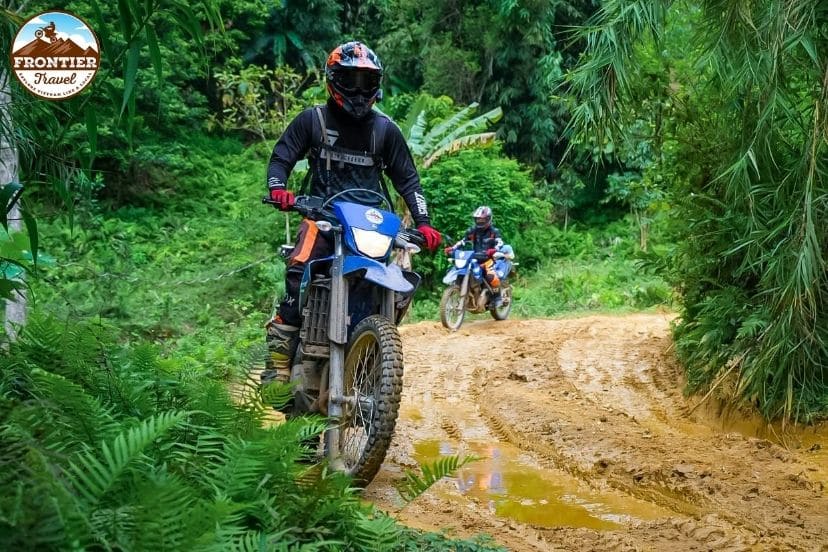
The most effective way to preserve your motorcycle's handling accuracy is to keep the heaviest items packed as close to the fuel tank as possible. Utilizing a robust tank bag or securing heavy mechanical spares onto the passenger portion of the saddle concentrates the mass near the bike's natural balance point.
This strategic placement prevents the rear subframe from flexing under high G-forces and keeps both wheels tracking along the same trajectory. Avoid placing heavy items in a top case extended far past the rear taillight assembly.
2.2. Keeping side panniers balanced perfectly equal
Asymmetric loading between your left and right side panniers will cause the motorcycle to constantly pull toward the heavier side on straight roads. Use a portable luggage scale to ensure the weight difference between your side bags never exceeds 1.5 kilograms.
If you pack a heavy cooking kit into the left saddlebag, balance it by placing your spare fluids and tubes into the right side bag. Applying riding loaded motorbike touring luggage Vietnam tips helps maintain this lateral equilibrium for a clean, effortless line when leaning through high-speed asphalt sweepers.
2.3. Using compression straps to eliminate shifting
Loose cargo that slides or shifts inside its bags during a sudden braking maneuver can instantly destabilize your balance on loose gravel. Utilize heavy-duty, non-elastic cam-buckle compression straps to cinch every bag down until it becomes an immovable part of the chassis frame.
Avoid using elastic bungee cords completely, as they stretch under load, allowing bags to slide into the rear wheel or melt against the hot exhaust pipe. Check the tension of every strap at every fuel stop, as continuous trail vibrations can slowly loosen nylon webbing.
3. Bike setup adjustments for a heavy payload
Altering your mechanical baseline is a core requirement of this comprehensive riding loaded motorbike touring luggage Vietnam tips handbook. Increasing the structural resistance of your springs prevents the frame from dragging over obstacles, saving your skid plate from hard impacts. These minor mechanical tweaks dramatically decrease your chances of experiencing a high-speed tank-slapper on unpredictable mountain roads.
3.1. Master riding loaded motorbike touring luggage Vietnam tips via rear shock preload
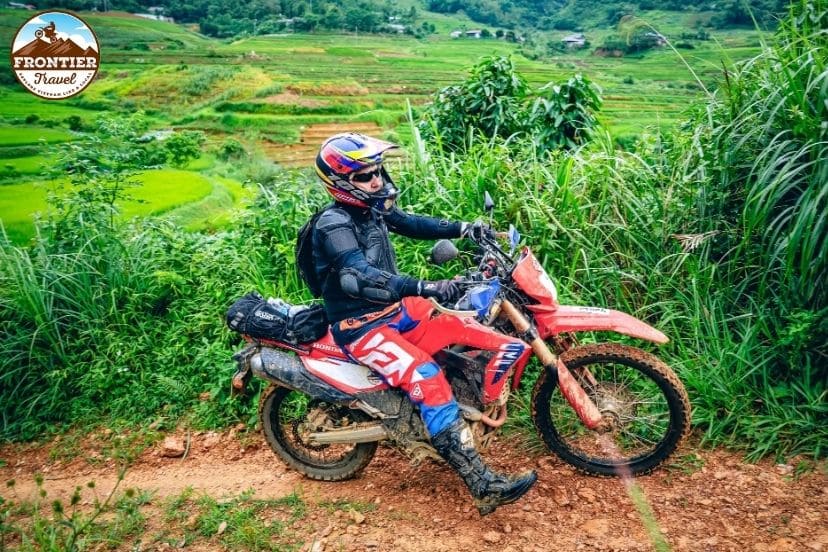
Increasing your rear shock absorber's mechanical preload setting is the single most important adjustment you can make before leaving the city. Adding preload compresses the internal spring coil, providing the extra resistance needed to support the heavy luggage weight without sagging excessively.
This adjustment restores the motorcycle's proper rake and trail dimensions, keeping the front steering angle sharp and responsive. Consult your owner's manual to find the specific spanner tool required to turn the shock adjustment collar up by three to five notches.
3.2. Adjusting tire pressures for extra weight
Operating a heavily laden touring bike with standard off-road tire pressures will cause the tire sidewalls to flex excessively, generating dangerous internal heat. To support the increased payload on asphalt transits, increase your rear tire pressure to 36 PSI and your front tire pressure to 32 PSI.
If your route transitions onto technical dirt trails, do not drop your pressures as low as you would when riding unladen. Maintain a minimum of 22 PSI in the rear tire to prevent the heavy cargo from slamming the wheel rim into sharp stones.
3.3. Correcting headlight aim for rear sag
When a heavy payload compresses the rear suspension, the front of the motorcycle naturally tilts upward toward the sky. This positional shift angles your headlight beam directly into the eyes of oncoming drivers, blinding them while leaving the actual road surface pitch black.
Locate the manual headlight adjustment screw behind the instrument cluster and rotate it clockwise to lower the light beam pattern. Following riding loaded motorbike touring luggage Vietnam tips ensures this alignment is corrected so you can clearly spot deep ruts, wandering livestock, and unlit agricultural vehicles during unexpected night riding.
4. Packing strategies for unpredictable monsoon weather
Choosing specialized materials that can withstand both tropical heat and torrential rain is critical for long-term cargo survival. Your outer bags must feature robust, abrasion-resistant outer shells that can survive slides against sharp limestone walls or dense jungle brush. Incorporating these weatherproofing layers into your setup ensures your delicate personal gear remains bone-dry throughout any mountain expedition.

4.1. Utilizing heavy duty roll top dry bags
Standard zippered backpacks and cheap nylon panniers will quickly leak through their seams when subjected to highway-speed rain conditions. You must utilize heavy-duty, marine-grade PVC or TPU roll-top dry bags that feature fully welded seams to ensure absolute water protection.
Roll the top closure down a minimum of three tight turns before snapping the buckles shut to create an airtight, moisture-proof seal. These rugged bags are completely dust-proof as well, preventing fine highland silt from clogging up your camera gear or clothing.
4.2. Keeping vital emergency tools easily accessible
There is nothing more frustrating than having to unpack your entire, mud-soaked motorcycle on a narrow cliffside trail just to locate a single 10mm wrench. Store your first-aid kit, tire plug repair kit, portable air pump, and rain gear in an easily accessible external pocket or a small tail bag.
This layout allows you to respond to sudden punctures or medical emergencies within less than sixty seconds without disturbing your main cargo load. Applying riding loaded motorbike touring luggage Vietnam tips keeps these items at the top of your packing hierarchy, reducing stress and helping your team move efficiently through difficult trail scenarios.
4.3. Protecting electronics from dust and rain
High-end cameras, lithium-ion battery banks, and sensitive drone equipment are highly vulnerable to the continuous high-frequency vibrations and moisture found on off-road routes. Wrap your delicate electronic components inside soft microfiber towels before placing them into individual, airtight zip-top plastic bags.
Store these sensitive items inside a rigid, foam-lined tank bag rather than inside hard metal panniers mounted directly to the vibrating frame rails. This dual-layer cushioning system dampens harsh trail impacts, saving your expensive camera lenses from internal glass delamination.
5. FAQ on managing a fully packed touring motorcycle
Embarking on a long-distance mountain tour with a fully loaded machine requires a thorough understanding of mechanical limitations and field repair protocols. Many riders are unsure how carrying an extensive gear setup impacts their daily riding style or how to handle structural failures in remote mountain districts. Below are the most frequent luggage management questions answered by professional tour leaders who support fleet operations across Vietnam every day.
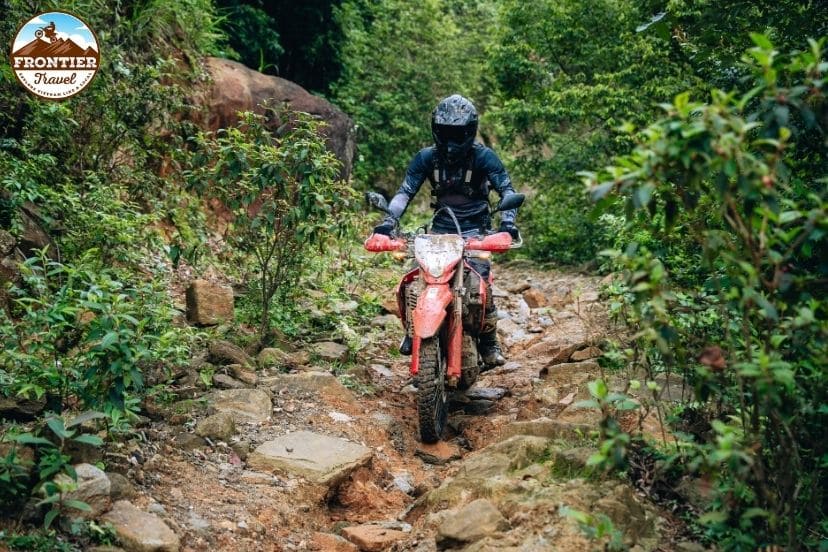
5.1. Should I choose soft or hard luggage?
For technical off-road touring through remote mountain loops, high-quality soft luggage systems are vastly superior to rigid aluminum hard boxes, especially during Off-Road Thrills on rough trails. Soft panniers flex and absorb impacts when the bike drops against a rock, whereas hard aluminum boxes will dent, crack, or break their mounting racks completely.
Furthermore, if your leg becomes trapped underneath the motorcycle during a trail fall, a soft bag will cushion your ankle rather than snapping your tibia against the ground. Hard boxes are only recommended for paved highway touring where maximum lockable security is your primary concern.
5.2. How does luggage affect lane filtering?
Mounting wide side panniers to your machine significantly expands your vehicle's physical width, which can complicate filtering through dense city traffic. Your rear bags can easily snag the bodywork of local commuter scooters if you try to squeeze through narrow gaps using your standard handlebar dimensions as a reference guide. Always remember that your rear profile is wider than your handlebars when entering congested urban areas like Hanoi or Da Nang. Exercise extreme patience and avoid aggressive filtering maneuvers until you have adapted to your bike's new structural width.
5.3. What if my luggage rack cracks?
Continuous trail vibrations combined with a heavy gear payload can eventually cause metal fatigue, resulting in a cracked rear luggage rack deep in the backcountry. If your rack cracks, do not panic, as nearly every small commune in Vietnam features a local roadside mechanic with an electric welding machine.
Use heavy-duty zip ties or a stout tree branch wrapped in duct tape to temporarily secure the broken rack until you can reach the nearest village. A local welder can easily grind down the fracture and apply a strong steel reinforcement weld for less than five dollars.
Conclusion
Riding loaded motorbike touring luggage Vietnam tips help riders turn heavy travel setups into smoother, safer, and more balanced journeys. Good preparation also reduces rider fatigue, protects your gear, and keeps every movement more controlled during long touring days. Ride with Frontier Travel Vietnam to experience Vietnam’s remote routes with expert support, practical packing guidance, and safer adventure touring.