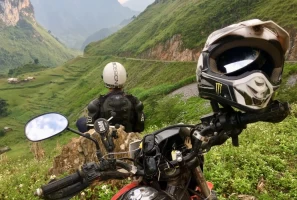
Perfecting the art of recovering dropped motorbike Vietnam off road maneuvers is the ultimate damage-control skill. Manhandling a fully loaded 150kg adventure bike back onto its wheels on a steep, slippery incline can easily rupture a disc in your back or burn out your remaining stamina if done with poor form. When a bike goes down deep in the backcountry, Frontier Travel Vietnam shows riders how to use smart body mechanics and controlled leverage to get it upright without wasting energy or risking injury.
1. Immediate post-fall safety protocol before lifting
The very first action must always involve assessing the immediate state of the machine to halt active mechanical deterioration. Left running while lying horizontally, a modern four-stroke engine will suffer catastrophic top-end failure within less than sixty seconds due to internal oil starvation. This baseline safety routine forms the structural foundation for executing any successful recovering dropped motorbike Vietnam off road maneuver in remote mountain territories.
1.1. Killing the ignition to prevent engine oil starvation
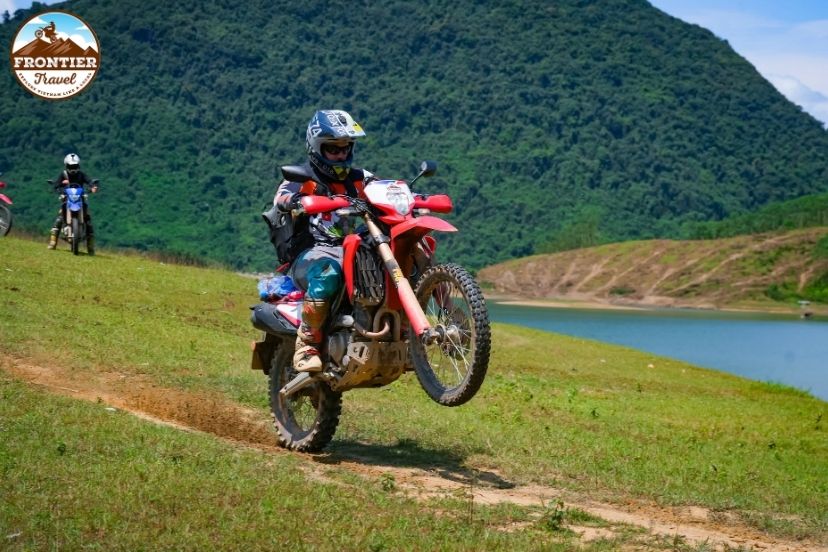
When a motorcycle tips onto its side, the oil pump loses its pickup point at the bottom of the oil pan, completely starving the overhead camshafts of lubrication. You must immediately locate the red kill switch on the right handlebar housing and click it to the off position to save the internal components.
Turning off the key cylinder also prevents the rear tire from spinning wildly if the transmission remains locked in a forward gear. This basic step removes the threat of sudden friction burns and stops the engine from vacuuming raw fuel directly into the airbox.
1.2. Assessing personal physical injuries before touching the machine
Adrenaline masks painful soft-tissue damage, hairline bone fractures, and deep muscle contusions immediately following a high-impact off-road tumble. Before bending down to grip the frame, walk five steps away from the crash site while slowly rotating your wrists, ankles, and shoulders to check for internal injuries.
If you detect a sharp spinal ache or a deep throbbing pain in your knee joints, do not attempt to lift a heavy dual-sport machine alone. In recovering dropped motorbike Vietnam off road situations, waiting for your trail companions or flagging down a local highland farmer is infinitely safer than permanently destroying your lower back muscles.
1.3. Evaluating trail stability to prevent the bike from sliding downhill
Mountain single-tracks throughout regions like Ha Giang feature loose limestone scree that can easily slide away under heavy weight pressures. Inspect the ground surfaces directly beneath your boots to ensure the soil will not collapse once you begin applying vertical lifting forces.
If the motorcycle has fallen with its wheels pointing up a 30-degree embankment, trying to lift it directly will cause the frame to slide further down the mountain. You must clear away large rolling stones and kick flat steps into the dirt to establish stable, unyielding footholds.
2. Recovering dropped motorbike Vietnam off road mechanics
Understanding the directional vectors of a motorcycle frame allows you to apply force where it yields the maximum rotational movement. Every specific angle of terrain dictates whether you should push with your legs or use the handlebar as an extended lever extension. Applying the correct recovering dropped motorbike Vietnam off road mechanics allows you to overcome gravity while using less than forty percent of your maximum muscular capacity.
2.1. The classic straight-back reverse monkey lift method
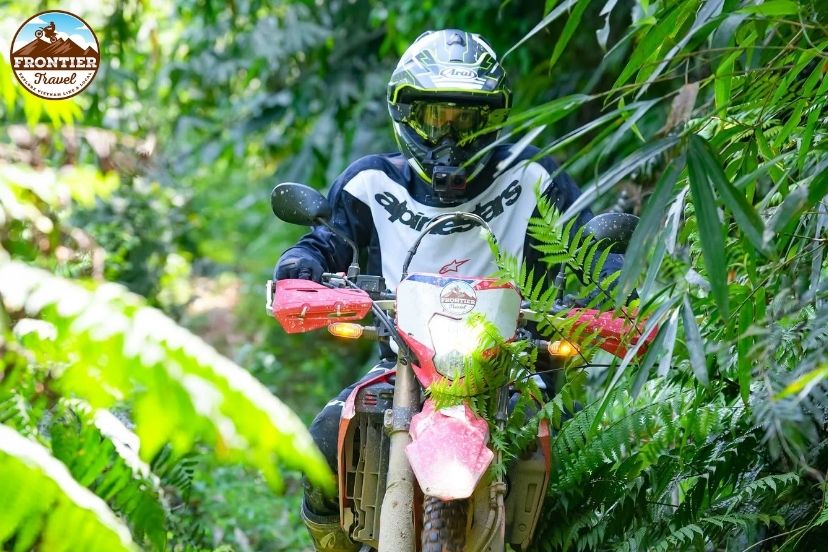
The reverse monkey lift remains the gold standard technique for moving a 150kg to 250kg machine without placing any stressful stress on your lumbar spine. Turn your back completely to the motorcycle, squat down deeply at the knees, and firmly plant your buttocks against the middle edge of the seat pad.
Grip the low frame rail or passenger footpeg bracket with one hand while grabbing the lower handlebar grip with the other arm. Drive upward through your quadriceps muscles while taking tiny steps backward, pushing the bike upright using the massive power of your legs.
2.2. Recovering dropped motorbike Vietnam off road with handlebar leverage
For agile 125cc to 250cc trail bikes, utilizing the full length of the handlebar provides incredible rotational leverage from the front of the chassis. Extend the low side of the handlebar completely until the steering head hits its solid mechanical stop against the frame bumper.
Standing at the front of the bike, grip the end of the handlebar grip with both hands and lift vertically while walking forward toward the tank. This long lever configuration multiplies your input force, making recovering dropped motorbike Vietnam off road easier when you need to quickly pop a lightweight machine out of deep ruts with minimal energy.
2.3. Deploying the front wheel walk up for steep vertical slopes
When a motorcycle drops facing directly down a steep mountain incline, traditional side lifting methods will cause the chassis to flip over completely. You must position yourself at the front tire, grabbing the fork sliders firmly before slowly walking the front wheel upward along the slope face.
This incremental technique uses the grade of the hill to support the machine's weight as you gradually pivot the frame back onto its side stand. Once the front tire points across or up the slope, you can safely deploy standard side-lifting methods to finish the recovery.
3. Managing slick surfaces and awkward trail angles
Securing your footing on unstable ground is just as vital as securing a solid, non-slip grip on the motorcycle's structural components. You must actively look for micro-topography changes, such as embedded roots or rock shelves, to brace your boot heels against during the lift. This calculated preparation turns a chaotic slip hazard into a controlled, highly predictable recovering dropped motorbike Vietnam off road procedure.
3.1. Finding secure boot traction on slimy highland clay slopes
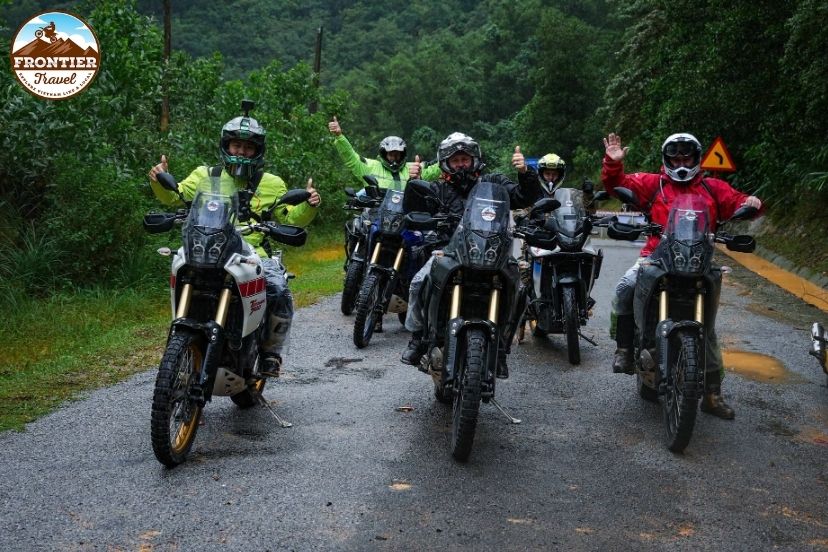
Red clay trails become as slick as ice after a brief highland downpour, making proper footing essential during Off-Road Thrills in remote mountain terrain. Before lifting, scrub the slick top layer of mud off the trail using the edge of your boot to expose the firmer, rockier soil hidden underneath.
If the trail is completely uniform mud, lay down large tree branches or flat pieces of limestone shale to build a stable platform for your feet. Having a solid, slip-free foundation prevents sudden core muscle tears and keeps your lifting vector directed perfectly upward.
3.2. Putting the bike in gear to lock the rear tire before lifting
Lifting a motorcycle that is resting in neutral allows the wheels to roll freely, causing the bike to roll away from you as it leaves the ground. Reach down to the left side of the engine and click the shift lever down repeatedly until the transmission locks firmly into first gear.
Slide the motorcycle forward slightly until the internal gearbox dogs engage completely, effectively locking the rear tire like a parking brake. In recovering dropped motorbike Vietnam off road situations, this simple mechanical lock prevents the bike from rolling forward or backward, keeping the chassis completely anchored to the lift spot.
3.3. How to safely flip a bike that landed completely upside down
When a motorcycle tumbles off the high edge of a single-track, it often comes to rest upside down with its wheels suspended in brush. Attempting to lift from this position is impossible because the center of mass is inverted, requiring you to flip the chassis horizontally first.
Grab the low wheel rim and slowly drag it downhill, utilizing gravity to spin the heavy engine cases back toward the low side of the track. Once the rubber tires are resting lower than the gas tank, you can apply normal straight-back lifting physics to finish the recovery.
4. Post-recovery mechanical checks before restarting
Running through a structured mechanical checklist ensures you do not overlook hidden structural damage that could manifest as a high-speed steering wobble later. Check that your throttle tube rotates freely and snaps back to its closed position automatically without binding against twisted handguard aluminum bars. This preventative maintenance routine forms a core component of advanced recovering dropped motorbike Vietnam off road field knowledge used by international tour leaders.
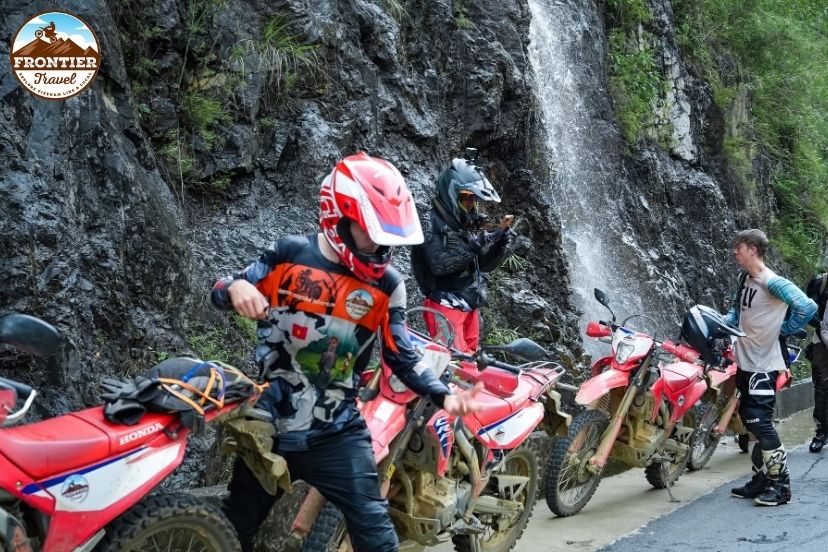
4.1. Checking for fuel leaks and clearing flooded engine cylinders
Gasoline frequently flows past the carburetor float bowl vents or fuel tank cap breathers when a motorcycle spends time resting on its side. Inspect the exterior engine cases for pooling fuel and smell the airbox area to ensure gas hasn't saturated the foam air filtering element.
If the engine refuse to turn over or makes a harsh thudding sound, raw fuel may have entered the combustion chamber, creating a hydro-lock hazard. Remove the spark plug completely and crank the motor over three times to clear any liquid fuel out of the cylinder head safely.
4.2. Re-aligning twisted front forks against a tree trunk or rock
A sharp handlebar impact against a hard boulder will easily twist the front fork tubes out of alignment within the triple clamp assemblies. If your handlebars are straight but the front wheel points five degrees to the left, your steering geometry is dangerously compromised.
Loosen the lower triple clamp pinch bolts slightly, brace the front tire against a solid tree trunk, and forcefully yank the bars to straight. During recovering dropped motorbike Vietnam off road, once the front tire aligns perfectly parallel with the main frame line, torque the pinch bolts back down to factory specification.
4.3. Inspecting handguards and controls for crucial leverage damage
Wrap-around aluminum handguards frequently rotate downward during a hard fall, pinching the clutch lever or front brake lines against the handlebar tubing. Ensure both hand levers operate through their full sweep without rubbing against the protective outer aluminum armor shielding.
If a lever has bent into a sharp hook shape, do not try to straighten it cold on the trail as cast aluminum snaps easily under stress. Leave the bent control as is or gently apply heat with a lighter before attempting micro-adjustments to prevent snapping the lever clean off.
5. FAQ on handling downed motorcycles in remote zones
Overcoming the physical exhaustion of multiple bike drops involves utilizing your environment and your riding gear to minimize overall muscle strain. Adjusting your packing strategy by keeping heavy tools low in your luggage profile significantly decreases the physical effort required to lift the machine. Incorporating these expert packing adjustments guarantees you can execute a smooth recovering dropped motorbike Vietnam off road maneuver without draining your daily energy reserves.
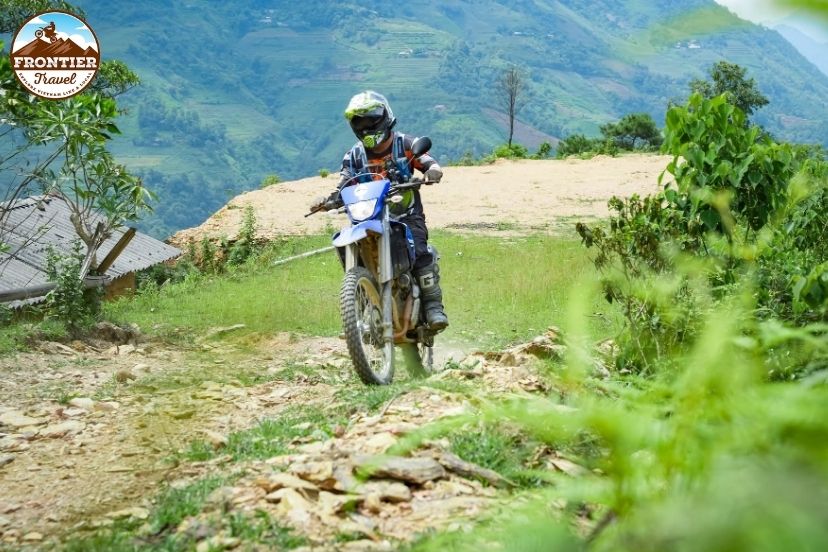
5.1. Should I remove heavy panniers before attempting a solo lift?
If your motorcycle is carrying more than fifteen kilograms of soft luggage or hard aluminum panniers, unbuckling them before lifting is highly recommended. Attempting to lift an additional twenty kilograms of gear situated far out on the rear rack adds massive rotational resistance to your physical pull.
Stripping the bike down to its base dry weight saves your back muscles and prevents the luggage frames from bending under lifting pressures. Once the unladen machine rests safely on its side stand, you can easily reattach your luggage bags and continue down the trail.
5.2. How do I safely lift a bike if the trail is pure liquid mud?
5.2. How do I safely lift a bike if the trail is pure liquid mud?
Lifting a motorcycle out of deep, suction-like mud requires you to break the vacuum seal holding the plastic side panels to the ground first. Reach down and rock the motorcycle back and forth horizontally several times to allow air and water to penetrate beneath the submerged frame components.
Slide a sturdy tow strap or tie-down webbing under the low fork slider to give your hands a clean, mud-free lifting handle. In recovering dropped motorbike Vietnam off road conditions, this extension strap allows you to stand completely upright while pulling, preventing your boots from sinking deeper into the slick mire.
5.3. What is the best team lifting protocol to avoid injuring your partner?
When two riders work together to hoist a downed adventure machine, clear verbal communication is essential to prevent sudden, asymmetric weight shifts. One rider must take control of the lower handlebar grip, acting as the main spotter while steering the front wheel straight ahead.
The second helper squats at the rear of the bike, gripping a solid frame rail or the passenger peg mount securely. Count aloud to three before driving upward simultaneously, ensuring both ends of the motorcycle leave the ground at the exact same velocity.
Conclusion
Recovering dropped motorbike Vietnam off road is not about brute strength, but about patience, balance, and smart technique. On Vietnam’s rocky trails, muddy climbs, and remote mountain tracks, this skill gives every rider more confidence and control. Frontier Travel Vietnam believes that mastering these small but essential techniques helps turn difficult off-road moments into valuable adventure experience.