O Quy Ho is one of the most majestic and impressive mountain passes in Northern Vietnam, always leaving travelers in awe of its unique beauty. If you're planning to conquer this route, here are some useful details to help you prepare.

1. O Quy Ho Pass: An experience every motorbike rider must try once
As one of the “Four Great Mountain Passes” of Northern Vietnam, O Quy Ho consistently draws countless tourists and motorbike riders. But its fame is no accident.
Here are a few reasons why this pass has become a journey every adventurer should experience:
The King of Northwest passes with stunning height and length
O Quy Ho Pass, often hailed as the King of the Northwestern passes, stretches more than 50 km and rises to nearly 2,000 meters above sea level.
Its remarkable length makes O Quy Ho one of the longest mountain passes in Vietnam. The deeper you ride into the pass, the more vividly the landscape transforms, from the lush green forests of Sa Pa to the sunlit, open and untouched stretches on the Lai Chau side.
The elevation of approximately 2,000 meters offers a completely different experience in terms of weather and visibility. From the highest points of the pass, riders can cast their eyes over a sea of white clouds, gaze down into deep valleys and admire mountain ranges layered like endless waves.
Thrilling yet rewarding
O Quy Ho Pass is shaped by long, gently winding roads that embrace the mountainside, creating an exhilarating rhythm for every motorbike rider. Occasionally, the ride is interrupted by sharp hairpin turns that force riders to slow down quickly and navigate with precision.
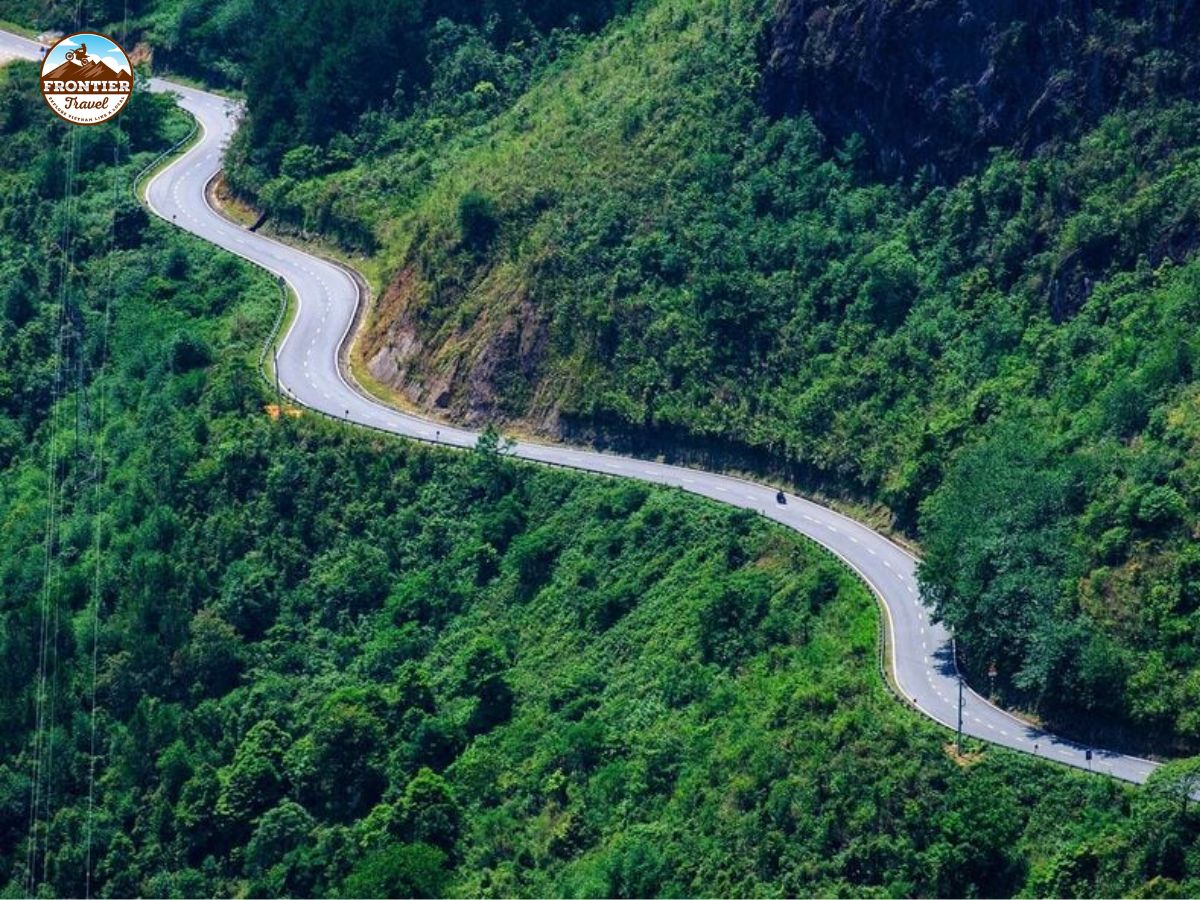
O Quy Ho Pass winding from above, breathtaking and irresistible
What makes O Quy Ho truly captivating is the sensation of riding on the edge between mountains and sky. On one side stands a towering, majestic cliff, while on the other stretches a vast, deep valley, creating a view that is both overwhelming and mesmerizing. A glance to the side reveals clouds drifting lazily at eye level, while below lies an endless expanse of open space.
It is this striking contrast that brings every stretch of road to life, turning each curve into a moment full of emotion and unforgettable adventure.
Enchanting climate
The captivating climate of O Quy Ho Pass is famous for its constantly changing weather, adding a touch of mystery to every journey. The contrast between the two sides of the pass is striking. The Lao Cai (Sa Pa) side is typically colder and often shrouded in mist, while the Lai Chau side enjoys warmer temperatures and clear sunshine.
As you ride along, it is not uncommon to find yourself engulfed in a thick blanket of fog, only to see a deep blue sky appear just minutes later. This sudden transition between sunlight, clouds, and mist creates a uniquely enchanting atmosphere that makes you feel as if you are truly riding through the clouds.
>>> You might also enjoy: O Quy Ho Pass: A majestic mountain route that captivates every adventure rider
2. Difficulty and riding experience on O Quy Ho Pass
O Quy Ho Pass is one of the most challenging routes in Northern Vietnam, suitable for experienced riders who are accustomed to steep mountain terrain and sharp, tricky curves. Conquering O Quy Ho is no easy task. Riders must face numerous dangerous and challenging factors, including:
Steep slopes and hairpin turns
The pass features steep inclines and sharp hairpin turns, especially on the sections connecting Lao Cai and Lai Chau. The road is notable for its numerous wide bends and sharp U-shaped curves, many of which have limited visibility, requiring riders to reduce speed and use their horn to warn oncoming traffic.
The curves near the summit, particularly on the Lai Chau side, demand maximum concentration due to the steep cliffs on both sides of the road.
Unpredictable weather and poor visibility
The weather at O Quy Ho is considered the most unpredictable factor, increasing the difficulty of any journey. In the early morning or late afternoon, dense fog often appears suddenly, reducing visibility to just a few meters.
During winter, light snowfall can make the asphalt extremely slippery, forcing riders to move slowly, maintain a safe distance, and use their brakes with caution.
Heavy traffic and large vehicles
Although it is a famous tourist route, O Quy Ho is also an important trade artery between Lao Cai and Lai Chau. Along the road, travelers will encounter heavy vehicles such as trucks and large containers.
These vehicles move slowly when climbing slopes and occupy a lot of space on curves, so riders need to be especially attentive, always maintain a safe distance, and be ready to give way when necessary.
3. Vietnam motorbike routes passing through O Quy Ho Pass
For motorbike enthusiasts planning their next adventure, exploring the Northwest of Vietnam offers some of the most scenic and thrilling rides in the country. Below are Vietnam motorbike routes that pass through the iconic O Quy Ho Pass, with directions from Hanoi and Sapa.
How to get from Hanoi to O Quy Ho Pass
The distance from Hanoi to Sapa is about 320 km. Here are some popular motorbike routes to O Quy Ho Pass, allowing you to ride safely while fully enjoying the stunning scenery along the way.
Route Flow | Main National Highway | Recommended Number of Days |
Hanoi → Phu Yen → Son La → Dien Bien Phu → Lai Chau → Sapa (O Quy Ho Pass) → Thac Ba Lake → Hanoi | QL32, QL6, QL4D, QL3, QL2 | 7 days |
Hanoi → Khau Pha (Yen Bai) → Pha Din (Son La/Dien Bien) → O Quy Ho (Lai Chau/Lao Cai) → Ha Giang (Ma Pi Leng) | QL32, QL6, QL4D, QL4C | 10 -14 days |
How to ride from Sapa to O Quy Ho Pass
If you want to take a short motorbike trip and explore O Quy Ho Pass from Sapa, you can start from the town center or the Sapa bus station, following National Highway 4D. Then, ride along Dien Bien Phu Street, pass the Silver Waterfall, and continue straight to reach the summit of the pass.
4. Safety tips for riding on O Quy Ho Pass
Riding motorbike in Vietnam, especially on mountainous routes like O Quy Ho Pass, requires careful preparation and awareness. To ensure a safe and enjoyable journey, follow these essential safety tips before and during your ride.
Preparation before departure
Documents: International driving license (IDP), valid passport and Vietnam visa (if required for your nationality).
Motorbike check: Inspect front and rear brakes, especially brake pads. Ensure tires have sufficient tread and pressure. Check all lights (headlights, low beams) and especially hazard/warning lights.
Personal gear: Wear full protective gear: full-face or 3/4 helmet, gloves, body armor, anti-slip boots. Bring warm clothing and rain gear.
Weather check: Check the weather forecast before departure. Avoid riding on days with ice warnings or heavy continuous rain.
Riding techniques on mountain passes
Ascending and descending: Use low gears (1st or 2nd). Low gears provide better traction uphill and allow engine braking downhill to control speed without overheating brakes.
Braking: Avoid continuous braking on long descents. Use intermittent braking and let the bike slow naturally using low gears.
Cornering: Reduce speed well before entering curves. Keep handlebars steady. Stick close to the right edge of the road and avoid crossing lanes to prevent collisions with oncoming traffic.
Use horn: Sound the horn at blind curves, especially sharp turns.
Follow tour guide instructions: If riding with a guided tour, always follow instructions regarding speed, overtaking and safe rest stops.
Tips for special weather/conditions
Fog/Rain: Immediately reduce speed. Turn on low beam and hazard lights to increase visibility. Never attempt high speed when visibility is below 10 meters.
Ice/Slippery road: If encountering ice, find a safe place to stop and wait for warmer conditions or melting. If you must proceed, ride extremely slowly, avoid sudden braking, and do not change speed abruptly.
Traffic: O Quy Ho Pass has many trucks and large container vehicles. Always yield to large vehicles on uphill sections or curves. Never overtake on blind corners or steep slopes.
Note: Avoid riding at night. Start the journey around 8 AM and finish before 5 PM to avoid dense fog and low light conditions.
>>> See more: The ultimate Vietnam motorbike tour guide for beginners
5. Important road signs to watch on O Quy Ho Pass
Road Sign | Meaning | Rider Guidance |
W.219 | Steep slope ahead (Warning of steep uphill/downhill) | Warns riders of upcoming steep sections. Pay attention to the grade percentage (shown on the sign) and immediately shift to a lower gear to use engine braking effectively. |
W.201a | Dangerous curves (Winding road) | Indicates continuous sharp curves, often including notorious hairpin turns. Reduce speed and use the horn at each turn. |
W.202a | Multiple consecutive dangerous curves to the left | The road ahead has several consecutive curves, starting with a left-hand turn. Reduce speed, stay alert, and be prepared to navigate the bends carefully |
W.203a | Road narrows on both sides | The pass often narrows, especially near cliffs. Be extremely careful with trucks/containers and give way if necessary. |
W.222a | Slippery road (Road surface may be slippery) | Warns riders about potentially slippery sections due to rain, fog, or ice in winter. Reduce speed, avoid sudden braking, and throttle gently. |
W.228a | Falling rocks (Falling rocks on the right) | Common on O Quy Ho due to steep cliffs. Do not stop unnecessarily near these areas and stay alert for falling rocks, especially after heavy rain. |
.jpg)
Some road signs to watch out for when riding O Quy Ho Pass
6. Explore O Quy Ho Pass by motorbike with Frontier Travel Vietnam
For adventure seekers eager to explore O Quy Ho Pass, Frontier Travel Vietnam offers a 7-day motorbike tour from Hanoi, taking you through the pristine landscapes of Northwest Vietnam, including remote valleys, unique ethnic villages and breathtaking mountain passes. The highlight of the journey is conquering two of the "Four Great Passes": The historic Pha Din Pass and the majestic O Quy Ho Pass.
Tour highlights:
Ride through pristine valleys, winding mountain trails and vibrant ethnic villages.
Experience the thrill of historic Pha Din Pass and take in the breathtaking scenery of the majestic O Quy Ho Pass.
Capture unforgettable photos of golden terraced fields, the stunning Silver Waterfall, and challenging winding roads.
Immerse yourself in the daily life of the Thai, H’Mong, Dao, and Lao communities, savoring local cuisine and traditional customs.
Visit Son La Prison, a site steeped in history, and the Dien Bien Phu battlefield, a key landmark in Vietnam’s past.
Relax at a traditional homestay, enjoying hearty local meals amidst the serene mountain landscape.
Explore the bustling Sapa Market, the historic Stone Church, and the charming streets of the highland town.
- Take part in boating, swimming, and observe the everyday life of the Dao people on the tranquil Thac Ba Lake.
>>> Click here to explore the complete O Quy Ho Pass motorbike tour
The professionally designed tour includes:
Riding the most scenic routes, from challenging curves to ideal stops for photos and rest.
High-quality motorbikes suitable for mountainous terrain, such as WR250cc, KLX250cc or CRF300cc.
Experienced guides and technicians who provide riding instructions, support in unexpected situations, and introduce local cultural and sightseeing spots.
Customizable itineraries tailored to each rider's experience level and physical condition, ensuring a safe and enjoyable adventure for every group.
Want to know if your preferred dates are available? Connect with Frontier Travel Vietnam to secure your spot, customize your itinerary and make sure your journey is truly memorable.
FAQs
1. Is riding on O Quy Ho Pass safe?Yes, if you have experience riding on mountain roads and strictly follow safety rules.
2. Is O Quy Ho Pass suitable for beginner riders?No. This is a challenging route with steep slopes, sharp hairpin turns, and frequent fog. For a safe experience, it’s recommended to join a tour with an experienced guide.
3. What times of day should be avoided when riding on O Quy Ho Pass?Avoid riding at night, early morning and late afternoon, when dense fog can reduce visibility and increase the risk of accidents.
4. Can you see Fansipan Peak from O Quy Ho Pass?Yes. On clear days with no clouds, you can see Fansipan Peak (the Roof of Indochina) from the summit area of O Quy Ho Pass (Heaven’s Gate).
5. Is O Quy Ho Pass prone to landslides during the rainy season?Yes. O Quy Ho Pass has a high risk of landslides, especially during the rainy season, typically from May to September.
6. Which curves are considered the most dangerous on O Quy Ho Pass?It’s hard to pinpoint a single most dangerous curve, but the most challenging sections are usually near the summit (Heaven’s Gate). The stretches on the Lai Chau side are often steeper and more treacherous.
7. Are there any gas stations along the pass?No. There are no major gas stations directly on O Quy Ho Pass. Be sure to fill up in Sa Pa or Tam Duong before starting your ride.