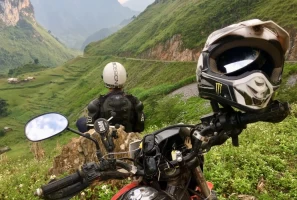
Motorbike chain adjustment check Vietnam tour guide protocols are vital skills for every rider exploring the diverse terrains of Southeast Asia. To ensure a seamless and safe journey through unpredictable weather and steep mountain passes, understanding your vehicle's mechanical needs is absolutely non-negotiable. That is why Frontier Travel Vietnam, the leading expert in organizing thrilling motorbike tours across Vietnam, provides this ultimate handbook to keep your wheels spinning smoothly.
1. Why Motorbike Chain Care Matters in Vietnam
Vietnam's climate and terrain place tremendous stress on motorcycle chains throughout every riding season. Before learning adjustment techniques, riders should understand why chain maintenance deserves serious attention.
1.1. Harsh Local Terrain and Unpredictable Weather Dynamics
Vietnam's northern mountains and central regions frequently experience high humidity, heavy rainfall, and rapidly changing weather conditions. These environmental factors continuously expose motorcycle chains to moisture, dirt, and contaminants.
Routes featuring steep passes, muddy tracks, and dusty coastal roads create particularly harsh operating conditions for drive systems. Moisture accelerates corrosion while dirt and sand form abrasive compounds that gradually wear away critical chain components according to every motorbike chain adjustment check Vietnam tour guide recommendation.

Mountain roads accelerate chain wear through extreme conditions
1.2. Severe Mechanical Impacts of a Neglected Drive Chain
A neglected chain quickly loses efficiency and creates noticeable performance problems during daily riding. Riders often experience power loss, jerky acceleration, and inconsistent throttle response when chain maintenance is ignored.
Severely worn or damaged chains may eventually snap under load and create dangerous riding situations. Following motorbike chain adjustment check Vietnam tour guide practices helps prevent costly transmission damage while improving overall comfort during long-distance travel.
1.3. The Golden Rule of Routine Chain Maintenance Intervals
Regular maintenance remains the most effective strategy for extending chain life and preserving motorcycle performance. Consistency matters far more than waiting until obvious problems begin to appear.
Every rider should inspect and lubricate the chain approximately every 500 to 800 kilometers under normal riding conditions. Additional inspections are mandatory after heavy rain, river crossings, mud sections, or challenging off-road segments as emphasized in every professional motorbike chain adjustment check Vietnam tour guide.
2. Motorbike chain adjustment check Vietnam tour guide
Proper chain adjustment begins with accurate measurements and a clear understanding of factory specifications. The following procedures explain how to assess chain slack correctly before making any adjustments.
2.1. Locating and Preparing for Proper Slack Measurement
Accurate measurements depend entirely on identifying the correct section of the chain before beginning the inspection. Riders should always locate the midpoint between the front and rear sprockets because this area exhibits the greatest vertical movement.
This midpoint can usually be identified visually by following the lower run of the chain between both sprockets. Establishing this location correctly is a fundamental step in any motorbike chain adjustment check Vietnam tour guide procedure.

Motorbike chain adjustment check Vietnam tour guide measurement basics
2.2. Step-by-Step Procedure for Measuring Chain Play Safely
The motorcycle should be positioned securely before any measurements are taken to ensure safety and consistency. A center stand or paddock stand provides the most stable working platform for this task.
Push the chain upward and downward gently at the designated midpoint while measuring the total movement distance. Consistent pressure is essential because uneven force can produce inaccurate readings and compromise the motorbike chain adjustment check Vietnam tour guide process.
2.3. Universal Standard Slack Variations Across Motorcycle Types
Most motorcycles operate correctly with chain slack ranging between 25 mm and 40 mm, although exact values vary by model. Different motorcycle categories require different settings because suspension geometry directly affects chain movement.
Adventure motorcycles, sport bikes, and naked bikes often use unique factory specifications tailored to their intended use. Riders should always compare measurements with the manufacturer's swingarm sticker rather than relying solely on general motorbike chain adjustment check Vietnam tour guide recommendations.
3. Diagnosing Physical Wear and Sprocket Damage Signs
After measuring chain slack correctly, riders should evaluate the physical condition of the entire drive system. Careful inspections help identify wear patterns before they develop into serious mechanical failures.
3.1. Evaluating Lateral Chain Play and Elongation Defects
Chain elongation occurs naturally over time as internal components wear through repeated use and exposure to harsh conditions. Detecting excessive stretching early prevents additional damage to the sprockets and transmission system.
Grip the chain near the rear sprocket and gently pull it away from the teeth to assess lateral movement. If significant separation becomes visible and the sprocket teeth are exposed, the chain has likely exceeded acceptable limits according to motorbike chain adjustment check Vietnam tour guide standards.

Checking chain stretch helps prevent costly drivetrain damage
3.2. Identifying Critical Sprocket Wear and Structural Damage
Sprocket condition directly influences how efficiently engine power reaches the rear wheel during operation. Damaged teeth create uneven chain movement and accelerate wear throughout the entire drive assembly.
Inspect every sprocket tooth carefully and look for sharp hook-shaped profiles commonly known as shark-fin wear. Chipped, bent, cracked, or missing teeth indicate that the complete drive kit should be replaced as recommended in every professional motorbike chain adjustment check Vietnam tour guide.
3.3. Inspecting Chain Link Seals and Auditory Noise Profiles
Modern motorcycle chains often rely on O-ring or X-ring seals to retain lubrication and reduce friction between moving components. Damaged seals allow contaminants to enter the chain and dramatically shorten service life.
Rotate the rear wheel manually and listen carefully for unusual clicking, grinding, or cracking sounds during movement. Riders should also check for stiff links, binding sections, or irregular chain motion that may indicate internal wear beyond normal motorbike chain adjustment check Vietnam tour guide maintenance requirements.
4. Required Tools and Workspace Preparation Steps
Successful chain adjustment depends not only on skill but also on using the correct equipment. Before beginning any work, riders should prepare a safe workspace and gather all necessary tools.
4.1. Necessary Hardware for Rear Axle Manipulation Tasks
Rear axle adjustments require tools that match the exact dimensions specified by the motorcycle manufacturer. Using incorrect sizes increases the risk of damaging nuts, bolts, and adjustment hardware.
Carry suitable socket wrenches, open-ended wrenches, or Allen keys designed specifically for your motorcycle model. Portable versions of these tools should always accompany riders undertaking long-distance trips and following a motorbike chain adjustment check Vietnam tour guide routine.

Essential tools ensure safe rear axle adjustments tasks
4.2. Precision Measurement Equipment and Tension Adjusters
Accurate measurements play a critical role in achieving proper chain tension and wheel alignment. Even small discrepancies can influence handling, drivetrain efficiency, and component lifespan.
A ruler marked in millimeters provides the most reliable method for measuring chain slack under field conditions. Riders should also carry the appropriate small wrenches required for adjusting the dedicated chain tension bolts during a motorbike chain adjustment check Vietnam tour guide procedure.
4.3. Chemicals and Safety Gear for Finalization Phase
Maintenance work becomes more effective when supported by proper cleaning products and safety equipment. High-quality supplies help preserve drivetrain components and improve overall service results.
Keep dedicated chain lubricants, clean lint-free cloths, and suitable cleaning agents readily available before beginning maintenance. A wheel chock or sturdy wooden block should also be used to stabilize the motorcycle safely throughout the motorbike chain adjustment check Vietnam tour guide process.
5. Executing the Precise Chain Tension Alignment Procedure
With the motorcycle prepared and the required tools available, the adjustment process can begin. Following a systematic sequence ensures accurate tension settings and proper wheel alignment.
5.1. Loosening the Foundation and Safety Lock Hardware
The first stage focuses on releasing the components that secure the rear wheel in position. Proper loosening creates enough movement to allow accurate chain adjustments without disturbing wheel alignment excessively.
Loosen the rear axle nut carefully using the correct wrench while keeping the nut partially engaged on the axle. Next, loosen the chain adjuster lock nuts on both sides of the swingarm to prepare for the motorbike chain adjustment check Vietnam tour guide procedure.

Careful loosening ensures safe rear wheel adjustment process
5.2. Synchronizing the Adjuster Bolts for Straight Tracking
Chain tension adjustments must be performed evenly on both sides of the swingarm to maintain correct wheel alignment. Uneven adjustments can cause the motorcycle to track poorly and increase tire wear.
Turn each adjuster bolt gradually while monitoring the alignment marks stamped into the swingarm. Riders preparing for a North Vietnam motorbike tour should pay particular attention to these reference marks because straight wheel tracking is essential on demanding mountain roads.
5.3. Verification Checks and Final Torque Re-Securing
After achieving the target slack measurement, the entire assembly should be inspected one final time before tightening all hardware. Verification prevents small mistakes from developing into larger mechanical problems later in the journey.
Confirm that chain slack falls within the required specification and verify that the chain runs straight across both sprockets. Tighten the lock nuts and rear axle nut according to factory torque specifications to complete this critical motorbike chain adjustment check Vietnam tour guide stage.
6. Lubrication Techniques for Maximum Chain Longevity
Once the chain has been adjusted correctly, lubrication becomes the next essential maintenance priority. Proper lubrication reduces friction, minimizes wear, and significantly extends drivetrain service life.
6.1. Cleaning the Chain Before Lubrication Application
Lubricating a dirty chain often traps abrasive contaminants against critical moving parts and accelerates wear. Effective maintenance always begins with thorough cleaning before any lubricant is applied.
Use a dedicated chain cleaner and a soft brush to remove mud, dust, old lubricant, and road debris from the entire chain surface. This preparation stage is considered a fundamental element of every motorbike chain adjustment check Vietnam tour guide routine because it allows fresh lubricant to penetrate properly.

Clean chain thoroughly before applying fresh lubricant always
6.2. Applying Lubricant to the Correct Contact Areas
Many riders apply excessive lubricant to visible outer surfaces while neglecting the locations that require protection most. Proper technique focuses on the internal contact points where friction occurs between chain components.
Rotate the rear wheel slowly and apply lubricant evenly along the inner side of the chain near the rollers and side plates. Allowing the lubricant time to settle before riding improves effectiveness and supports a professional motorbike chain adjustment check Vietnam tour guide maintenance schedule.
6.3. Determining Optimal Lubrication Frequency on Tour
Lubrication intervals vary depending on riding conditions, weather exposure, and route characteristics. Riders traveling through mountainous or off-road environments typically require more frequent maintenance than those remaining on paved highways.
Most chains benefit from lubrication every 500 to 800 kilometers under normal operating conditions. Additional servicing should be performed after rainstorms, river crossings, or extended dusty sections encountered during a motorbike chain adjustment check Vietnam tour guide journey.
7. Common Chain Maintenance Mistakes Riders Must Avoid
Even experienced riders occasionally make errors that reduce chain lifespan and compromise safety. Understanding these common mistakes helps ensure more effective maintenance and better long-term reliability.
7.1. Over-Tightening the Chain Beyond Specifications
Many riders incorrectly assume that a tighter chain automatically provides better performance and durability. In reality, excessive tension places unnecessary strain on bearings, sprockets, and transmission components.
An over-tightened chain can restrict suspension movement and create premature mechanical wear throughout the drivetrain. Every motorbike chain adjustment check Vietnam tour guide recommends maintaining factory-approved slack measurements rather than relying on guesswork.

Avoid over-tightening chain to protect drivetrain components
7.2. Ignoring Alignment Marks During Adjustments
Chain tension and wheel alignment work together as a single system that influences motorcycle stability. Neglecting alignment marks can cause tracking issues even when chain slack appears correct.
Always compare adjustment indicators on both sides of the swingarm before tightening the rear axle. Riders preparing for a North Vietnam motorbike tour should be especially diligent because long mountain routes amplify handling problems caused by poor wheel alignment.
7.3. Delaying Replacement of Worn Components
Some riders attempt to maximize component lifespan by postponing replacement far beyond recommended service limits. While this approach may appear economical initially, it often results in greater expenses later.
A severely worn chain quickly damages sprockets, while worn sprockets accelerate deterioration of a replacement chain. Following timely replacement schedules remains one of the most important lessons taught by every motorbike chain adjustment check Vietnam tour guide.
8. Conclusion
Motorbike chain adjustment check Vietnam tour guide knowledge ensures your mechanical components withstand the relentless challenges of remote highways and muddy mountain tracks. By keeping your drive system meticulously cleaned, properly aligned, and perfectly tensioned according to these factory specs, you eliminate breakdown risks and protect your safety. If you have any questions or require professional mechanical assistance, do not hesitate to contact Frontier Travel Vietnam to get expert guidance, premium bike rentals, and unforgettable guided tours across this beautiful country.