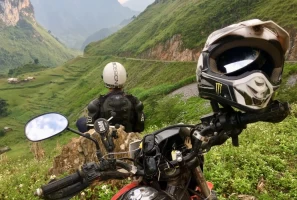
Learning how to ride downhill motorbike Vietnam engine braking techniques require is a critical survival skill for any rider tackling the country’s high-altitude loops. In this guide, Frontier Travel Vietnam breaks down the essential mechanical principles of gear-based speed management to keep your motorcycle stable and your brakes cool on long, punishing descents.
1. Introduction to How to Ride Downhill Motorbike Vietnam Engine Braking Guide
Riding down steep northern mountain passes like Ma Pi Leng or O Quy Ho on the Ha Giang Loop Motorbike Tour using only traditional front and rear brakes carries severe risks. Inexperienced riders frequently face "brake fade," a dangerous phenomenon where brake pads overheat from constant friction until they completely lose stopping power.
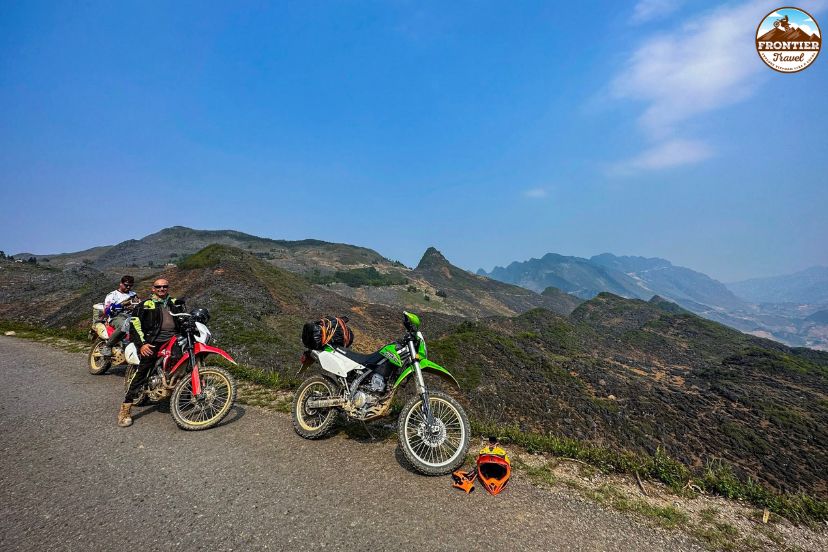
Long downhill stretches on Northern Vietnam passes
To prevent these catastrophic failures, we at Frontier always train our riders to use engine compression to naturally regulate descent speed. Relying on a proper how to ride downhill motorbike Vietnam engine braking strategy allows you to safely manage steep gradients without wearing out your mechanical brake pads.
2. Basic How to Ride Downhill Motorbike Vietnam Engine Braking Techniques
Navigating vertical descents safely requires a solid grasp of mechanical mechanics before you hit the slopes. Our team emphasizes these foundational habits to keep your bike fully stable.
2.1 Understand How Engine Braking Works
Engine braking slows your motorcycle by reducing throttle input while keeping the transmission fully engaged in gear. This mechanical drag uses internal engine vacuum to restrict acceleration, meaning lower gears naturally help control downhill speed without excessive brake use.
When you close the throttle, the engine acts as a natural air compressor that resists the forward momentum of the rear wheel. Relying on this how to ride downhill motorbike Vietnam engine braking principle allows you to maintain a steady descent pace without constantly fighting the bike's weight with your fingers.
2.2 Use Lower Gears Before Descending
Riders must downshift into a lower gear well before entering steep downhill sections. Selecting a lower gear early provides much better speed management and smoother downhill control, which forms the basis of a solid, safe descent strategy on mountain loops.
Waiting until you are already plunging down a steep cliffside to shift gears increases the risk of a panicked mistake. By clicking down early, you establish a reliable how to ride downhill motorbike Vietnam engine braking threshold that prevents gravity from pulling the machine into an uncontrollable free-roll.
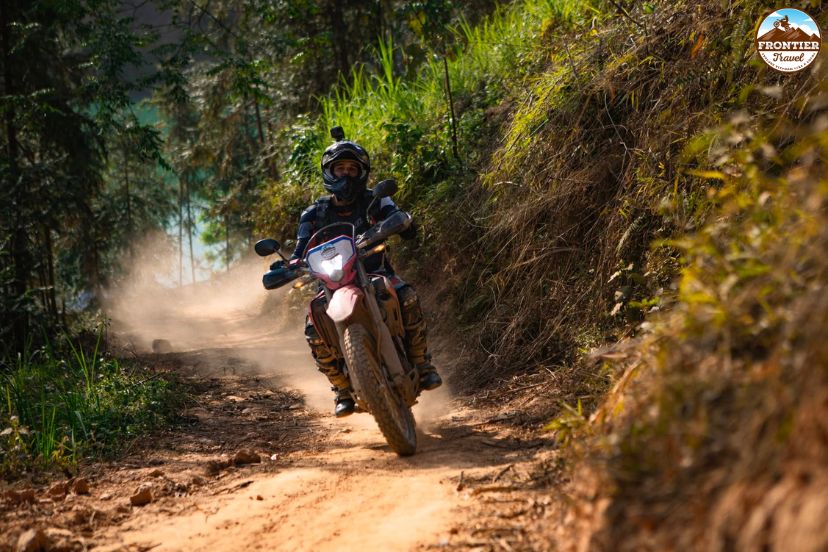
Mountain road safety with engine braking techniques
2.3 Avoid Pulling the Clutch Continuously
Holding the clutch lever in while descending completely cuts off your engine braking effectiveness, forcing the bike into a dangerous free-wheel roll. To maintain optimal motorcycle control, you must stay securely in gear so the transmission can manage your momentum.
When the clutch is pulled, the connection between your rear tire and the slowing power of the engine is broken. This requires you to execute a proper how to ride downhill motorbike Vietnam engine braking habit by letting the lever out fully, letting the mechanical friction do the hard work.
2.4 Combine Engine Braking With Smooth Brake Control
Gentle, progressive brake input helps stabilize the motorcycle chassis during technical downhill riding. You must avoid sudden heavy braking on steep mountain roads, choosing instead to let your engine drag handle the majority of your deceleration needs.
Think of your mechanical brakes as a supporting tool rather than the primary method of slowing down. Lightly squeezing the levers alongside your how to ride downhill motorbike Vietnam engine braking setup gives you precise control over your line when entering tight switchbacks.
3. Step-by-Step Execution of How to Ride Downhill Motorbike Vietnam Engine Braking
Executing a smooth descent on massive highland slopes is simple when you follow a disciplined, step-by-step sequence. Here is how our Frontier road captains manage severe drops out on the road:
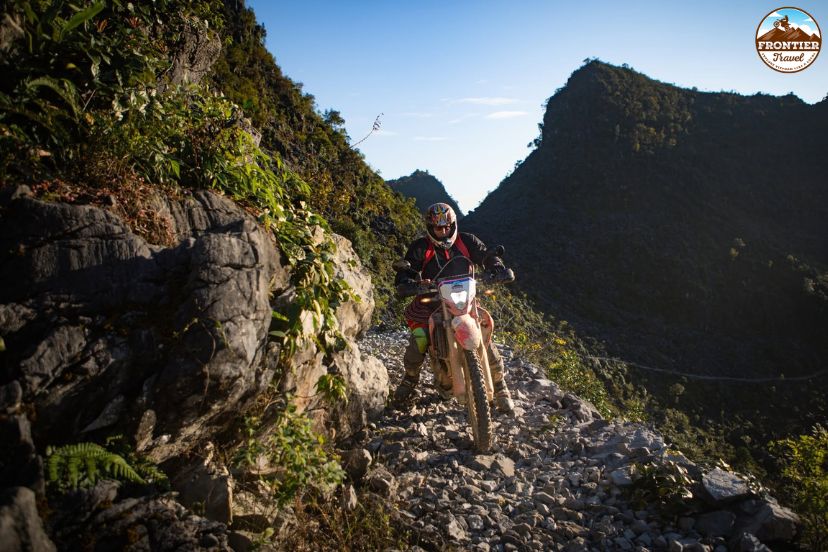
Proper gear selection for downhill motorbike riding
- Step 1: Roll off the throttle completely before the steepest section of the downhill slope begins to let engine friction start slowing you down.
- Step 2: Pull the clutch, click down into a lower gear, and smoothly release the clutch lever to engage the internal compression resistance.
- Step 3: Give a quick throttle blip before releasing the clutch lever—known as rev-matching—to prevent the rear wheel from skidding on loose asphalt. Mastering this fluid motion is essential to a safe how to ride downhill motorbike Vietnam engine braking execution.
- Step 4: Use occasional, light 3-second taps on your mechanical brakes if the engine RPMs climb too close to the dangerous redline zone.
4. How to Ride Downhill Motorbike Vietnam Engine Braking Guide for Different Road Conditions
Adapting your descent strategy to changing mountain elements is critical for maintaining traction. Our team at Frontier recommends adjusting your gear selection to match the specific road challenges ahead.
4.1 Riding Downhill on Steep Mountain Passes
Steep descents require slower entry speeds and highly consistent engine braking control to prevent runaway momentum. Riders should focus on smooth throttle and brake coordination, using a low gear to let the engine vacuum steadily hold the bike back on vertical drops.
As the gradient increases, gravity naturally tries to pull the heavy machine faster down the mountain. Perfecting this how to ride downhill motorbike Vietnam engine braking control allows you to maintain a safe, predictable pace without overheating your vital braking components.
4.2 Riding Downhill Through Hairpin Corners
Hairpin turns require excellent low-speed balance and careful gear selection before you begin to lean. Implementing a reliable deceleration routine ensures you do not have to brake aggressively mid-turn, keeping your suspension completely stable through sharp switchbacks.
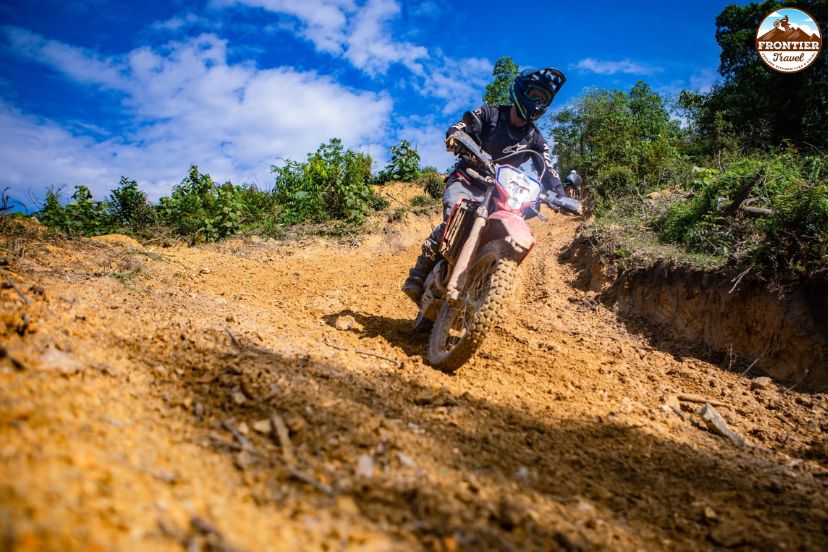
Motorbike rider descending a winding mountain pass
When you enter a tight downhill turn with a locked-in lower gear, the chassis remains balanced and responsive. This disciplined how to ride downhill motorbike Vietnam engine braking habit keeps the front forks from diving excessively, giving you maximum traction to steer through the apex.
4.3 Riding Downhill During Rain or Fog
Wet mountain roads drastically reduce tire traction and forward visibility, demanding extreme caution from riders. You should double your normal braking distance, drop down an extra gear for maximum engine drag, and reduce overall speed significantly to combat slick tarmac.
Moisture on highland roads can turn dust and oil into a highly slippery surface. Relying on a smooth how to ride downhill motorbike Vietnam engine braking approach reduces the need for sudden brake pulls that could instantly cause your tires to slide out.
4.4 Riding Downhill on Rough or Gravel Roads
Loose surfaces require much smoother throttle, clutch, and brake inputs than clean, dry asphalt. Sudden mechanical braking can instantly break traction on uneven terrain, making a steady gear setting the safest way to descend unpaved highland trails.
When riding over loose stones, any sudden change in wheel speed can cause an immediate loss of control. Utilizing a steady how to ride downhill motorbike Vietnam engine braking technique keeps the rear tire rolling predictably, allowing the suspension to track smoothly over the rugged surface.
5. How to Ride Downhill Motorbike Vietnam Engine Braking Techniques for Different Motorbike Types
Different machines handle vertical drops in unique ways based on their weight and suspension travel. Here is how we break down handling characteristics across our rental fleet to ensure you get the best performance.
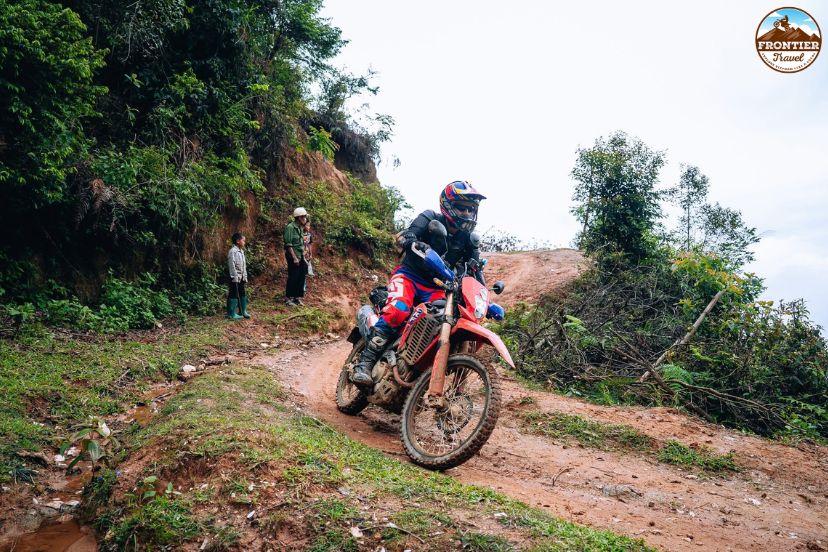
Controlling speed on steep mountain roads in Vietnam
5.1 Honda CRF300L newest version, Yamaha WR250R, Kawasaki KLX
Lightweight dual-sport bikes feature long-travel suspension that reacts dynamically to heavy vertical load changes. Utilizing a proper how to ride downhill motorbike Vietnam engine braking balance prevents these soft forks from diving too aggressively and upsetting your steering geometry.
- On-Road: Use a 70% Front / 30% Rear braking bias. Apply the front brake gently first to "load" the long-travel dual-sport forks before squeezing fully to prevent front-end chassis instability.
- Off-Road: Use a 30% Front / 70% Rear bias. Rely primarily on a steady gear setting, utilizing the rear brake to slide or steer while never grabbing the front brake on loose gravel.
5.2 Yamaha Tenere 700 and Honda Transalp 750
Heavy adventure motorcycles carry immense forward momentum that can easily overwhelm your mechanical brake pads on long descents. Mastering a disciplined how to ride downhill motorbike Vietnam engine braking strategy is vital to keep these larger twin-cylinder machines under complete control.
- Engine Braking: Downshift into 2nd or 3rd gear early on descents to let the large twin-cylinder engine control your speed, effectively protecting your heavy brake rotors from dangerous overheating.
- Intermittent Braking: Squeeze both brake levers firmly for 3–5 seconds, then fully release them for 1–2 seconds to allow cool air to circulate around the pads.
- Electronics: Engage specific Gravel or Off-Road riding modes to allow the adventure ABS system to handle uneven mountain surfaces without completely cutting off your stopping power.
5.3 Essential Body Position
Your physical posture completely dictates how effectively your motorcycle chassis absorbs gravity on a steep drop. Maintaining an active stance alongside a correct how to ride downhill motorbike Vietnam engine braking habit keeps your arms relaxed and your steering inputs fluid.
- Standing (Off-Road): Shift your hips well behind the seat center line. Brace your body weight against the footpegs rather than the handlebars to prevent dangerous force transfer to your wrists.
- Sitting (On-Road): Grip the fuel tank firmly with your knees during a descent sequence. Keep your arms loose and shoulders relaxed to allow the front wheel to track straight over bumps.
6. Common Mistakes in How to Ride Downhill Motorbike Vietnam Engine Braking
Avoiding critical rider errors is just as important as mastering proper mechanics. Watch out for these three dangerous habits when exploring the mountains:
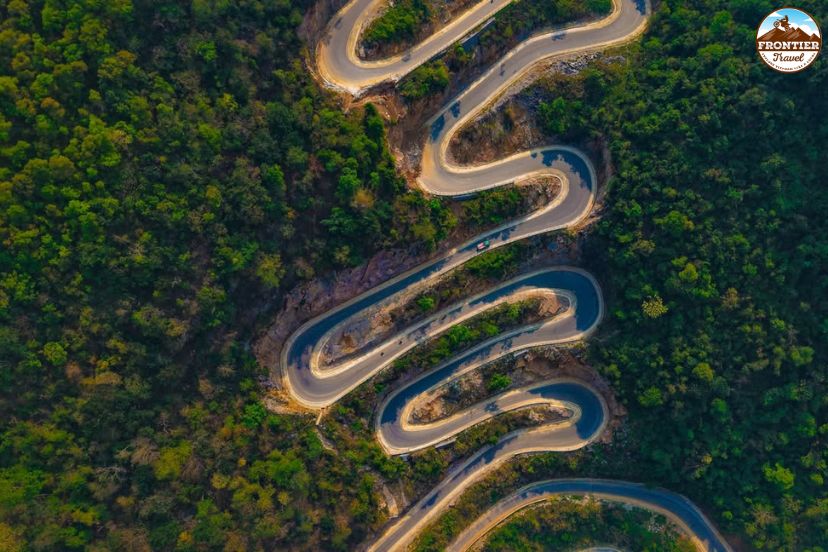
Safe downhill riding techniques for motorbike tours
- Coasting in Neutral: Holding the clutch lever in or coasting in neutral disconnects the transmission, forcing the bike into a dangerous free-fall that completely removes engine braking support.
- Rear Brake Stomping: Relying too heavily on the rear brake pedal easily locks the rear tire on steep slopes, leading to immediate rear-wheel fishtailing and severe low-side crashes.
- Panic Downshifting: Slamming the gear shifter down into 1st gear at high road speeds causes severe mechanical stress and violent rear wheel lockup. Always use a proper how to ride downhill motorbike Vietnam engine braking progression to match your engine RPMs smoothly to your actual road speed.
7. Safety Habits to Perfect How to Ride Downhill Motorbike Vietnam Engine Braking
Developing defensive road habits ensures your mechanical slowing techniques work perfectly alongside local traffic. Our team at Frontier recommends combining these safety checks with your gear-based deceleration.
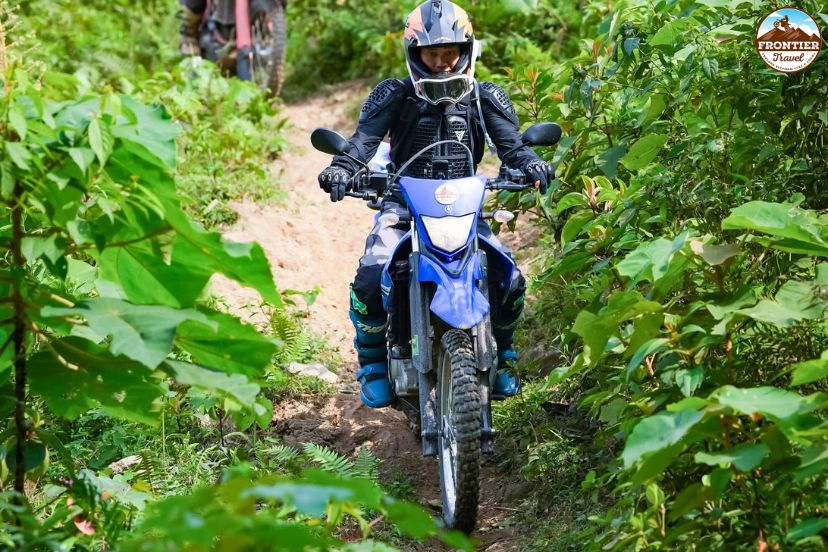
Using engine braking on Vietnam mountain descents
7.1 Brake Checks
Ensure fresh brake fluid and maximum pad thickness before leaving for any mountain tour. Having healthy hardware backing up your how to ride downhill motorbike Vietnam engine braking habits gives you a reliable safety net if you ever need to perform an emergency stop.
7.2 Buffer Zones
Maintain a large gap with other riders, as engine braking does not activate your rear brake light. Creating a wide safety buffer ensures vehicles behind you have plenty of time to react when your how to ride downhill motorbike Vietnam engine braking strategy slows your momentum without visual warning.
7.3 Cooling Stops
Utilize Frontier's scheduled scenic rest stops to give both your body and your bike a complete break. Giving your machine a brief rest allows any accumulated heat in the tires and pads to dissipate, ensuring optimal mechanical performance for the next pass.
8. FAQ: How to Ride Downhill Motorbike Vietnam Engine Braking
Navigating steep loops successfully comes down to understanding how your machine responds to gravity. Here are the most frequent questions we answer regarding mechanical descent controls:
8.1 Can engine braking damage my motorcycle engine?
No, motorcycle engines are specifically designed to handle high-RPM deceleration smoothly. Relying on a proper how to ride downhill motorbike Vietnam engine braking routine is infinitely safer than melting your brake pads on a long drop.
8.2 Which gear is best for steep downhill mountain passes?
Lock the bike into 2nd or 3rd gear for most standard alpine highways. Only downshift into 1st gear for exceptionally steep, narrow concrete village paths where your how to ride downhill motorbike Vietnam engine braking needs are at their absolute absolute maximum.
8.3 Does my brake light turn on during engine braking?
No, engine deceleration does not trigger your rear tail light switch. Occasionally tap your brake pedal lightly during a how to ride downhill motorbike Vietnam engine braking sequence just to flash the lamp and alert any riders traveling directly behind you.
8.4 Should I hold the clutch lever in while riding downhill?
Absolutely not, because pulling the lever completely disconnects the transmission from the wheels. Keep the clutch fully released to let your how to ride downhill motorbike Vietnam engine braking vacuum naturally regulate your road speed without free-wheeling out of control.
8.5 What should I do if the engine revs too high near the redline?
Apply firm, progressive pressure to both mechanical brakes for 3–5 seconds to drop your road speed quickly. Once the RPMs drop safely away from the redline, release the levers fully to resume your steady how to ride downhill motorbike Vietnam engine braking rhythm.
9. Conclusion
How to ride downhill motorbike Vietnam engine braking habits are vital for protecting your brakes and maintaining chassis control on extreme vertical descents. At Frontier Travel Vietnam, we provide premium dual-sport machinery and expert on-road coaching to help you master these essential mountain skills. Contact our team today to book your next custom loop tour and tackle legendary passes with total confidence!