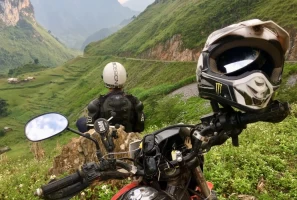
Understanding the Vietnam motorbike tour traffic rules is vital for any rider looking to navigate the unique and often chaotic flow of local roads safely. Beyond just wearing a helmet, you must grasp the unwritten customs and official regulations that dictate how different vehicles interact on the move. This guide breaks down the essential legal requirements to help you stay compliant and confident throughout your entire journey.
1. Introduction to the Unique Vietnam motorbike tour traffic rules
To truly appreciate the riding experience in this country, one must first accept that the road system operates on a unique blend of formal law and informal social contracts. Getting a handle on these nuances is the first step toward a successful adventure.
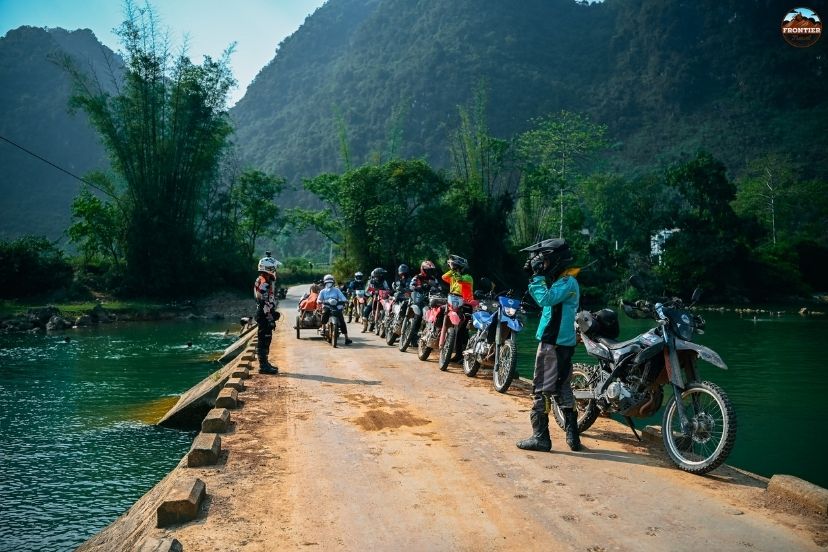
Understanding Vietnam motorbike tour traffic rules for safe travel
1.1. The "cultural signature" of Vietnamese streets
Hanoi and Saigon are not just cities; they are living, breathing organisms where the streets serve as the primary arteries. Understanding the vibrant energy of these urban centers is essential because the Vietnam motorbike tour traffic rules are often applied within a "school of fish" mentality.
In these metropolitan hubs, traffic does not stop so much as it flows around obstacles. You will quickly notice how honking and constant movement create a unique urban symphony that, while intimidating at first, actually helps keep the traffic from becoming completely gridlocked.
1.2. Why learning the rules is essential for foreigners
Navigating the exciting challenge of local driving habits requires more than just technical skill; it requires a psychological shift in how you perceive the road. Learning the Vietnam motorbike tour traffic rules is vital for any foreigner who wants to avoid heavy fines or, more importantly, dangerous collisions.
By taking the time to study these regulations, you are showing profound respect for local culture through responsible riding. This commitment to safety not only protects you but also ensures that the local community views international riders as disciplined guests rather than reckless tourists.
1.3. Bridging the gap between adventure and safety
Understanding the laws of the land significantly enhances the "authentic" travel experience by removing the stress of the unknown. When you know the Vietnam motorbike tour traffic rules, you can focus your mental energy on the incredible vistas of the Central Highlands rather than worrying about an unexpected police checkpoint.
Local guidance plays a crucial role in this process by helping you interpret unwritten road behaviors that aren't found in a textbook. To bridge this gap effectively, riders should consider the following:
- Observation: Spend your first hour in the city just watching how locals navigate intersections without clear lane markings.
- Patience: Accept that "right of way" is a flexible concept that usually favors the larger or faster vehicle.
- Intuition: Develop a sense for the "drift" of traffic, which often matters more than the painted lines on the asphalt.
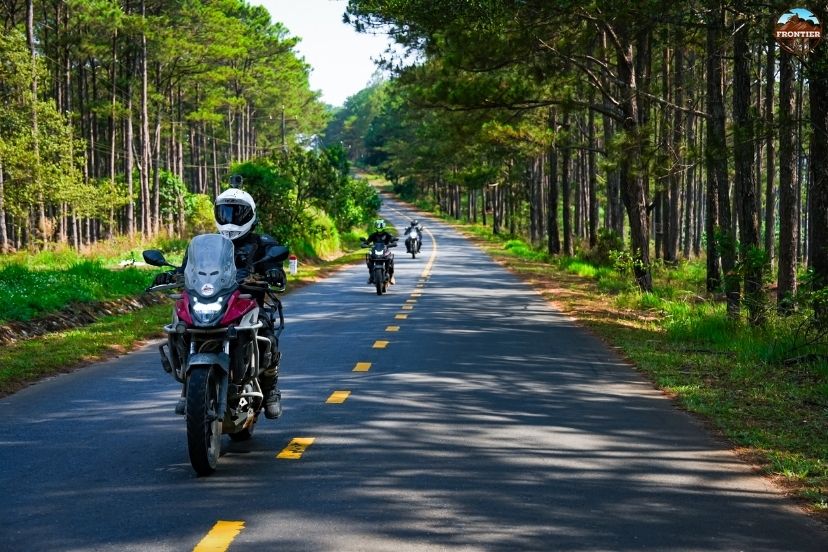
Understanding local road behavior helps balance adventure and safety
2. Essential documentation for Vietnam motorbike tour traffic rules
Before you even turn the key in the ignition, your paperwork must be in perfect order to withstand the scrutiny of local authorities. The legal framework surrounding Vietnam motorbike tour traffic rules is strict regarding licensing, and ignorance is rarely accepted as an excuse.
2.1. The "must-have" combo
To ride legally and avoid trouble with traffic police (often called the "yellow shirts"), you must carry a specific set of documents at all times. Failure to produce these can result in the immediate impoundment of your motorcycle, which can ruin a planned itinerary.
- Original Home Country License: This must clearly show a motorbike endorsement (Class A/A1/A2) to prove you are trained to handle a two-wheeled vehicle.
- International Driving Permit (IDP): Only the 1968 Convention version is officially recognized in Vietnam; the 1949 version is technically invalid here.
- Passport and Visa: While a copy is often sufficient, having your original documents or a clear photo of your entry stamp is highly recommended.
2.2. Common checkpoints
Police checks are not constant, but they frequently occur in specific strategic areas where tourists and locals alike are expected to follow the Vietnam motorbike tour traffic rules strictly. Knowing where these checkpoints are likely to appear can save you from a stressful encounter.
In major cities, you will find officers at the entry and exit points of Hanoi, Da Nang, and Ho Chi Minh City. Furthermore, national routes like QL1A or the mountain passes of the Ha Giang Loop often have mobile units monitoring speed and documentation. Tourist hotspots are particularly scrutinized, especially near the start of popular loops where rental motorbikes are most common.
2.3. Quick tips for roadside checks
If you find yourself being flagged down by an officer, the way you react can determine the outcome of the interaction. Keeping your cool and following the established Vietnam motorbike tour traffic rules for police interactions is the best way to move on quickly.
- Stay Calm: If flagged down, signal your intent to pull over, find a safe spot, and remain polite throughout the conversation.
- Show Documents: Present your IDP alongside your original license immediately to demonstrate that you are a legal rider.
- Copy of Registration: Always keep a photo or a physical copy of the bike's "Blue Card" (Registration) which should be provided by your rental shop.
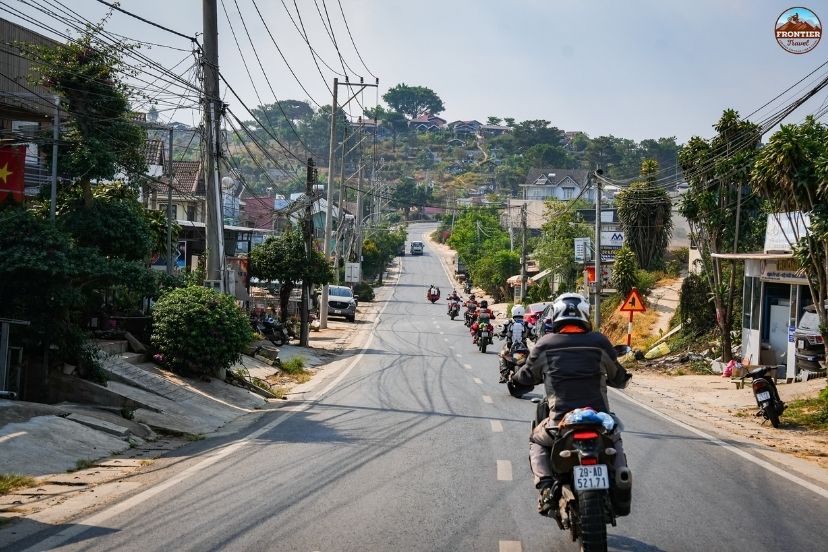
Stay calm and present documents during roadside checks
3. Safety equipment and Vietnam motorbike tour traffic rules
Personal protection is not just a suggestion; it is a core component of the legal requirements for riding in Vietnam. The law is very specific about what you must wear to be considered compliant with the Vietnam motorbike tour traffic rules.
3.1. Mandatory helmet regulations
The most visible rule is the mandatory use of a helmet for both the rider and any passenger on the bike. This law is strictly enforced in both urban and rural areas, and the "yellow shirts" are quick to pull over anyone riding bareheaded.
Standard fines for non-compliance range from 200,000 to 300,000 VND, but the real cost is the risk to your life. A legal helmet must have a chin strap that is properly fastened while the vehicle is in motion to meet the Vietnam motorbike tour traffic rules.
3.2. Identifying high-quality safety gear
While many locals wear "fashion helmets" that look like baseball caps, these do not provide adequate protection for a high-speed tour. To truly follow the spirit of the Vietnam motorbike tour traffic rules, you should opt for a full-face or three-quarter helmet that meets international safety standards.
Professional rental companies and tour operators provide specialized helmets designed for long-distance travel, ensuring they are snug-fitting and durable. High-quality gear should include:
- Impact Resistance: A shell that can withstand a significant drop or collision without cracking.
- Clear Visor: Essential for protecting your eyes from the dust, insects, and rain that are common on Vietnamese roads.
- Ventilation: Necessary for the humid climate to prevent the rider from overheating during long afternoon stretches.
3.3. Protective clothing beyond the law
While the law only mandates helmets, an experienced rider knows that additional protection is necessary for a safe journey. Adhering to comprehensive Vietnam motorbike tour traffic rules for personal safety means dressing for the "slide," not just the "ride."
Protective gloves are essential for maintaining a good grip on the controls and protecting your palms in case of a fall. You should also wear a sturdy jacket and long pants to prevent "road rash." Perhaps most importantly, you should move beyond flip-flops and wear closed-toe shoes or boots, as these provide the stability needed to operate the gear lever and rear brake effectively.
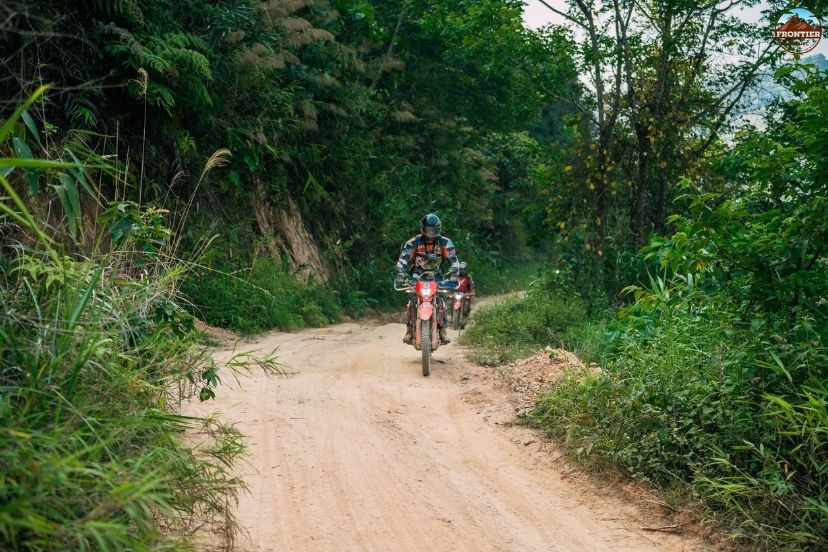
Protective gear enhances safety beyond basic requirements
4. Speed limits and Vietnam motorbike tour traffic rules
Speeding is a major focus for local authorities, and the limits in Vietnam are often much lower than what Western riders might expect. Understanding these boundaries is a critical part of the Vietnam motorbike tour traffic rules that will keep you out of trouble.
4.1. The legal framework (Law)
In Vietnam, speed limits for motorbikes are generally divided into two main categories based on the environment:
- Inside Residential Areas: You are restricted to 40–50 km/h depending on whether the road has a median strip or not.
- Outside Residential Areas: You can typically speed up to 50–60 km/h on open highways.
4.2. On-road vs. off-road reality
While the legal limit may feel "slow," the diverse terrain of the country often dictates a much more cautious pace regardless of the Vietnam motorbike tour traffic rules.
- On-Road (Paved Highways): Maintaining a steady 50–60 km/h is standard, but be aware that police often set up speed traps at the end of long, straight stretches where riders are tempted to go faster.
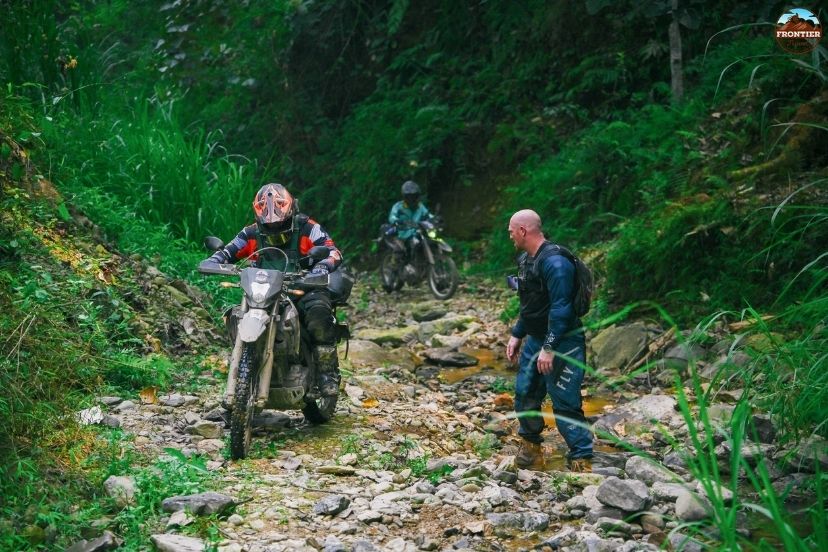
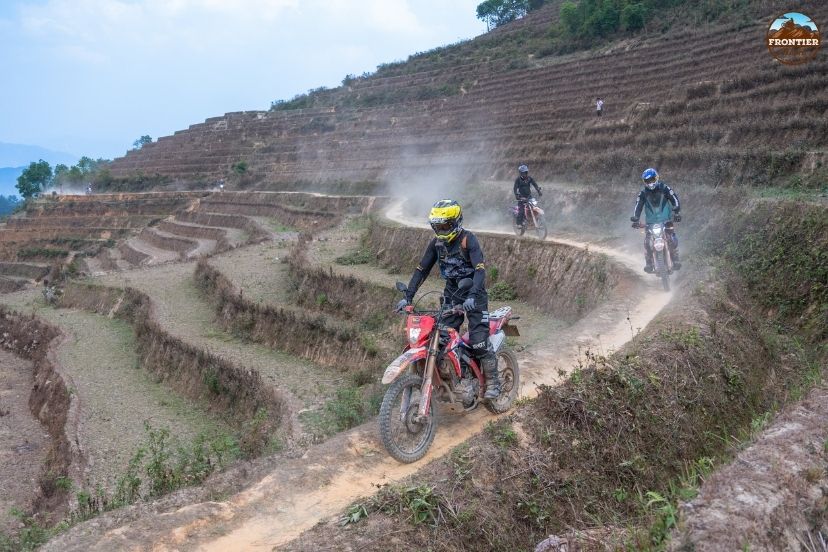
- Off-Road (Trails/Dirt Roads): Speed becomes irrelevant on mountain tracks where you will rarely exceed 20 - 30 km/h due to mud, loose gravel, and steep gradients. In these conditions, technical skill and balance matter far more than the throttle.
4.3. What actually happens?
Vietnamese roads are "living ecosystems" where the official laws often meet the reality of rural life. Expect the following challenges:
- Livestock: Buffaloes, cows, and dogs frequently cross the road without warning, ignoring all Vietnam motorbike tour traffic rules.
- Local Traffic: Be prepared for motorbikes emerging from small alleys or even driving on the wrong side of the road against the flow of traffic.
- Heavy Vehicles: Large trucks and buses often take up the entire lane on mountain curves, forcing smaller bikes into the shoulder.
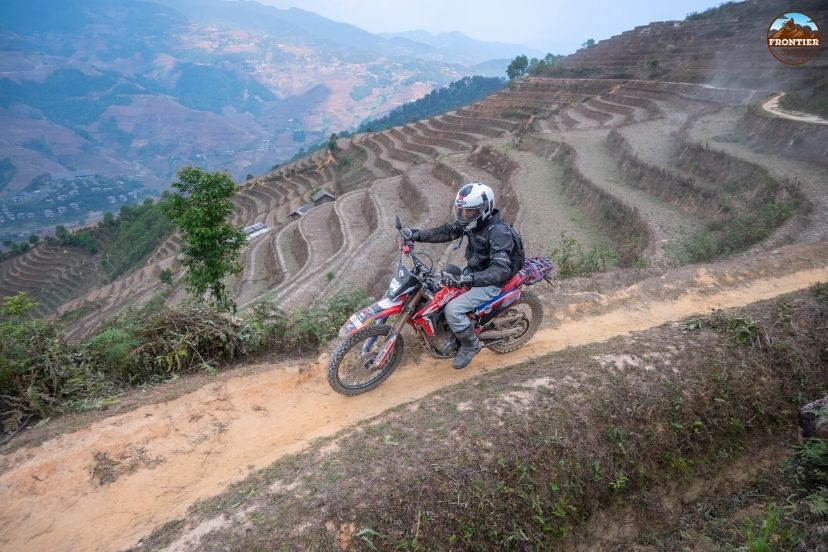
Expect unpredictable hazards despite Vietnam motorbike tour traffic rules
4. 4. What should you do?
To navigate this safely, you must adopt a proactive riding style that balances the law with local reality:
- Follow the "Flow": Don’t try to be the fastest rider on the road; match the pace of local traffic to remain predictable.
- Cover Your Brakes: Always keep two fingers on the brake lever in crowded or blind areas to decrease your reaction time.
- Use Your Horn: In Vietnam, the horn is a friendly "I am here" signal, not an insult. Use it liberally before entering blind corners in the mountains.
5. Passenger and distance Vietnam motorbike tour traffic rules
The number of people on a bike and the space between vehicles are also governed by specific regulations. While it is common to see families of four on a single scooter, international riders are expected to adhere to the strict Vietnam motorbike tour traffic rules for safety.
5.1. The two-person maximum limit
Legally, a motorbike in Vietnam is permitted to carry a maximum of two people: the rider and one passenger. While there are minor exceptions for children or emergencies, overloading significantly compromises balance and increases braking distance on challenging terrains. For a safe touring experience, sticking to this limit is essential to ensure the bike handles correctly on steep mountain passes.
5.2. Maintaining legal safe distances
Maintaining a "reaction gap" is your best defense against the unpredictable maneuvers of local traffic, such as sudden swerves to avoid potholes or animals. According to Vietnam’s traffic rules, you should keep a distance of at least 35 meters at 60 km/h, increasing up to 100 meters on faster highways. Keeping this space ensures you have sufficient time to react and stop safely when the unexpected happens.
5.3. Managing space in crowded urban environments
In the dense traffic of Hanoi or Ho Chi Minh City, maintaining a 35-meter gap is often impossible, requiring you to focus on smaller "reaction gaps" instead. You must prioritize positioning yourself with a clear "escape route" to avoid being squeezed between larger vehicles like cars or buses. Most importantly, never linger in the blind spots of trucks or buses, as they may change lanes suddenly without seeing you.
Maintain safe positioning and avoid blind spots in heavy city traffic
6. Prohibited actions under Vietnam motorbike tour traffic rules
Certain behaviors are strictly forbidden and carry heavy penalties that can include the suspension of your license or the seizure of your vehicle. Staying compliant with these Vietnam motorbike tour traffic rules is non-negotiable for a safe tour.
6.1. Zero tolerance for audio and mobile devices
It is strictly illegal to use a mobile phone or wear earphones while riding, as you must remain fully alert to the sounds and horns of surrounding traffic. Violating this rule can result in heavy fines and a license suspension ranging from 1 to 3 months. If you need to check a map or take a call, you must pull over completely to a safe spot before using your device.
Vietnam enforces a "Zero Tolerance" policy, meaning the legal blood alcohol limit is exactly zero. Violating this rule can result in impounded vehicles and massive fines up to 40 million VND, even after just one beer. As riding under the influence is a leading cause of accidents, staying completely sober is the most critical rule for your safety.
6.3. Obeying traffic signals and roundabouts
In Vietnam, a yellow light is a signal to slow down and prepare to stop, and running a red light is a serious offense that poses extreme danger to cross-traffic flow. When navigating roundabouts, you must enter slowly and yield the right of way to vehicles already inside the circle coming from your left. Mastering these signals and yielding techniques is a fundamental requirement for staying safe and legal during your journey.
7. Logistics and parking Vietnam motorbike tour traffic rules
Even when you are not riding, the rules of the road still apply to how and where you leave your motorcycle. Proper logistics are essential for preventing theft and staying on the right side of local ordinances.
7.1. Finding designated parking zones
In Vietnam, you must park in designated zones often marked with "Giu Xe" signs rather than anywhere on the sidewalk. Parking illegally near intersections or on pedestrian streets can lead to your bike being impounded by urban order police. To avoid a lengthy and expensive retrieval process, always look for a parking attendant and collect a ticket for a small fee.
Always use designated “Giu Xe” parking zones to avoid fines or impound
7.2. Protecting your bike from theft and scams
While Vietnam is generally safe, motorcycle theft still occurs in major cities, so never leave your helmet or bags unattended on the bike. Always engage the steering lock as a minimum precaution and use additional disc locks or chains provided by tour operators. These simple security measures will give you peace of mind while exploring attractions or enjoying local food.
7.3. Awareness of common roadside scams
Be alert to "staged" accidents or unauthorized mechanics who claim your bike has non-existent mechanical issues. For minor scrapes, it is often more practical to settle quietly with a small payment than to involve the authorities. Always keep your tour operator’s emergency number on hand to help navigate any suspicious or complicated situations on the road.
8. Frequently asked questions (FAQ) about Vietnam motorbike tour traffic rules
Before hitting the road, it’s essential to understand the key traffic rules and common concerns riders often face in Vietnam.
8.1. Can I turn right on a red light in Vietnam?
Generally, the answer is no. You must wait for the light to turn green unless there is a specific green arrow signal or a sign that explicitly says "Motorbikes are allowed to turn right."
8.2. What should I do if a police officer pulls me over?
Stay polite and immediately present your original license and the 1968 IDP. If you have violated the Vietnam motorbike tour traffic rules, the officer will explain the fine; in many cases, you may be asked to pay at a local treasury or, occasionally, settle a "spot fine" to continue your journey.
8.3. Are the rules different for the Ha Giang Loop vs. Ho Chi Minh City?
The formal laws remain the same, but the enforcement and terrain differ. In the city, the focus is on lane discipline and traffic lights, while on the Ha Giang Loop, the focus shifts to speed control and staying on the right side of the road during mountain curves.
8.4. Is lane filtering (splitting) legal in Vietnam?
Yes, lane filtering is a standard and legal practice for motorbikes in Vietnam. It allows the heavy volume of two-wheeled traffic to move to the front of intersections, which is a core part of how the Vietnam motorbike tour traffic rules accommodate millions of riders.
9. Conclusion
In conclusion, mastering the Vietnam motorbike tour traffic rules is the essential foundation for any successful two-wheeled adventure in this beautiful country. If you are looking for an expert-led journey that prioritizes both excitement and safety, be sure to visit Frontier Travel Vietnam to explore their professional tour options.