Mai Chau local food what to eat guide introduces the rich flavors of Northwest Vietnam through authentic Thai ethnic cuisine, mountain specialties, and traditional village dining experiences. Together with Frontier Travel Vietnam, discover what makes Mai Chau one of the most memorable food stops in Northern Vietnam motorbike journeys.
1. What Makes Mai Chau Food Different From Other Regions?
Mai Chau cuisine reflects the lifestyle of the Thai ethnic communities living among Northern Vietnam’s mountains and valleys. Local dishes feature smoky grilled flavors, bamboo cooking, mountain herbs, and fresh ingredients from nearby forests, rivers, and farms. Meals are closely tied to homestay culture and village gatherings, making local cuisine an unforgettable part of any Northwest Vietnam Ride.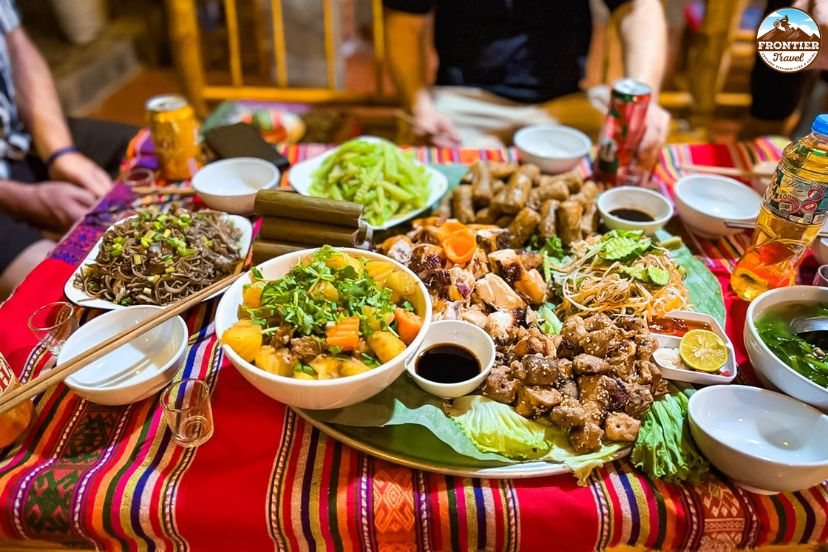
Traditional dishes to try in Mai Chau
Many dishes are simple in appearance but rich in natural flavors created through charcoal grilling, slow smoking, and traditional preparation techniques passed down for generations. A Mai Chau local food what to eat guide often highlights how local meals feel more authentic and personal compared to modern restaurant dining in urban Vietnam.
2. Traditional Dining Culture in Mai Chau Villages
Exploring village dining traditions is one of the most memorable parts of visiting Mai Chau. Meals are not only about food but also about hospitality, conversation, and cultural exchange between travelers and local families, making it a highlight of any Northwest Vietnam Ride. Many Frontier motorbike tours through Northern Vietnam include overnight village stays where riders can experience these authentic mountain dinners firsthand.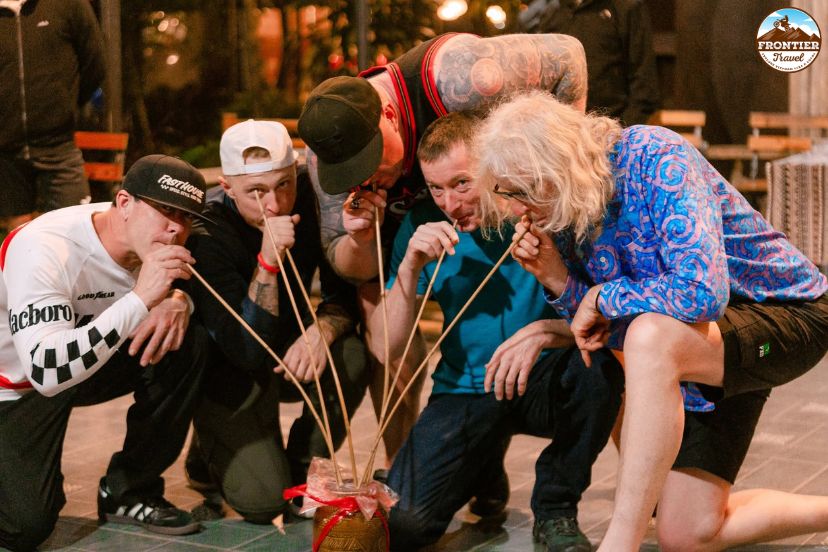
Authentic Thai ethnic cuisine in Mai Chau
2.1 Family-Style Meals in Thai Stilt Houses
Traditional meals in Mai Chau are commonly served inside wooden Thai stilt houses where everyone gathers around shared dishes placed at the center of the table. Grilled meats, sticky rice, vegetables, fresh herbs, and homemade sauces are usually prepared daily using locally sourced ingredients from nearby farms and mountain gardens.
Dining together inside these traditional homes creates a warm and welcoming atmosphere that reflects the strong community culture found throughout the valley. A Mai Chau local food what to eat guide often recommends joining homestay dinners because they provide a much deeper cultural experience than ordinary restaurants.
2.2 Local Rice Wine and Cultural Performances
Many evening meals in Mai Chau villages also include traditional music performances, folk dancing, and shared rice wine experiences hosted by local Thai communities. Travelers are often invited to drink rice wine together using long bamboo straws while enjoying live cultural performances after dinner.
These traditions remain an important part of village hospitality and help visitors better understand the social life of local ethnic communities. During a Mai Chau local food what to eat guide experience, these evenings often become some of the most unforgettable memories of traveling through Northern Vietnam.
3. Essential Mai Chau Local Food What to Eat Guide
Mai Chau offers a variety of traditional mountain dishes that reflect the region’s natural ingredients and ethnic cooking culture. Most meals focus on smoky flavors, grilled meats, sticky rice, fresh herbs, and simple preparation methods that preserve the freshness of local ingredients.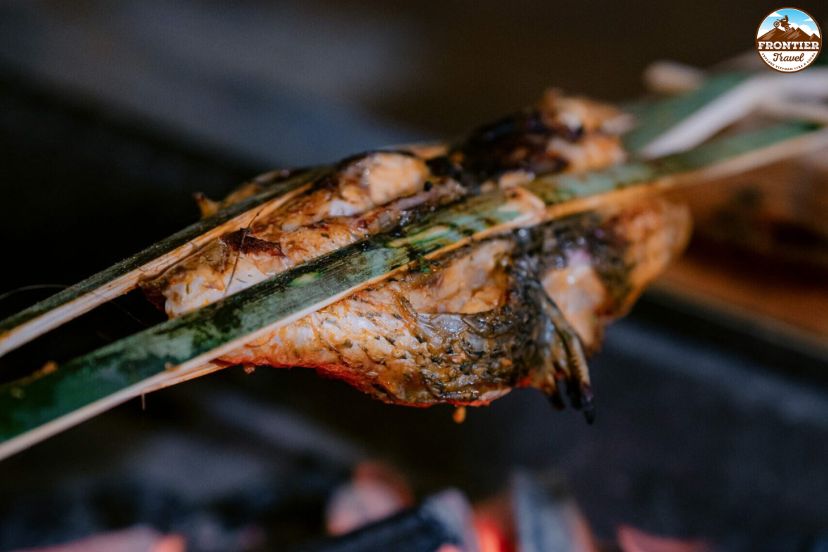
Grilled stream fish and local specialties in Mai Chau
3.1 Com Lam (Bamboo Sticky Rice)
Com Lam is one of the most iconic dishes in Mai Chau and throughout Northwest Vietnam. Sticky rice is placed inside fresh bamboo tubes before being slowly cooked over charcoal fire, allowing the rice to absorb a gentle smoky aroma from the bamboo itself.
The result is soft, fragrant rice with a slightly smoky flavor that pairs perfectly with grilled meats and mountain vegetables. Almost every Mai Chau local food what to eat guide includes Com Lam because it represents the traditional cooking style of Northern Vietnam’s ethnic mountain communities.
3.2 Five-Color Sticky Rice
Five-color sticky rice is a visually striking dish made using natural mountain herbs, leaves, and local plants to create vibrant colors without artificial ingredients. Each color carries symbolic meaning connected to prosperity, nature, and local cultural traditions.
This dish is especially popular during festivals, weddings, and important community gatherings among Thai ethnic families. Many travelers following a Mai Chau local food what to eat guide enjoy trying this dish because it combines beautiful presentation with deep cultural significance.
3.3 Smoked Buffalo Meat
Smoked buffalo meat is a famous Northwest Vietnam specialty prepared by slowly drying and smoking strips of buffalo meat above traditional kitchen fires for long periods. The smoking process creates a rich aroma, chewy texture, and concentrated savory flavor.
Locals often enjoy this dish alongside rice wine during evening gatherings and colder mountain nights. A Mai Chau local food what to eat guide frequently recommends smoked buffalo meat as one of the region’s most authentic highland specialties.
3.4 Local Rice Wine
Traditional rice wine plays an important role in Mai Chau village culture and is commonly shared during dinners, celebrations, and cultural performances. The wine is usually homemade by local families using rice, herbs, and natural fermentation methods passed down through generations.
Although relatively strong, the flavor is smooth and often served warm during cooler evenings in the mountains. Many Mai Chau local food what to eat guide experiences include rice wine because it reflects the hospitality and communal spirit of local ethnic communities.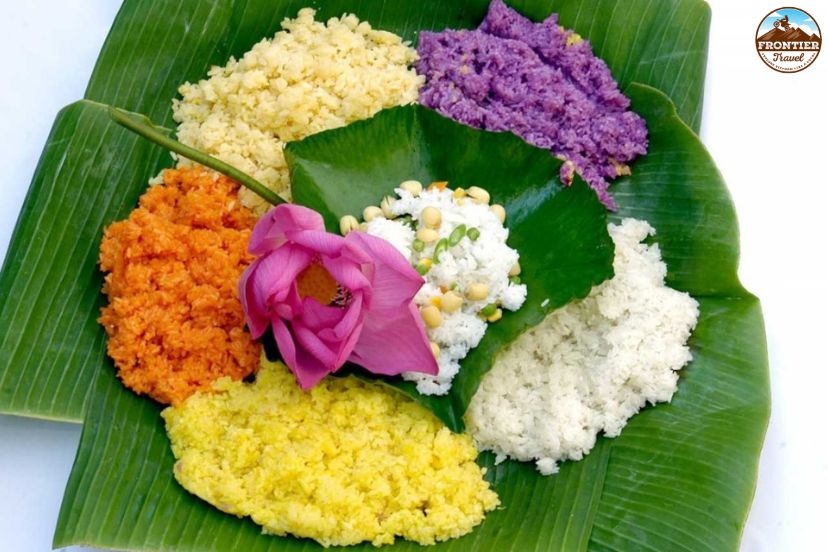
Sticky rice traditions in Mai Chau villages
3.5 Mountain Snail
Mountain snails are a seasonal specialty collected from streams, rice fields, and wet mountain areas surrounding Mai Chau. Local cooks usually prepare them with lemongrass, chili, lime leaves, and mountain herbs to create a fresh and aromatic flavor.
The texture is slightly chewy while the herbs add strong regional character to the dish. Travelers exploring a Mai Chau local food what to eat guide during rainy seasons often have more opportunities to try this unique Northwest Vietnamese specialty.
3.6 Grilled Pork
Grilled pork is one of the most common dishes served in Mai Chau homestays thanks to its smoky flavor and simple mountain-style preparation. Local pork is marinated with herbs, garlic, and traditional spices before being grilled slowly over charcoal.
The meat is usually served with sticky rice, fresh vegetables, and dipping sauces prepared by local families. A Mai Chau local food what to eat guide would not feel complete without mentioning this comforting dish that appears at many village dinners throughout the valley.
4. Best Places to Experience Mai Chau Local Food
Mai Chau offers more than peaceful rice fields and mountain scenery. The valley is also one of Northern Vietnam’s best places to experience authentic ethnic cuisine through homestays, family dinners, roadside eateries, and local village culture. Unlike larger tourist destinations, dining here still feels personal, traditional, and closely connected to daily life.
4.1 Traditional Thai Stilt House Dinners
One of the most memorable experiences in a Mai Chau local food what to eat guide is joining a traditional dinner inside a Thai wooden stilt house surrounded by rice paddies and limestone mountains. Meals are usually served family-style with grilled pork, bamboo sticky rice, mountain vegetables, smoked buffalo meat, and homemade dipping sauces placed at the center of the table.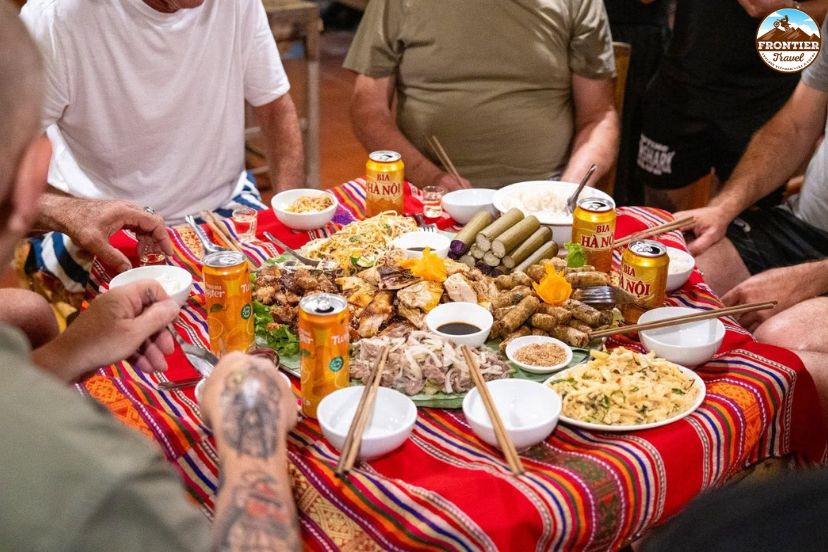
Exploring local food culture in Mai Chau Valley
Many evenings also include traditional Thai dance performances and shared rice wine drinking sessions with local hosts. Frontier often includes these village dinner experiences during Northern Vietnam motorbike tours because they allow riders to connect more deeply with Mai Chau’s mountain culture and hospitality.
4.2 Village Homestays Around Mai Chau Valley
Village homestays around Mai Chau offer one of the most authentic ways to experience local food and daily life in Northern Vietnam. Families often prepare homemade dishes using fresh vegetables, sticky rice, mountain herbs, and traditional recipes passed down through generations.
Compared to larger tourist restaurants, these homestays provide a quieter atmosphere where travelers can enjoy traditional Thai hospitality, peaceful rice field scenery, and family-style dinners. Many visitors combine these food experiences with Northern Vietnam motorbike tours through Frontier Travel Vietnam to explore nearby mountain regions and ethnic villages.
4.3 Local Markets and Small Roadside Restaurants
Small roadside restaurants and local village markets throughout Mai Chau often serve some of the valley’s most traditional dishes at very affordable prices. These family-run eateries usually prepare food fresh each day using local pork, mountain herbs, stream fish, bamboo shoots, and seasonal vegetables collected nearby.
Unlike commercial tourist restaurants, many of these smaller kitchens still preserve old-style cooking methods focused on charcoal grilling and simple mountain flavors. Exploring these hidden food stops is often one of the most enjoyable parts of following a Mai Chau local food what to eat guide through Northwest Vietnam.
5. Motorbike Tours & Mai Chau Local Food What to Eat Guide
For many riders traveling with Frontier Travel Vietnam, Mai Chau is not only a food destination but also the perfect starting point for longer motorcycle adventures across Northern Vietnam. We often recommend this peaceful valley because the combination of ethnic culture, scenic mountain roads, and authentic village cuisine creates an unforgettable introduction to the regions beyond Hanoi.
5.1 Mai Chau as the Gateway to Northwest Vietnam
Many Frontier motorbike tours through Northern Vietnam begin in Mai Chau before continuing deeper toward Son La, Nghia Lo, Sapa, and Ha Giang. The valley’s slower pace, green rice fields, and traditional stilt villages provide a softer introduction before riders tackle longer mountain passes and remote highland roads further north.
Because of its easy accessibility from Hanoi, Mai Chau local food what to eat guide experiences are often the first opportunity travelers have to enjoy authentic Thai ethnic cuisine and village hospitality during a multi-day motorcycle expedition.
5.2 Food and Cultural Experiences Along the Journey
One of the biggest highlights of multi-day Northern Vietnam motorbike tours is the opportunity to experience different regional cuisines and ethnic cultures throughout the journey. Riders moving from Mai Chau toward Northwest and Northeast Vietnam gradually discover changing food traditions, cooking styles, and local specialties unique to each mountain province.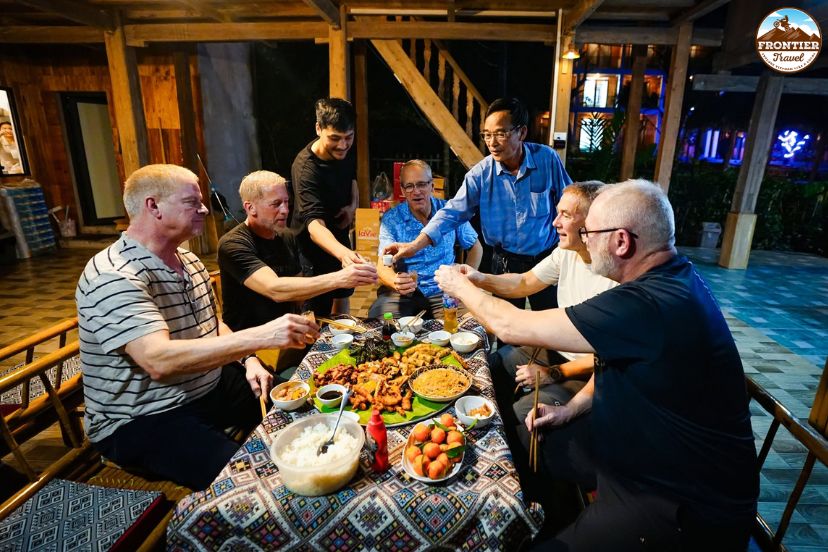
Best foods to eat during a Mai Chau trip
Even after visiting many destinations, Mai Chau often remains memorable because of its warm village atmosphere, traditional Thai performances, and communal homestay dinners shared with local families. A Mai Chau local food what to eat guide therefore becomes part of a much larger cultural journey across Northern Vietnam.
5.3 Riding Through Scenic Mountain Landscapes
The roads surrounding Mai Chau are famous for combining beautiful riding scenery with peaceful countryside experiences. Riders pass rice terraces, limestone mountains, riverside roads, bamboo forests, and small ethnic villages while traveling between valleys and mountain passes.
Many Frontier riders consider the balance between scenic riding and authentic local food one of the most rewarding aspects of exploring Northwest Vietnam. Following a Mai Chau local food what to eat guide while traveling through these landscapes creates a much deeper connection to the region beyond simply sightseeing.
6. Frequently Asked Questions About Mai Chau Local Food What to Eat Guide
Before joining a mountain journey through Mai Chau, many travelers often ask us about local food, dining experiences, and village hospitality. At Frontier, we always try to combine scenic riding routes with authentic local meals so riders can experience both the culture and flavors of Northwest Vietnam more naturally. This short Mai Chau local food what to eat guide answers some of the most common questions before the trip.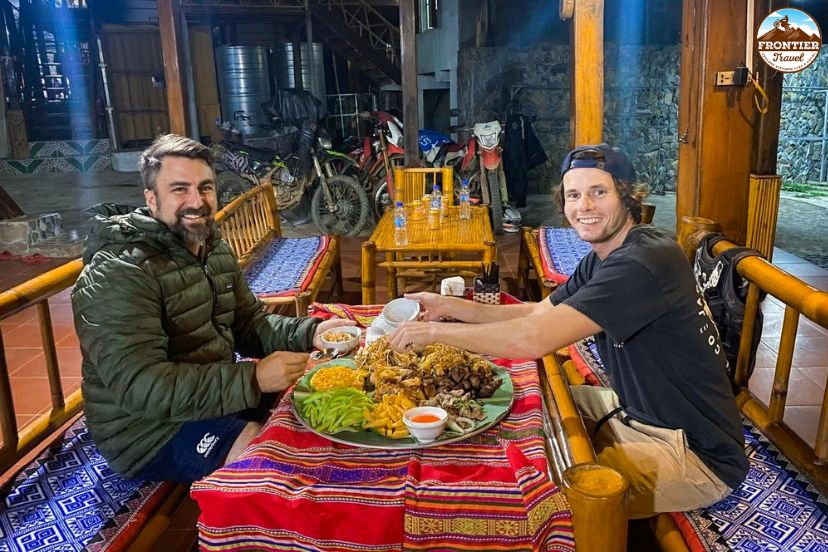
Northern Vietnam culinary experience in Mai Chau
6.1 Is the food safe and good?
Yes. Most meals in Mai Chau are freshly prepared daily using local vegetables, mountain herbs, sticky rice, and grilled meats from nearby villages. Frontier carefully selects trusted homestays and local restaurants to ensure both hygiene and authentic regional flavors throughout the journey.
6.2 Is Mai Chau food spicy?
Not usually. Traditional dishes in Mai Chau are generally mild and balanced, focusing more on smoky grilled flavors, herbs, and natural ingredients rather than heavy spices or chili.
6.3 Can vegetarians find food in Mai Chau?
Yes. Many local homestays can prepare vegetarian meals including tofu, stir-fried vegetables, bamboo sticky rice, mushrooms, and seasonal mountain greens when requested in advance.
6.4 Is local rice wine safe to try?
Yes. Traditional rice wine is an important part of Thai ethnic hospitality and village dinners in Mai Chau. Most homestays serve homemade rice wine during cultural performances and family-style meals, but visitors should still drink moderately.
6.5 Do I need to worry about anything?
No.. Frontier handles the route planning, accommodations, local dining experiences, and riding support so travelers can focus on enjoying the scenery, mountain culture, and Mai Chau local food what to eat guide experience without unnecessary stress.
7. Conclusion
The Mai Chau local food what to eat guide is more than simply discovering regional dishes; it is about experiencing the atmosphere of Thai stilt houses, mountain hospitality, and peaceful valley life in Northwest Vietnam. With Frontier Travel Vietnam, travelers can seamlessly combine these authentic food experiences with scenic motorbike adventures through the region's most beautiful mountain passes. Contact Frontier today to start planning your next cultural and culinary journey through the northern highlands.