Southeast Asia is not only famous for its tropical beaches, but also as the cradle of many remarkable ancient civilizations. Spanning thousands of years of history, the region is home to extraordinary ancient wonders Southeast Asia that hold outstanding architectural, religious, and cultural value.
From the grandeur of Angkor Wat to lesser-known ancient Asia sites, this article offers an overview of the region’s most iconic ancient landmarks, while introducing the concept of a cultural Asia ride—where history is not just observed, but deeply felt and understood through immersive journeys.
Angkor Wat (Cambodia) – The Greatest Ancient Wonder of Southeast Asia
Angkor Wat – the most iconic symbol among the ancient wonders of Southeast Asia.
When speaking of ancient wonders Southeast Asia, Angkor Wat is invariably the first name mentioned. Built in the 12th century under King Suryavarman II, Angkor Wat is not only the largest religious complex in the world but also a powerful symbol of the peak of the ancient Khmer civilization.
.jpg)
Stone carvings at Angkor Wat, symbol of Khmer ancient civilization
Architectural & Historical Value
Temple planning based on Hindu cosmology
Large-scale moats and canal systems with advanced water management
Stone bas-reliefs depicting the Ramayana and Mahabharata epics
.jpg)
Angkor Wat temple complex, symbol of ancient wonders Southeast Asia
Practical Experience
Visit early in the morning to avoid crowds and enjoy the best light
Follow the main axis to fully appreciate the spatial scale
Spend time observing the bas-reliefs to understand the historical narratives
Many researchers consider the hydraulic system surrounding Angkor to be one of the most complex water-management achievements of the ancient world, demonstrating the advanced urban planning of the Khmer people.
.jpg)
Angkor Wat temple complex, symbol of ancient wonders Southeast Asia
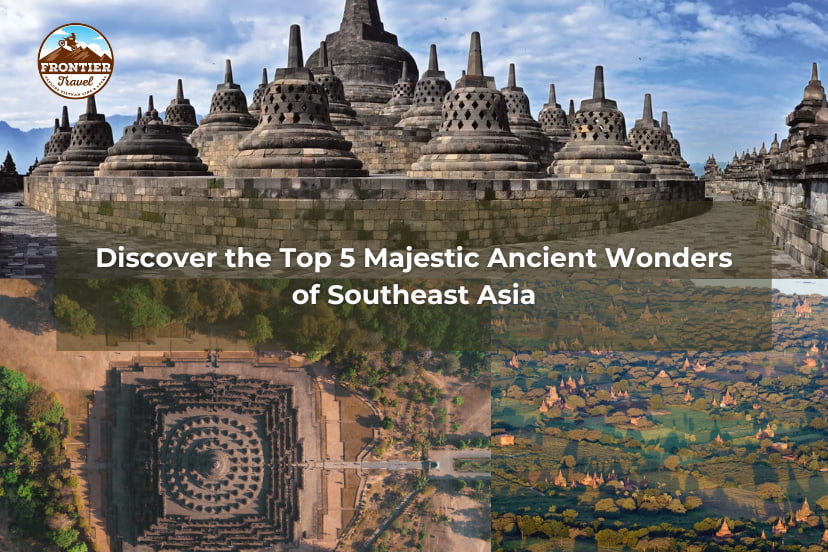
Borobudur (Indonesia) – The Pinnacle of Javanese Buddhism
Borobudur – a Buddhist masterpiece in the heart of Indonesia.
Borobudur is the largest Buddhist temple in the world and one of the most symbolic ancient wonders Southeast Asia. Built in the 9th century, the monument features thousands of stone reliefs illustrating the human journey toward enlightenment according to Mahayana Buddhist philosophy.
Key Highlights
Unique stepped pyramid structure
Over 500 Buddha statues in various postures
A serene meditative atmosphere amid the mountains of Java
According to UNESCO, Borobudur is a rare example of harmonious integration between architecture, religion, and natural landscape, restored through rigorous archaeological research.
.jpg)
Borobudur Temple, a Buddhist masterpiece in central Java, Indonesia
Bagan (Myanmar) – The City of a Thousand Temples
Bagan – one of Asia’s most impressive religious landscapes.
Located along the Irrawaddy River, Bagan was once a prosperous capital with more than 10,000 religious structures. Today, Bagan offers a quiet, nostalgic atmosphere, ideal for travelers who prefer slow exploration focused on historical depth and spatial experience.
.jpg)
Ancient temples of Bagan spread across the Irrawaddy plain in Myanmar
Notable Experiences
Watching sunrise or sunset over the temple plain
Cycling or walking among centuries-old structures
Hot-air balloon rides (subject to conditions and regulations)
Bagan exemplifies how ancient civilizations integrated religion, urban life, and nature into a harmonious whole.
My Son Sanctuary (Vietnam) – The Mystical Legacy of Champa
My Son – a representative ancient Asia site in Vietnam.
Nestled in a green valley in central Vietnam, My Son Sanctuary is one of the most important ancient Asia sites, reflecting the architectural sophistication, religious beliefs, and artistic achievements of the ancient Champa Kingdom.
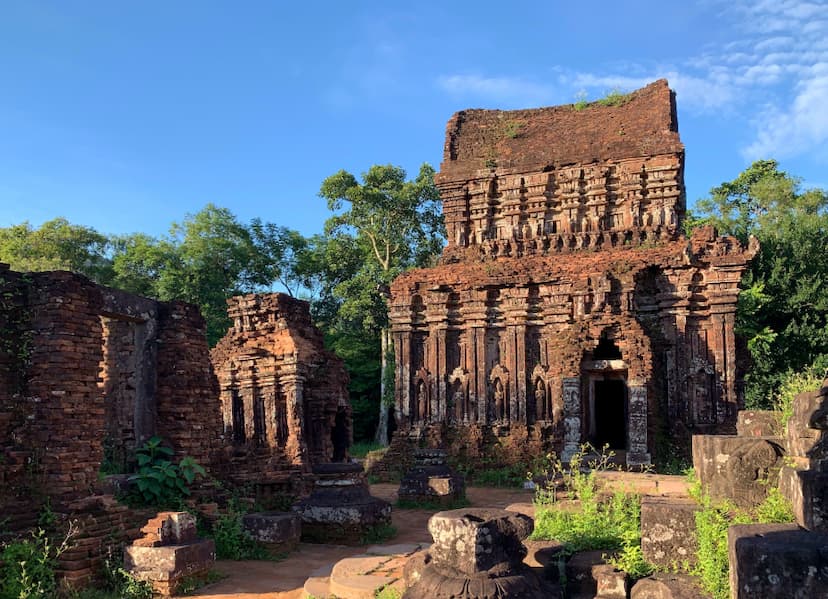
Ancient Cham temple ruins at My Son Sanctuary in Vietnam
Scholarly Significance
Brick construction techniques without mortar that remain scientifically debated
Strong influences from Hinduism
Recognized by UNESCO as a World Heritage Site
Less monumental than Angkor, My Son possesses a quiet, mysterious beauty and highlights the cultural diversity of ancient Southeast Asia.
Cultural Asia Ride – Experiencing Heritage from a Vietnamese Perspective
Within a region rich in ancient wonders, Vietnam serves as a meaningful gateway for exploring Southeast Asian heritage through on-the-ground experiences. Rather than offering trans–Southeast Asia tours, Frontier Travel Vietnam focuses exclusively on journeys within Vietnam, adopting a slow, in-depth, and culturally rich approach.
Through cultural Asia rides in Vietnam, Frontier Travel Vietnam enables travelers to explore sites such as My Son Sanctuary, historic routes, traditional villages, and landscapes deeply connected to local culture. These journeys are inspired by the broader heritage of Southeast Asia but are implemented entirely within Vietnam.
.jpg)
Motorcycle journey in Vietnam with Frontier Travel Vietnam
Why Choose Frontier Travel Vietnam?
Itineraries focused 100% within Vietnam
Emphasis on local cultural experiences over mass tourism
Tour design prioritizing safety, depth, and authenticity
Frontier Travel Vietnam does not offer “sightseeing tours,” but instead creates opportunities for travelers to understand and experience Asian heritage through a Vietnamese lens.
Conclusion
The ancient wonders Southeast Asia stand as vivid testimony to the history and intellect of ancient civilizations. Whether it is the grandeur of Angkor Wat, the spiritual depth of Borobudur, or ancient Asia sites like My Son, each destination offers a unique perspective on the region’s cultural identity.
Inspired by this heritage, cultural Asia rides in Vietnam provide an ideal way for travelers to explore history in a meaningful, sustainable, and authentic manner.
FAQs
1. What does “ancient wonders Southeast Asia” refer to?
The term refers to iconic ancient landmarks across Southeast Asia that showcase the architectural, religious, and urban achievements of early civilizations. Sites such as Angkor Wat, Borobudur, Bagan, and My Son illustrate the region’s historical depth and diversity.
2. Why is Angkor Wat considered the greatest ancient wonder of Southeast Asia?
Angkor Wat stands out for its monumental scale, complex hydraulic system, and symbolic architecture. It represents not just a religious monument, but a complete sacred city demonstrating the advanced planning of the Khmer civilization.
3. How are ancient Asia sites different from typical tourist attractions?
Ancient Asia sites are not merely places to visit; they are historical and cultural spaces best explored slowly and thoughtfully. Understanding their context, beliefs, and construction techniques reveals their true heritage value beyond surface-level sightseeing.
4. What is a cultural Asia ride?
A cultural Asia ride is an experience-based approach to travel that connects culture, history, and people through movement and journey-based exploration. It emphasizes continuity, local observation, and experiencing heritage within its real-life context.
5. Does Frontier Travel Vietnam operate tours outside Vietnam?
Yes, but in a limited scope. Frontier Travel Vietnam currently operates journeys in Vietnam and Laos, focusing on cultural, historical, and landscape-based experiences. The company does not offer mass-market tours across Southeast Asia, nor does it organize trips to sites such as Angkor Wat or Borobudur.
Content about ancient wonders Southeast Asia in this article is intended for regional context and inspiration, helping place journeys in Vietnam and Laos within the broader Southeast Asian civilization framework.
6. Who are Frontier Travel Vietnam’s cultural Asia rides suitable for?
Frontier Travel Vietnam is ideal for travelers who:
Wish to explore Vietnam and Laos in a deep, non-mass-tourism way
Are interested in history, culture, and local life
Prefer slow, safe journeys with meaningful experiences
Frontier’s cultural Asia rides draw inspiration from Southeast Asian heritage while remaining focused on Vietnam and Laos, ensuring authenticity and sustainability.