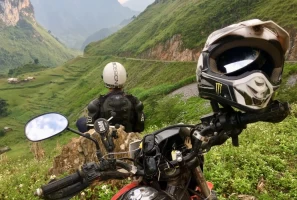
Booking a specialized CRF300l North Vietnam off road tour is the absolute pinnacle of adventure for riders who want to escape the crowded tourist asphalt and dive deep into the raw, unpaved wilderness. To transform your dream of tearing through the high-altitude wilderness into a reality, let the professional trail guides at Frontier Vietnam Travel lead your pack into the deep unknown.
1. Introducing CRF300l North Vietnam off road tour
The first reason riders choose a CRF300l North Vietnam off road tour is the direct access to terrain that ordinary road bikes cannot safely enter. Northern Vietnam contains highland corridors where asphalt may suddenly turn into broken concrete, gravel, mud, or exposed rock within a few kilometers. These changes demand a motorcycle with stable low-speed control, long suspension travel, and enough torque to recover from steep climbs.
The terrain also rewards riders who enjoy constant technical variation instead of long highway cruising. Mountain trails may rise from 500 meters to over 1,800 meters in a single riding zone, creating sharp differences in air temperature, visibility, and soil grip. A guided CRF300l North Vietnam off road tour helps riders manage these transitions with safer pacing and better route decisions.
2. Top off-road destinations: Mapping the best dirt tracks in northern vietnam
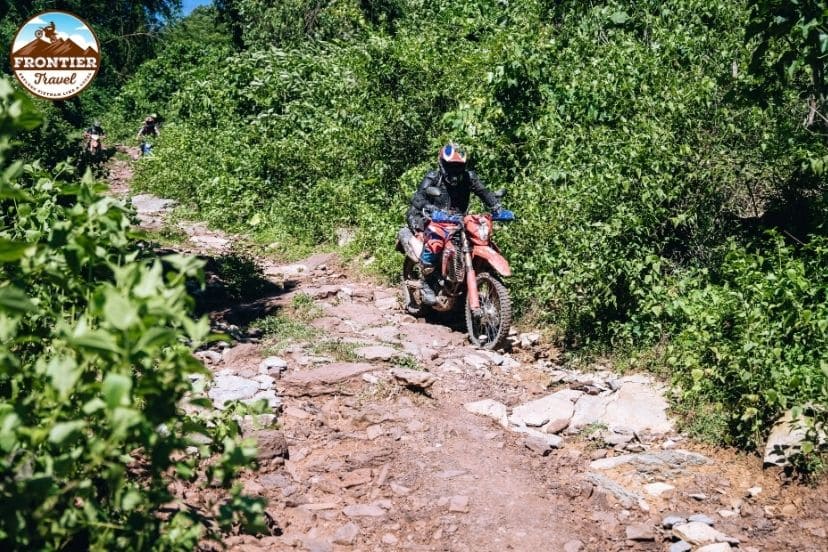
Northern Vietnam offers several off-road zones that are especially suitable for dual-sport riding because they combine dramatic elevation, village trails, and remote dirt access. A well-planned CRF300l North Vietnam off road tour may connect Ta Xua, Y Ty, Cao Bang, and Ha Giang into a multi-day loop with different riding styles each day.
2.1. Exploding through the muddy single-tracks and hidden valleys of ta xua and y ty
Ta Xua and Y Ty are ideal for riders who want narrow mountain trails, cloud forests, and muddy climbs that demand controlled aggression. In these areas, rain can turn compact dirt into slick clay within minutes, so riders must keep momentum without forcing the throttle too hard.
A CRF300l North Vietnam off road tour through these valleys often includes ridgelines above 1,500 meters, where fog can reduce visibility to less than 30 meters. The CRF300L’s smooth low-end response helps maintain traction when climbing wet tracks or crossing uneven farm paths. These destinations reward patience, body positioning, and steady throttle control more than outright speed.
2.2. Navigating rocky riverbeds and bamboo forests in remote pocket zones of cao bang
Cao Bang gives the expedition a more technical and isolated character because many trail sections pass through river valleys, limestone pockets, and forest corridors. Riders may encounter shallow water crossings from 30 to 60 centimeters deep, depending on recent rainfall and upstream flow.
The surface below the water is often uneven, with loose stones that can deflect the front wheel if the rider brakes suddenly. During a CRF300l North Vietnam off road tour, guides usually check the safest line before the full group enters difficult crossings. Bamboo forest sections also require slower speeds because visibility can narrow quickly and trail edges may be hidden by vegetation.
2.3. CRF300l North Vietnam off road tour Ha Giang routes
Ha Giang is one of the most iconic off-road regions in Vietnam because its borderland terrain combines sharp limestone mountains, deep valleys, and dramatic dirt connectors. Many routes climb above 1,200 meters, with steep gradients that may exceed 20% on rough village tracks.
The CRF300L handles these sections well because its torque delivery is easier to manage than heavier adventure motorcycles on tight climbs. A CRF300l North Vietnam off road tour in Ha Giang also requires strong downhill discipline, especially when loose gravel appears near cliffside corners. Riders who enjoy endurance-style trail riding will find this region both physically demanding and visually unforgettable.
3. Bike setup and preparation: Optimizing the dual-sport
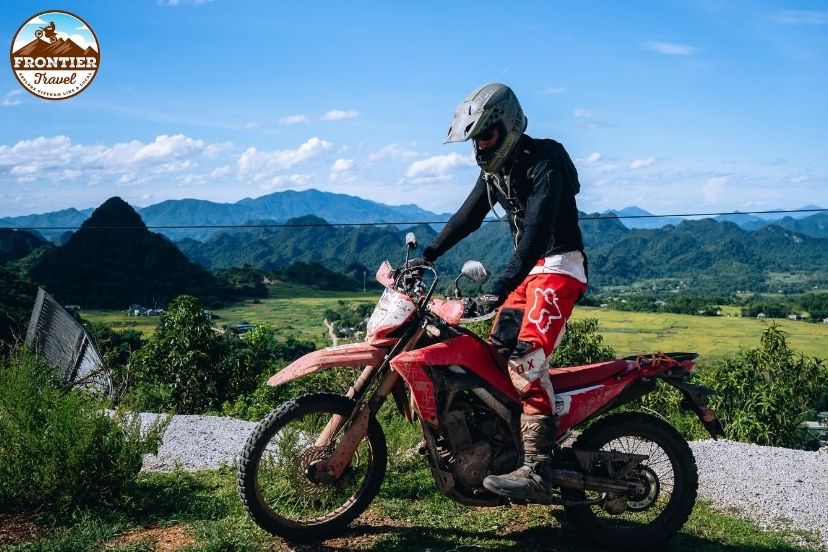
A successful off-road expedition depends heavily on bike preparation before the first trail begins. The standard Honda CRF300L already offers useful adventure features, including a 286cc engine, 21-inch front wheel, 18-inch rear wheel, and long-travel suspension geometry. However, a proper CRF300l North Vietnam off road tour setup should focus on traction, protection, and durability because the northern terrain can punish weak components quickly.
3.1. Upgraded knobby tires and heavy-duty inner tubes for maximum mud traction
Knobby tires are one of the most important upgrades because road-biased tires lose grip quickly on wet clay, deep mud, and loose shale. A strong off-road tread with blocks around 10 to 13 mm deep helps clear mud while maintaining forward drive on steep climbs. Heavy-duty inner tubes reduce puncture risk when hitting sharp stones or hidden edges inside riverbeds.
During a CRF300l North Vietnam off road tour, riders should also check tire pressure every morning because altitude, temperature, and impact damage can affect handling. Better traction makes the motorcycle easier to control and reduces unnecessary clutch abuse in slippery sections.
3.2. Essential protective armor including skid plates, handguards, and radiator braces
Protective armor keeps the motorcycle functional when trails become rough, narrow, or unpredictable. A 4 to 6 mm aluminum skid plate protects the engine cases from rocks, roots, and ledges that can strike the lower frame. Full-wrap handguards reduce the chance of broken levers during small crashes, especially when the bike falls on clay slopes or rocky switchbacks.
Radiator braces are useful because cooling system damage can end a riding day immediately in remote areas. For a CRF300l North Vietnam off road tour, these upgrades are not decoration, but practical insurance against terrain-related damage.
3.3. Suspension adjustment tips for carrying rider weight over deep ruts and jumps
Suspension setup affects comfort, control, and safety when the bike carries a rider plus luggage across rough tracks. Riders weighing between 65 and 95 kg should check rear sag and preload before entering multi-day trail sections. Too much rear sag can make the front wheel feel light on climbs, while overly stiff settings can reduce grip on loose surfaces.
During a CRF300l North Vietnam off road tour, balanced suspension helps the bike stay composed over deep ruts, small jumps, rocky steps, and broken mountain roads. Correct adjustment also reduces fatigue in the shoulders, knees, and lower back during long riding.
4. Packing list and essential gear what to wear for a remote enduro expedition
Packing for a remote off-road expedition requires more than choosing comfortable riding clothes, because Northern Vietnam can shift from hot valleys to cold ridgelines within the same day. Riders joining a CRF300l North Vietnam off road tour should prepare gear that protects against impact, rain, abrasion, and fatigue during long technical sections.
4.1. Choosing lightweight armor, breathable motocross jerseys, and professional dirt boots
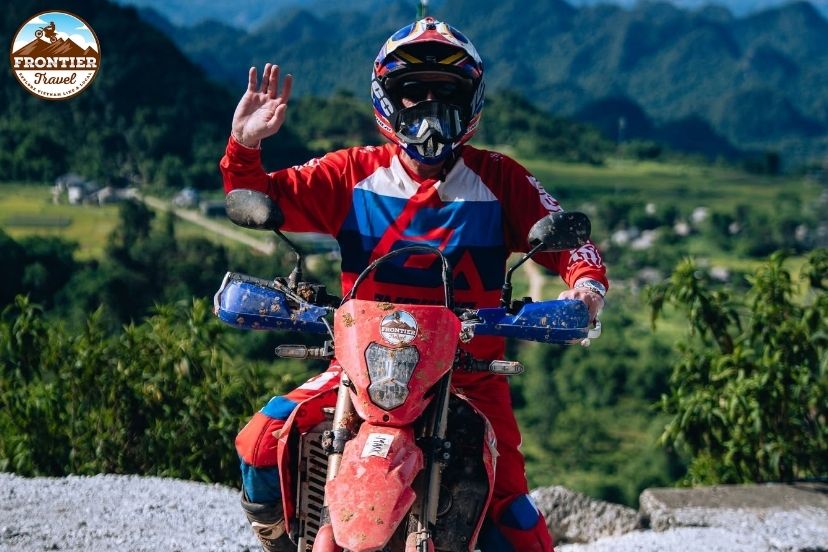
Proper body armor is essential because off-road falls often happen at low speed but on rough surfaces such as sharp stones, wet roots, or broken clay tracks. A rider should use CE-rated chest protection, elbow guards, knee braces, and a full-face adventure or motocross helmet with strong ventilation.
Breathable jerseys help regulate body temperature when climbing steep trails at slow speed, especially in humid valleys below 700 meters. Professional dirt boots protect ankles and shins from footpeg impact, flying rocks, and awkward bike recovery situations. For a CRF300l North Vietnam off road tour, riders should avoid heavy touring jackets that trap heat and restrict upper-body movement.
4.2. Hydration packs, emergency medical kits, and waterproof soft luggage systems
Hydration is critical because technical riding can make riders lose 1 to 2 liters of fluid within several hours, even when the weather feels cool. A 2 or 3 liter hydration pack allows continuous drinking without stopping the group too often. Each rider should also carry basic medical items, including bandages, antiseptic wipes, pain relief tablets, blister treatment, and electrolyte packets.
Waterproof soft luggage is better than hard cases because it absorbs impacts more safely during falls and keeps the rear section lighter. Compact packing also prevents weight imbalance when crossing ruts, riverbeds, or steep village access paths.
4.3. Navigational tools and satellite communication tracking for deep wilderness sectors
Remote trail sectors in Northern Vietnam often pass through valleys where mobile signal becomes weak or disappears completely for several kilometers. Riders on a CRF300l North Vietnam off road tour should rely on offline GPS maps, preloaded route files, and backup battery packs instead of depending only on phone data.
Satellite trackers add another safety layer by allowing the support team to monitor group movement in difficult borderland regions. A simple handlebar-mounted navigation device helps riders read upcoming turns without stopping repeatedly. These tools are especially valuable when fog, rain, or landslides force the guide team to adjust the planned route.
5. Riding challenges mastering the unique elements of vietnamese terrain
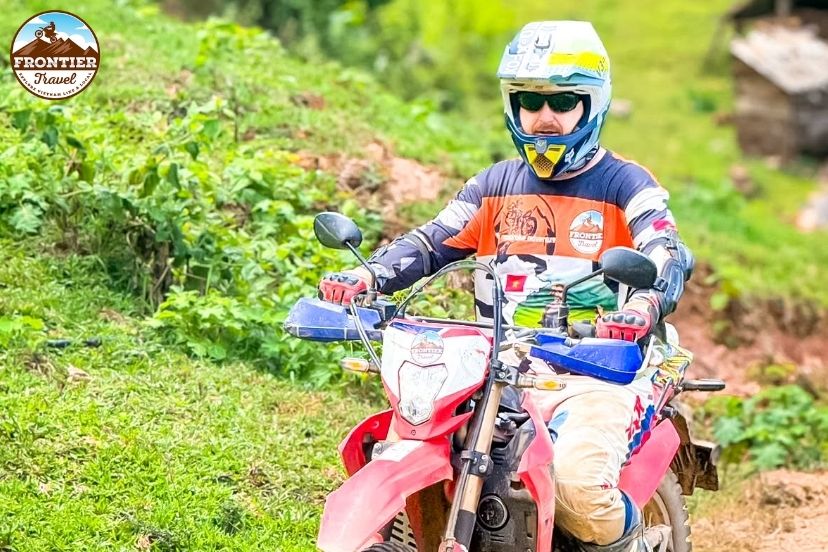
Northern Vietnam’s off-road terrain is famous because it rarely stays consistent for long distances. A CRF300l North Vietnam off road tour may begin on compact gravel, continue through slippery clay, and finish across loose shale before lunch. This constant change demands active riding technique rather than passive cruising.
5.1. Surviving unpredictable weather from blinding mountain fog to sudden tropical downpours
Weather can change quickly in highland areas such as Ha Giang, Ta Xua, and Y Ty because elevation strongly affects wind, temperature, and cloud formation. Fog can reduce visibility to 20 or 30 meters, forcing riders to slow down and follow guide signals closely.
Sudden downpours can turn firm dirt into sticky clay within minutes, especially on shaded forest tracks. During a CRF300l North Vietnam off road tour, riders should keep waterproof layers accessible instead of burying them deep inside luggage. Clear goggles, anti-fog lenses, and dry gloves can make a major difference during long wet descents.
5.2. Technical tips for climbing steep, slippery clay slopes without burning the clutch
Clay climbs require steady momentum because stopping halfway often makes restarting much harder. Riders should stand on the pegs, keep their weight slightly forward, and use smooth throttle instead of aggressive acceleration. Excessive clutch slipping can overheat the system, especially during repeated attempts on slopes above 20 degrees.
The CRF300L’s controllable low-end torque helps riders climb steadily without forcing the engine into extreme rev ranges. When traction drops, choosing a clean line and avoiding deep wheel ruts is usually more effective than adding more power.
5.3. Safely crossing fast-flowing rivers and navigating loose rock shale fields
River crossings demand careful assessment before entry because water depth, current speed, and hidden rocks can change after rainfall. Riders should enter slowly, keep a steady throttle, and avoid sudden braking while the front wheel is underwater.
Loose shale fields require a relaxed grip because fighting the handlebar too aggressively can make the bike deflect harder. On a CRF300l North Vietnam off road tour, the guide usually checks difficult crossings first to identify the safest line. Riders should maintain spacing so one stalled motorcycle does not block the entire group in moving water.
6. Safety protocols and group logistics riding responsibly in remote borderlands
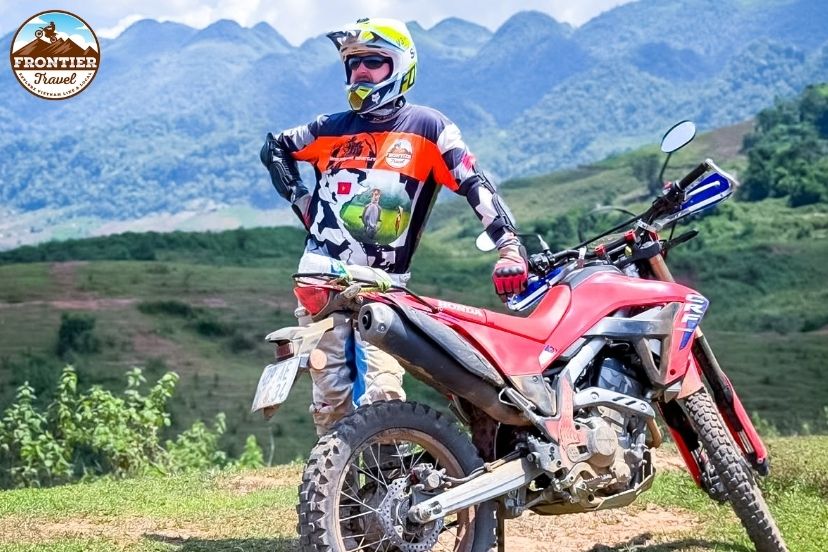
Safety planning determines whether a demanding expedition feels controlled or chaotic. A CRF300l North Vietnam off road tour should include experienced guides, mechanical support, communication planning, and flexible route decisions. Remote borderland routes may be far from repair shops, fuel stations, or medical facilities, so group logistics must be prepared before departure.
6.1. The critical role of english-speaking lead riders and trailing mechanical sweeps
An English-speaking lead rider is important because international participants need clear instructions before technical sections, river crossings, and steep climbs. The lead guide controls pace, selects safe lines, and adjusts the route when weather or trail damage creates new hazards.
A trailing mechanical sweep rides at the back to assist anyone who drops the bike, gets stuck, or suffers a minor mechanical issue. This structure keeps the group connected instead of leaving slower riders isolated in remote areas. For a CRF300l North Vietnam off road tour, this two-end system is one of the most important safety features.
6.2. Managing support trucks for carrying spare parts, tools, and backup machines
Support trucks are useful on longer expeditions because they carry tools, spare tubes, tire levers, chain lubricant, brake pads, and emergency fuel. They also reduce rider fatigue by transporting heavy luggage through accessible road sections. On routes where trucks cannot enter narrow trails, the team can arrange meeting points at village roads or valley exits.
Backup machines are valuable because one damaged clutch lever, punctured tire, or electrical issue should not end an entire riding day. A well-managed support system keeps the CRF300l North Vietnam off road tour moving even when terrain becomes punishing.
6.3. Respecting local ethnic minority communities and trail etiquette in high-altitude villages
Northern Vietnam’s remote routes pass through communities where daily life depends on farming, livestock, and narrow village paths. Riders should slow down near houses, avoid spraying mud near pedestrians, and give way to animals on shared trails. Loud revving, careless overtaking, or riding across cultivated land can damage the relationship between tour groups and local residents.
Respectful behavior also creates better travel experiences because villagers are more welcoming when riders act responsibly. Good trail etiquette ensures off-road tourism remains sustainable for both visitors and mountain communities.
7. Conclusion
Signing up for a CRF300l North Vietnam off road tour guarantees an intense adrenaline rush that traditional highway touring simply cannot replicate. By pairing your off-road ambitions with a bulletproof, modern dual-sport machine, you ensure that even the most brutal trails become an exhilarating playground. Get in touch with Frontier Vietnam Travel immediately to secure your spot on a premium enduro expedition and conquer the rugged northern wilderness like a true professional.