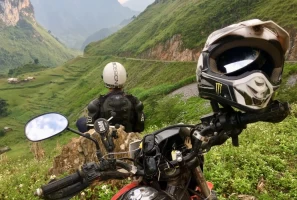
Planning to explore Vietnam on a motorcycle requires proper preparation to ensure a safe and enjoyable adventure. For international travelers joining a guided motorcycle tour, most essential equipment such as helmets, protective jackets and technical support is usually provided by the tour operator.
However, if you want to enjoy the freedom of riding across Vietnam on your own, you will need to be more proactive in organizing your luggage and choosing the items that truly matter. Below is a recommended motorcycle trip packing list for international travelers who plan to discover Vietnam independently.
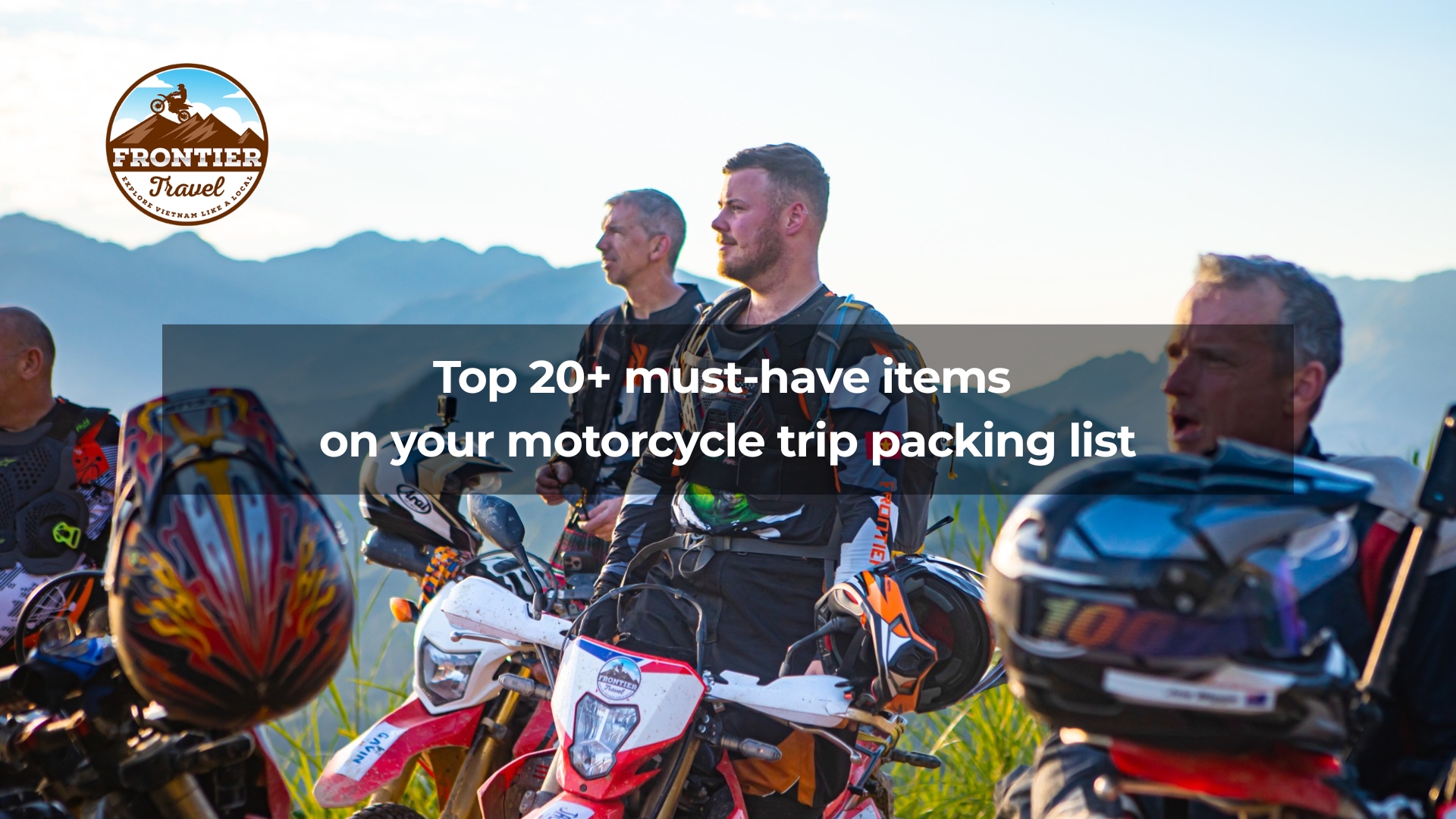
What should you bring from your home country?
1. International Driving Permit (IDP)
This is one of the must haves for road trip travel in Vietnam, especially if you plan to rent and legally ride a motorcycle. Many rental shops, particularly those that provide larger motorbikes, may ask to check your IDP together with your national driver’s license. Traffic police on popular routes such as the Ha Giang Loop and the Hai Van Pass also conduct document checks from time to time. If you cannot present valid papers, you may be fined or your motorcycle may be taken away.
Important notes for international travelers:
You can obtain an IDP only in your home country before arriving in Vietnam.
Vietnam does not issue or renew IDPs for foreign visitors.
- There is no valid way to apply for an IDP online or through quick services once you are in Vietnam.
2. Visa and passport
If you are coming from a country that is not exempt from visa requirements, having a valid visa is mandatory before entering Vietnam. Visas can be issued in the form of an e-visa, a visa stamped at the airport, or a visa obtained in advance from an embassy.
In addition to the visa, you also need to carry your passport, which must be valid for at least six months from the date of entry. To avoid any issues, bring a photocopy of your passport and keep both your passport and visa in a waterproof bag or a travel wallet while traveling by motorbike.
You might also like this:
>>> How to apply for Vietnam visa 2026
>>> Vietnam travel visa for US citizens: Complete guide for 2026
3. Travel insurance
International travel insurance is an essential item on your checklist for motorcycle trip in Vietnam. It protects your finances against potential risks that may occur during your journey. Since motorcycle touring can be more hazardous than regular travel, having insurance ensures peace of mind and allows you to fully enjoy your adventure.
When choosing insurance, keep the following in mind:
Select a plan that covers motorcycle riding and adventure activities to ensure protection in case of accidents on the road.
Always carry a printed copy of your insurance policy and a digital copy on your phone for easy presentation or assistance when needed.
Read carefully the terms regarding coverage, medical benefits, emergency support and applicable regions to avoid unexpected situations.
4. Personal and prescription medication
In Vietnam, there are many pharmacies and medical facilities where you can easily buy common medications such as pain relievers, cold medicine or digestive aids.
However, if you have chronic illnesses or require specialized medication, make sure to bring enough of your prescription medicines from your home country. This ensures that you can continue your treatment without interruption throughout your motorcycle trip.

Bring personal medication to stay healthy throughout the trip.
Additionally, it is recommended to carry your prescription or dosage information to make it easier if you need to purchase more or show it to a doctor in Vietnam.
5. Sunscreen
Vietnam is a tropical country with strong sunlight throughout the year. Therefore, sunscreen is an essential item when going on a motorcycle trip in Vietnam.
For tours along the coast, such as the route from Da Nang – Hoi An – Quy Nhon, mountain passes like Hai Van Pass, Ma Pi Leng Pass, or sunny regions such as the Central Highlands and Binh Thuan, prolonged exposure to UV rays can cause sunburn and skin irritation.
Some tips for choosing and using sunscreen:
Choose a product with SPF 30 or higher and broad-spectrum protection (UVA & UVB).
Apply sunscreen 15 - 20 minutes before going out in the sun and reapply every 2 - 3 hours or after heavy sweating.
- Carry a small, portable size for convenience in your bag or backpack while traveling.
6. Quality motorcycle boots
Motorbike routes in Vietnam vary greatly depending on the region. Some are smooth paved roads, others are winding mountain passes. You will also encounter rugged Northwest forest trails and even muddy paths during the rainy season. For any checklist for a motorcycle trip, quality riding boots are a must-have to ensure grip and safety throughout your journey.
Tips for choosing the right footwear:
High or mid-cut boots: These provide much better ankle support and protection compared to regular sneakers.
Anti-slip soles: Choose rubber soles with deep tread patterns for strong grip, especially on wet or steep surfaces.
Durable and breathable materials: Synthetic leather or water-resistant fabric is ideal for Vietnam’s hot and humid climate.
Lightweight and well-fitted: You will be wearing your boots for long periods, so prioritize pairs that are lightweight and fit your feet comfortably.
7. Motorbike riding gloves
Riding gloves are an essential item for any motorbike trip in Vietnam. They help you maintain a firm grip on the handlebars and protect your hands from sun, wind, dust, and minor impacts along the way.
You can easily rent gloves at motorbike rental shops or outdoor gear stores in major cities. However, if you are already familiar with a specific type of glove or want to ensure comfort and hygiene, it is best to bring your own pair from home.
Tips for choosing motorbike gloves:
Choose full-finger gloves: They cover all your fingers and offer better protection for long-distance rides.
Breathable materials: Keep your hands cool and comfortable in Vietnam’s hot and humid climate.
Good palm grip: Ensures better control, especially on mountain roads or during rainy weather.
Moderate thickness: Thick enough to provide protection but still flexible for smooth braking and throttle control.
Proper fit: Gloves that are too loose reduce grip, while those that are too tight may cause numbness or fatigue.
- Light water resistance: Useful if you are riding during the rainy season or passing through damp areas.
8. Weather-appropriate clothing
Vietnam’s weather changes significantly by region and season, so checking the forecast before your trip is an essential step to prepare the right clothing, ensuring both comfort and safety throughout your journey.
For routes from Hanoi to the northern mountainous areas such as Ha Giang, Cao Bang, or Lao Cai, temperatures are often much lower than in the lowlands. Early mornings and evenings can be quite cold, and in winter there may even be frost or snow at higher elevations. Therefore, you should bring warm layers, a windproof jacket, a lightweight raincoat, and thermal long pants to stay warm, dry, and comfortable while riding.
In contrast, motorbike journeys along the central and southern coastal regions usually mean hot weather and high humidity. Lightweight, breathable, and quick-drying clothing is the best choice, and don’t forget a sun-protective jacket to shield your skin during long hours on the road.
For long cross country journeys from north to south, careful clothing preparation becomes even more important. Sudden changes from cold to heat or from sunshine to rain can quickly affect your health and overall travel experience. The best solution is to prepare clothing for cold weather, hot weather and rain so that you are always ready for any situation.
9. Multipurpose scarf (Buff)
A multifunctional buff is a compact yet extremely practical item for any motorbike trip in Vietnam. When riding long distances, especially on dusty routes or in mountainous areas, it helps cover your mouth and nose, reduce dust exposure, and protect your skin from harsh sunlight.
During cold weather, or when riding at night or early in the morning, a buff also helps keep your neck and face warm and prevents discomfort caused by strong wind.
10. Waterproof sling bag/backpack
A waterproof bag may seem small, but it plays an essential role in keeping your personal belongings safe throughout a motorbike trip. This is especially important in Vietnam because the weather can change very quickly.
.jpg)
Pick a compact, waterproof backpack to protect your gear on a motorbike trip.
Choose a moto backpack that is designed specifically for bikers who love to travel. This type of backpack has sturdy straps that fit closely to your body to reduce shaking and provide better stability even when you ride at high speeds. The aerodynamic shape helps reduce wind resistance. It also brings more comfort and helps you save energy during long journeys.
11. Functional underwear and socks
These are essential personal items for any motorbike trip in Vietnam. With the country’s hot and humid climate, riding for many hours can make you sweat a lot, especially when passing through hotter regions or during intense activity.
Therefore, bringing enough underwear and socks to change frequently is highly recommended. This helps keep your body clean and dry, reduces friction, and prevents discomfort throughout the journey.
12. Electronic devices
Electronic devices are essential for staying connected and capturing memorable moments throughout your motorbike journey in Vietnam. In addition to your smartphone, make sure to bring a power bank, charging cables, and a travel adapter to keep all your devices running.
If you enjoy photography or want to document your trip in a more vivid way, bringing a camera or a GoPro will help you capture stunning shots and authentic footage along every stretch of the road.
What should you buy or rent in Vietnam?
13. Motorcycle protective jacket
In Vietnam, renting a motorcycle riding jacket is quite easy because most motorbike rental shops and outdoor gear stores offer a good variety of options. However, to ensure safety and comfort during long trips, you should pay close attention to the jacket’s quality and protective features before choosing one.
Some tips for choosing a motorcycle riding jacket:
Full protective coverage: Choose jackets with CE certified protectors on the shoulders, elbows, back and chest to maximize safety.
Breathable materials: Vietnam has a hot and humid climate, so a mesh jacket is ideal to keep your body well ventilated on long rides.
Proper fit: A jacket that is too loose may cause the protectors to shift out of place during impact. A jacket that is too tight can restrict movement and cause discomfort.
Light water resistance: This feature is helpful if you are riding during the rainy season or passing through regions with unstable weather.
Removable thermal liner: If your route goes through different climate zones, for example from Hanoi to the northern mountain areas, a removable inner layer will help keep you warm when needed.
14. Raincoat
To avoid getting wet during sudden rain, always prepare a high-quality raincoat when going on a motorcycle trip in Vietnam. Here, whether in small convenience stores or large shops, raincoats are widely available.
However, if possible, prioritize a full-set raincoat with reflective strips. This type of raincoat is not only convenient for riding but also makes you more visible to others, especially when traveling in the northern mountainous regions.
When choosing a raincoat for motorbike trips, keep the following in mind:
Waterproof material: Prefer thick nylon or polyester that can resist rain and wind.
Full-set design: Fits the body well, prevents wind from entering, and does not get in the way while riding.
- Lightweight and foldable: Easy to carry in a backpack or waterproof bag, taking up minimal space.
15. Helmet
A helmet is one of the must-haves for a road trip in Vietnam. However, bringing a helmet from home can make your luggage bulky, especially on international flights.
You can rent a helmet directly from the motorbike rental shop in Vietnam, as most reputable providers offer certified helmets in a variety of sizes that ensure safety. Additionally, outdoor and motorbike gear shops in Vietnam also provide many high-quality helmets suitable for different purposes and personal styles.
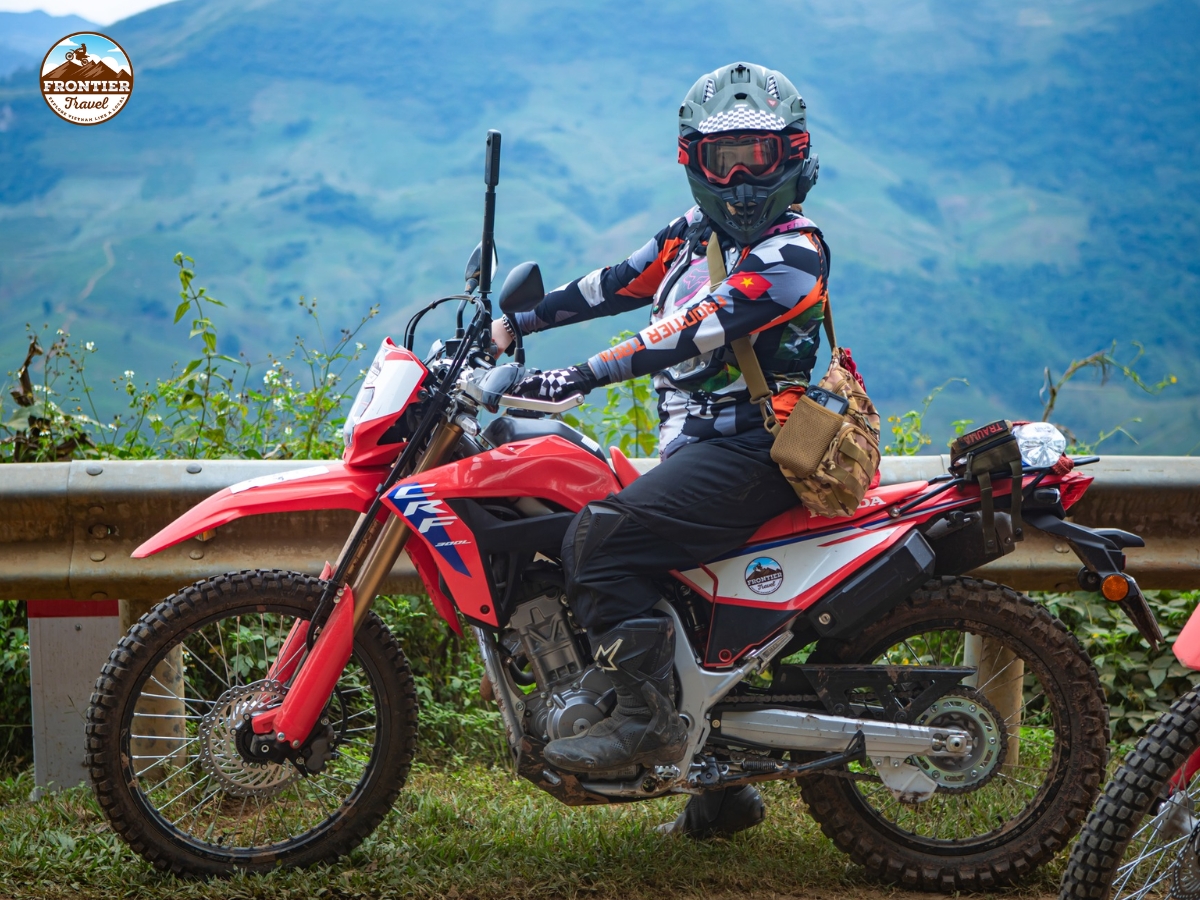
A full-face helmet offers maximum head and face protection on a motorbike trip.
Common types of helmets include:
Fullface: Offers complete protection, ideal for long-distance rides and high speeds, but can feel hot.
Modular / Flip-up: Flexible design with a flip-up chin bar, convenient for city riding combined with long trips.
3/4: Lightweight and well-ventilated, suitable for moderate rides, but does not protect the chin.
Off-road / Adventure: Breathable and sun-protective, ideal for dirt roads and off-road trails, but bulky.
Depending on your needs, route, and personal style, you can choose the helmet that provides both safety and comfort throughout your journey.
16. Luggage straps
To secure backpacks, bags, or other items on your motorcycle, you should prepare luggage straps. This is especially important on rough roads or mountain passes, where sudden braking or sharp turns can cause items to fall off.
When choosing luggage straps, keep the following in mind:
Adjustability: Straps should be adjustable to fit the size of your luggage.
Secure fasteners: Straps with hooks, buckles, or cam locks increase safety and reduce the risk of accidental release.
Elastic or non-elastic: Elastic straps are flexible for irregularly shaped items, while non-elastic straps provide firmer and more stable support.
17. Basic repair tools
During your journey, unexpected issues are hard to avoid. Especially when traveling by motorbike on your own, carrying a basic repair toolkit will help you quickly fix minor problems and continue your trip safely.
Some essential tools may include:
Wrench and spanner set: Used to tighten or loosen bolts and nuts on various parts of the bike.
Screwdrivers: Including flathead and Phillips screwdrivers, for adjusting components or removing protective covers.
Tire levers and patch kit: Useful for repairing punctured tires or replacing inner tubes when traveling through rural or mountainous areas.
Portable air pump: To inflate tires after repairs or maintain proper tire pressure throughout the long journey.
- Multi-tool or pliers: Handy for quick fixes, cutting wires, or handling minor mechanical issues.
Tips: Before your trip, learn a few basic repair techniques so you can handle problems on your own. Also, check with the motorbike rental shop about recommended tools to bring, ensuring you have all the necessary equipment for your journey.
18. Bottled water
Always make sure to carry enough drinking water to stay properly hydrated throughout your journey. You can bring along a personal water bottle and refill it with clean drinking water whenever needed along the way. In addition, bottled water is easy to find at small local shops, markets, and roadside stores.
It is best to prioritize plain water, as it contains no sugar or additives and helps prevent dehydration during long rides. You may also prepare some electrolyte drinks to replenish minerals, which is especially helpful on hot days or when riding continuously for many hours.
Soft drinks can be consumed occasionally, but they should be limited because their high sugar content can cause fatigue, increase dehydration, and negatively affect your health on long-distance journeys.
19. Vietnamese cash
Be sure to prepare some Vietnamese cash, as you will need it for convenience at small shops, local markets, street vendors, toll booths, or parking areas. You can exchange money at the airport or banks, and it is recommended to have denominations ranging from 5,000 VND to 100,000 VND.
Note: Keep your money in a safe place. Avoid carrying too much cash at once to reduce the risk of loss or theft.
20. Local 4G SIM card
A local 4G SIM card is essential for staying connected throughout your trip in Vietnam. It allows you to access maps, contact your accommodation, call for assistance if needed, and keep in touch with friends or family.
You can easily purchase a SIM card at airports, convenience stores, mobile phone shops, or kiosks in major cities. Most network providers offer data packages at reasonable prices, suitable for short-term travelers.
Note: Make sure to ask the provider if the SIM card has good coverage in the areas you plan to visit, especially in remote or mountainous regions. Also, ask for advice on a data plan with enough capacity for navigation, social media, and communication throughout your trip.
In conclusion, careful planning and the right gear are crucial for a smooth and enjoyable motorcycle journey in Vietnam. Prioritize safety and comfort by packing essential items, and keep this motorcycle trip packing list in mind to make the most of your two-wheeled adventure.
Riding a motorbike on your own brings a strong sense of freedom and personal discovery, but it also requires solid route knowledge, good riding skills, and the ability to handle unexpected situations.
To make your journey easier and more enjoyable, joining a guided tour allows you to fully focus on the experience without worrying about itinerary planning or logistics. If you are looking for authentic, safe, and well-designed Vietnam motorbike tours, contact Frontier Travel Vietnam for detailed consultation.